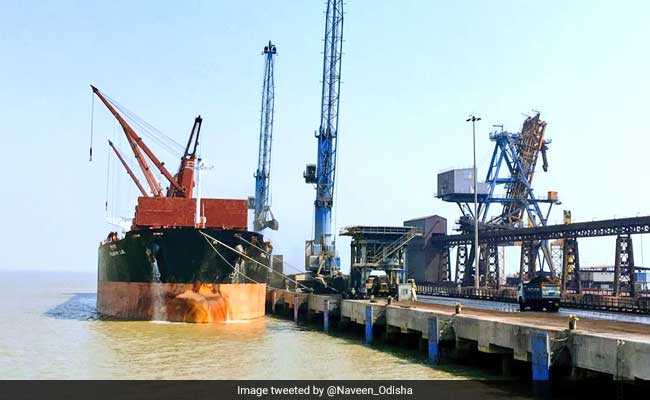
Adani Ports and Special Economic Zone (APSEZ) announced that its Dhamra Port on Odisha’s coast will operate entirely on renewable power from August 2026, meeting over 90 lakh units of monthly demand.
The port, a deep‑draft hub between Haldia and Paradip, handled 48.8 million tonnes of cargo last fiscal year and is built to move 60 million tonnes annually. It relies on a mix of sources: 25‑30 % of the electricity comes from APSEZ’s captive hybrid plant at Khavda in Gujarat, another 10‑15 % is fed through third‑party access, and the remainder is purchased under a green‑consumer arrangement with Odisha’s distribution utility.
APSEZ said this transition is part of its long‑term Net‑Zero strategy, aiming to slash the emissions linked to the energy‑intensive activities of cargo handling, storage, rail‑linked operations and other critical infrastructure.
By moving to 108 GWh of renewable electricity annually, Dhamra sets a precedent for India’s growing network of large‑scale private ports. Analysts note that the shift could inspire similar moves at other eastern‑India hubs, tightening the country’s decarbonisation targets for the logistics sector.
The next milestone will be the completion of the green‑consumer contract in early 2027, after which the port will report its first fully renewable‑powered year, a data point APSEZ plans to share with the Ministry of Commerce and Industry.