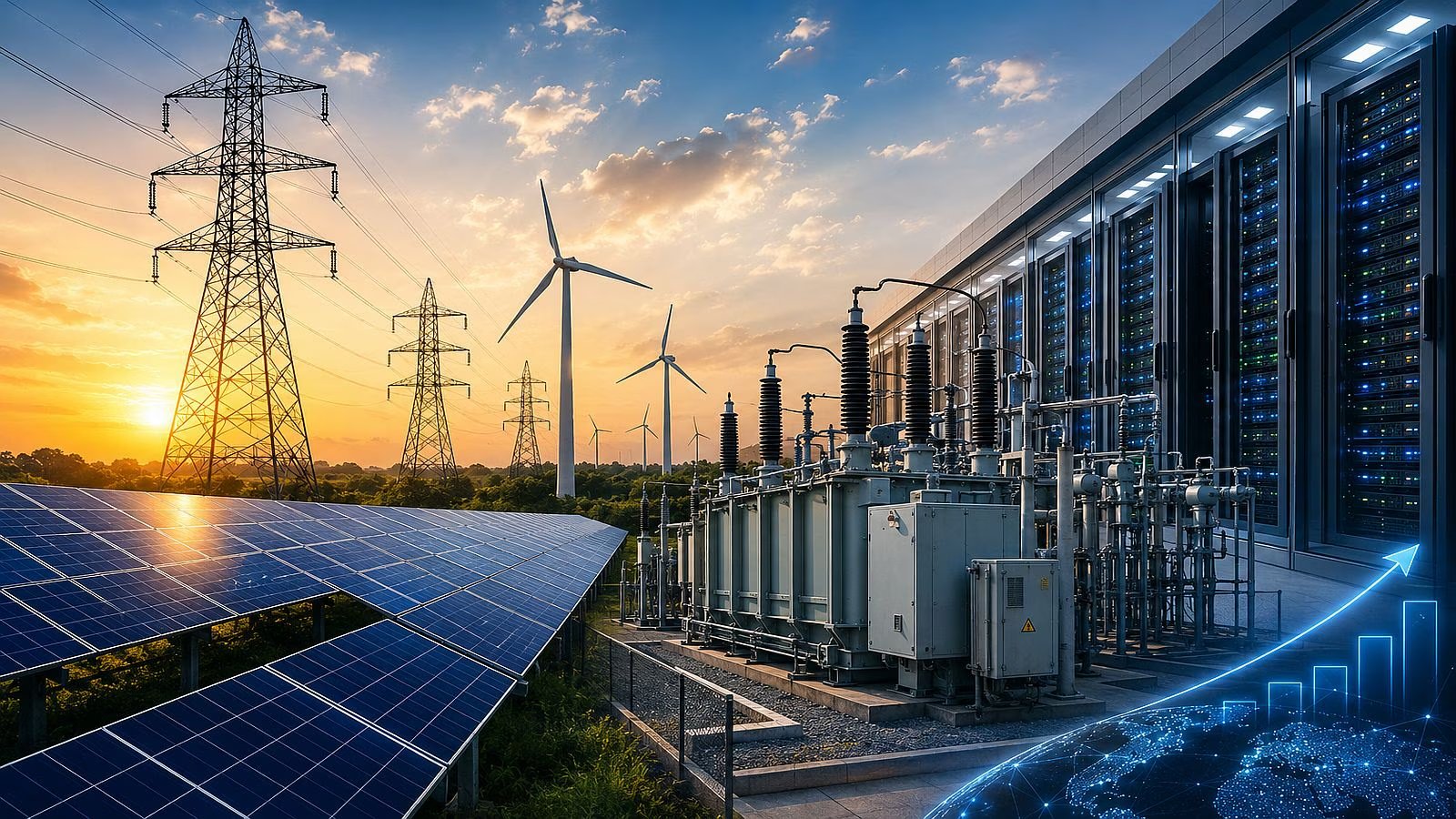
NCL Industries approved an investment of ₹595.17 crore on Thursday to execute Phase II and Phase III of its 130-megawatt hybrid solar and wind power venture in Tuticorin, Tamil Nadu. Equity traders took the news in stride. The stock slipped 1.07% to close at ₹170.40 on the BSE, down ₹1.85 amid routine market turnover.
Capital outlays are scaling up rapidly. With the fresh board clearance for the remaining 80 MW tranche, the total estimated price tag for the Tuticorin renewable energy site has expanded to ₹987.17 crore. The building materials producer will finance the buildout through a combination of bank debt and internal accruals.
The initial blueprint was set in motion earlier. The company greenlit Phase I—spanning 50 MW at a budgeted cost of ₹392 crore—on April 13, 2026. The latest board intervention locks in the full 130 MW generational footprint, designed to cushion the Hyderabad-based manufacturer against surging commercial power tariffs across its operational kiln and grinding footprint.
| Project Tranche | Generation Capacity | Estimated Cost | Board Status | Funding Structure |
|---|---|---|---|---|
| Phase I | 50 MW | ₹392.00 crore | Approved (April 13, 2026) | Debt & Internal Accruals |
| Phase II & III | 80 MW | ₹595.17 crore | Approved (Thursday) | Debt & Internal Accruals |
| Total Project | 130 MW | ₹987.17 crore | Fully Sanctioned | Debt & Internal Accruals |
Beyond captive power, the board granted in-principle clearance to pursue a new cement manufacturing plant in Odisha. NCL Industries plans to formally approach the Odisha state government to identify and allocate suitable industrial acreage, kicking off statutory filings and local clearances.
Yet regulatory caveats remain firmly attached. The company disclosed to exchanges that the Odisha plan remains at an initial evaluation stage. No land allotment has been formalized, no definitive transaction agreements have been inked, and no binding financial commitments have been executed to purchase or lease industrial property as of the filing date.
Market Context: Cement and ready-mix concrete producers across India face volatile input fuel costs and regional pricing pressure, prompting mid-sized manufacturers to substitute grid power with dedicated solar-wind assets. Sourcing internal clean generation reduces per-tonne power overhead while greenfield positioning in mineral-rich eastern states like Odisha allows producers to capture eastern infrastructure supply chains.
Any final commercial commitment to break ground on the Odisha plant will depend on the outcome of feasibility evaluations, formal state clearances, and subsequent approvals from the board of directors.