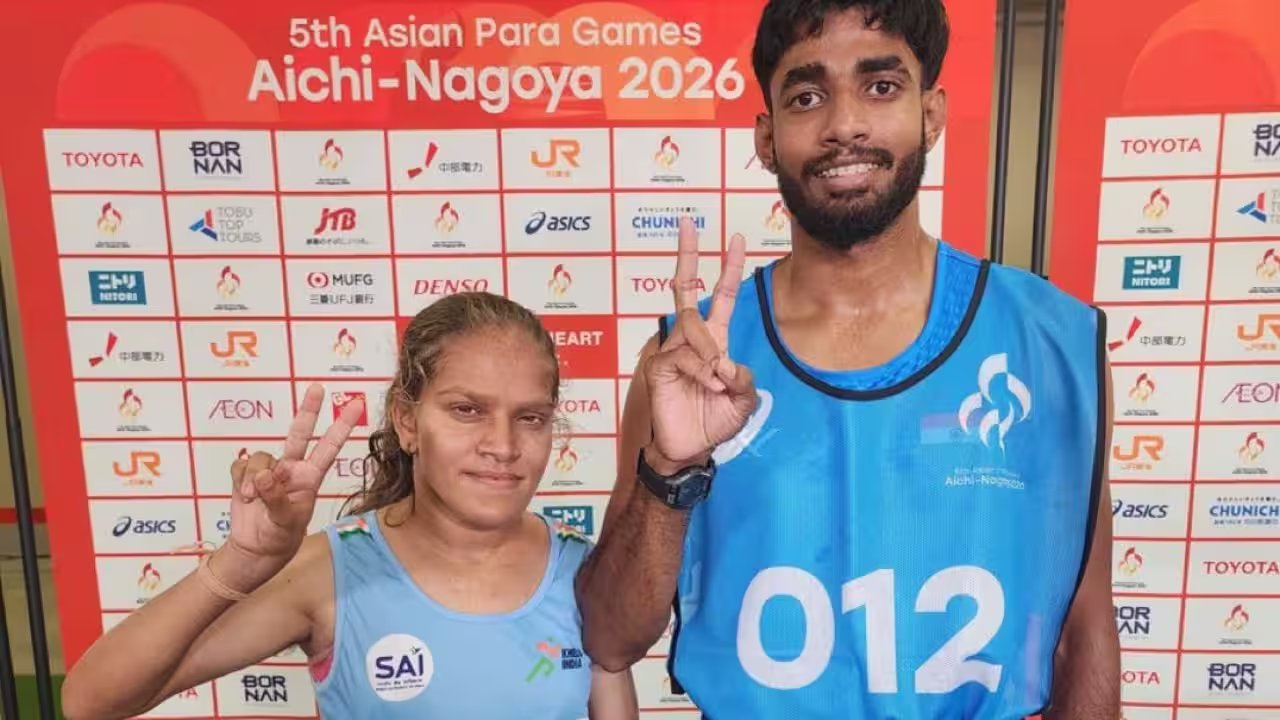
Airtight. That’s the only way to describe India’s 1-2 finish in the women’s 1500m T12/T13. Soumya Kumar, running with guide Bharath Kumar, didn’t just win; she set a personal best of 5:12.39 to take gold. It was a clean sweep of the top two spots for the Indian contingent.
The race was tight, but the scoring system told a different story than the raw clock. Here’s the kicker: Japan’s Mana Sasaki actually ran faster than Soumya. Sasaki clocked 5:12.15. Yet, she finished with bronze. Why? Because the T12 and T13 classifications were combined, and the final standings were decided by a points-based system that factors in both classification and performance. Soumya’s 621 points edged her to the top, while Radha Venkatesh, guided by Govind Solanki, banked 421 points for silver with a time of 5:30.90. Sasaki’s 336 points left her on the bottom tier of the podium.
It wasn’t just about the top two. In the T11 category—the most severe for visually impaired athletes—India’s Ravanni Valasanaini ended up with a bronze. But she didn’t earn it on the track. The original third-place finisher, Rakshitha Raju, was disqualified for a technical violation regarding her clothing, shoes, and bibs. A technicality that changed the medal table overnight.
This double podium finish is a significant bump for India’s overall medal count at the Aichi-Nagoya 2026 Asian Para Games. It shows depth in the middle-distance events, a sector where India has historically struggled to break through. The team is now looking to replicate this consistency in the upcoming 800m and 400m hurdles finals.