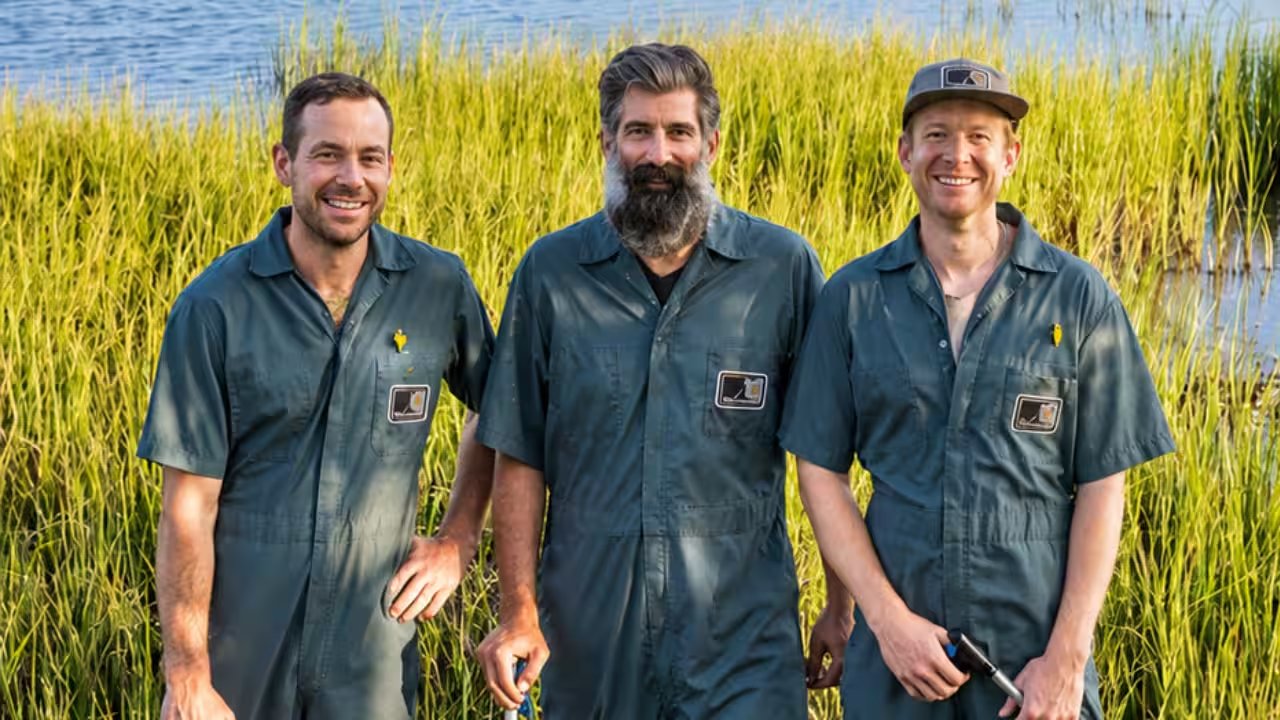
Joel Caldwell, Blake Scott, and Blake Suárez did not set out to write the city’s flood policy. They just wanted their kids to see something green in Wagener Terrace. In 2022, the three new dads organized a cleanup of Halsey Creek, a tidal salt marsh choked by trash and urban runoff. They expected a handful of friends. Instead, around 50 neighbors showed up after Suárez publicized the event, signaling a hunger for local environmental action that the founders had not anticipated.
The project, formally named the Marsh Appreciation and Restoration Society for Happiness (M.A.R.S.H.), evolved rapidly from trash pickup to land acquisition. The group used winches to haul a car engine out of the marsh and retrieved discarded televisions and tires. But the critical move was purchasing approximately one acre of land adjacent to the creek. This purchase blocked a potential housing development, effectively locking the wetland against future urban sprawl. Caldwell, a photographer, Scott, a history professor at the College of Charleston, and Suárez, a graphic designer, realized that owning the land gave them leverage to protect the ecosystem permanently.
By April 2023, the M.A.R.S.H. Project became a program of the Carolina Ocean Alliance, a Charleston-based non-profit. This partnership provided the legal and logistical backbone for their work. They began planting native vegetation, establishing pollinator gardens, and launching water-quality testing programs. Students from the College of Charleston joined as interns, turning casual volunteerism into structured citizen science. The group’s data and restoration efforts began to speak louder than any single cleanup day.
The impact reached city hall. A watershed plan developed with scientists and students outlined nature-based solutions for flooding. These findings directly informed the City of Charleston’s Halsey Creek Headwaters Masterplan, which addresses the area’s ecological conditions and flood risks. The creek, which connects to the Ashley River, remains under pressure from a road crossing that restricts tidal movement and surrounding development. Yet, the presence of kingfishers and egrets in the marsh suggests the restoration is working.
The founders are now pushing for a wider ecological corridor across the Charleston peninsula. They want habitats around different creeks to connect, allowing wildlife and water to flow more freely. The next step is scaling these local successes into a city-wide resilience strategy, ensuring that Halsey Creek remains a living wetland rather than a paved over lot.