They crowded shoulder-to-shoulder around a sputtering radio in Cambridge. The dial was dialed straight into London.
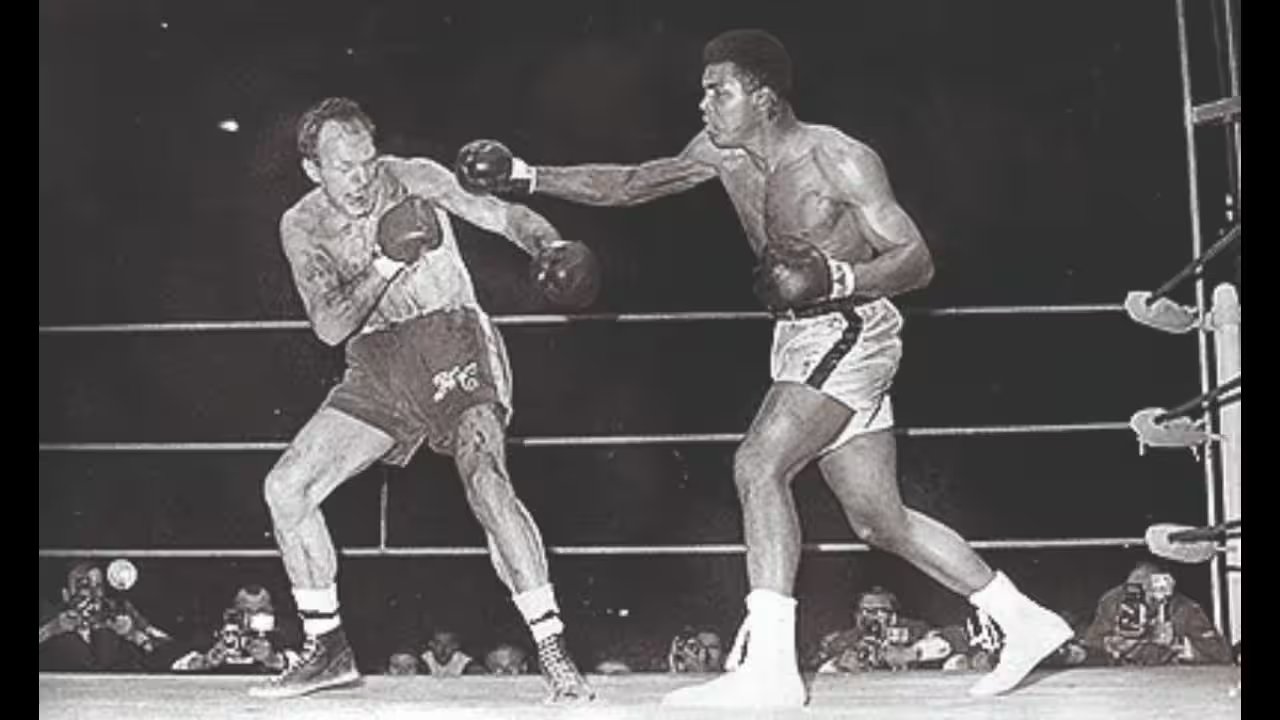
It was a damp evening in May 1966, and Sonia Gandhi—then a young student who had recently met Rajiv Gandhi—sat spellbound beside a circle of friends. Over the airwaves crackled the furious, thudding cadence of heavyweight boxing. Across the ring stood Muhammad Ali, twenty-four years old, brash, and reigning world heavyweight champion. Trading blows against him was Britain’s favourite brawler, Henry Cooper. The prize fight lasted less than six full rounds. Ali tore into Cooper, opening brutal cuts that forced a stoppage in the sixth.
When Clay beat Cooper in the sixth round of the match, we roared in triumph," Sonia Gandhi writes in her memoir, Belonging. "It was for us not just a victory in a sport but a moral one as well. We had been roused by Martin Luther King Jr's massive demonstration in Washington and his 'I have a dream' speech.
For that generation of students swept up in the Berkeley Free Speech Movement, anti-war demonstrations, and Europe's mounting youth revolts, Ali was no mere prize fighter. He was a lightning rod. Two years prior, he had stripped Sonny Liston of the world title, discarded what he called his slave name of Cassius Clay, and weaponized black pride against the racial hierarchy of Jim Crow America.
Ali's 1966 destruction of Cooper served as the definitive sequel to a far wilder, near-fatal collision three years earlier.
In 1963, fighting as Cassius Clay, the young contender crossed the Atlantic chasing leverage to demand a title shot against the fearsome Liston. Clay taunted the London crowd and mocked Cooper relentlessly, barking promises to wrap the bout inside five rounds.
Cooper had other plans.
Late in the fourth round, the British champion uncorked his trademark weapon: a savage, sweeping left hook nicknamed 'Enry's 'Ammer'. The punch smashed into Clay's jaw. The American crumpled hard, tumbling onto his backside. Ali would later confess that the concussive blow "made me feel as if I had gone back and visited all my ancestors in Africa."
Clay pulled himself up, but his equilibrium had vanished. He staggered back to the corner on rubbery legs, slumping onto his stool like a sack of potatoes.
What saved the future icon was the sharp, illicit craft of cornerman Angelo Dundee. Spotting a small split along the seam of Clay’s glove—a tear Dundee had noticed before the opening bell and deliberately kept quiet—the trainer shoved his finger inside, ripped the leather wider, and summoned the referee for an immediate equipment change.
The frantic search for replacement gloves bought Clay precious seconds to clear the fog from his skull. He burst out of the corner for round five, battered Cooper’s left eye into a bloody mask, and claimed a doctor’s stoppage. A year later, Clay humbled Liston twice, embraced Islam, and renamed himself Muhammad Ali.
| Ali vs. Cooper: Tale of Two London Clashes | 1963 Bout | 1966 Rematch |
|---|---|---|
| Ali's Moniker | Cassius Clay (Contender) | Muhammad Ali (World Champion) |
| Decisive Punch / Moment | Cooper lands 'Enry’s 'Ammer' hook in Round 4 | Ali cuts Cooper; doctor stops contest |
| Trainer Intervention | Angelo Dundee enlarges glove split to stall | Standard corner management |
| Official Result | Clay via TKO in Round 5 | Ali via TKO in Round 6 |
When Ali finally clawed his way back inside the ropes, the brash upstart of 1963 had morphed into a global myth. That subsequent second chapter—anchored by the grueling, epic brawls of the 'Rumble in the Jungle' against George Foreman in Zaire and the merciless heat of the 'Thrilla in Manila' against Joe Frazier—rewrote sports history. Yet for those listening through tiny radio speakers in May 1966, that sixth-round stoppage against Cooper was the exact night sport turned into a revolution.
| Venue | Wembley Stadium, London | Highbury, London |