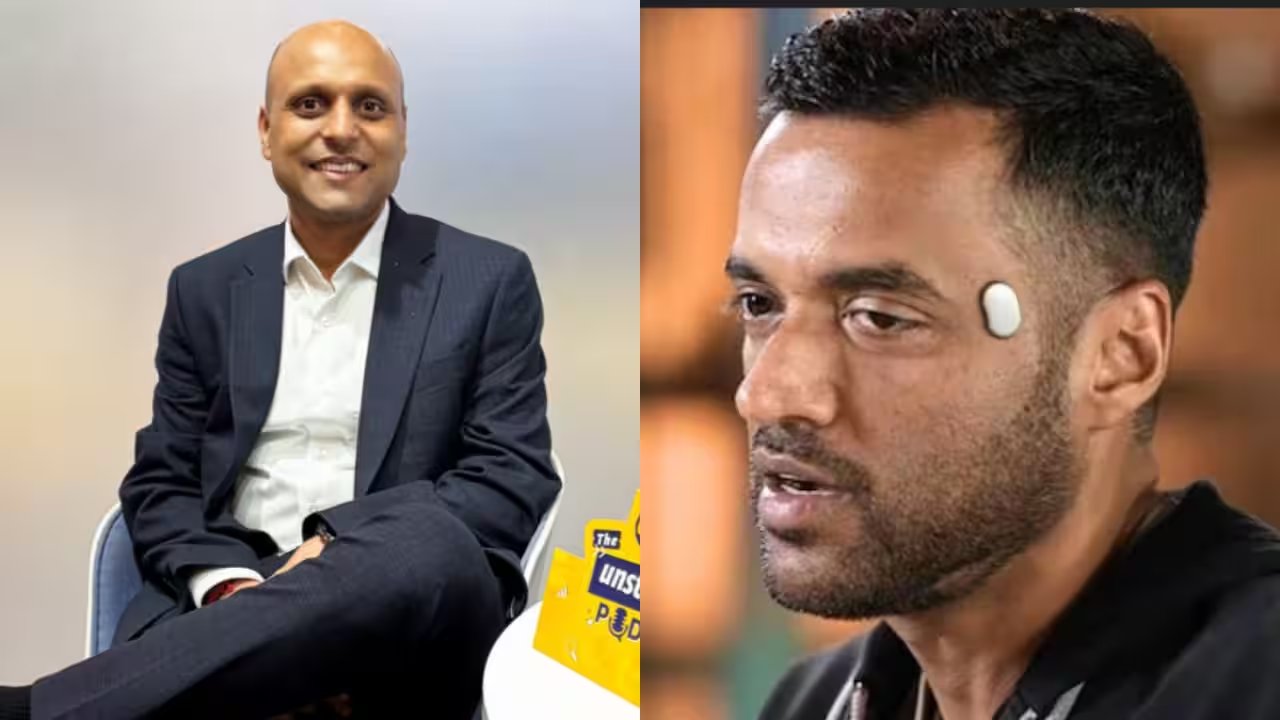
Ankit Aggarwal was ready to strap Deepinder Goyal's new health tracker to his wrist. Then he read the founder's post.
Aggarwal, founder and chief executive of the Delhi-based talent platform Unstop, abruptly cancelled his order for Temple—the high-end wellness wearable recently rolled out by the Zomato and Eternal founder. Aggarwal made clear that steep pricing did not scare him off. Neither did early hardware skepticism. Instead, he walked away because Goyal publicly dismissed the Indian market as an inconsequential fraction of his customer base.
The confrontation began after Goyal addressed mounting criticism over Temple's premium positioning in a November 8 post on X. Seeking to shut down domestic pricing complaints, Goyal declared that the hardware was engineered specifically for western markets, estimating that India would generate less than 1% of total sales volume.
Temple is not made for India. It's made for the world.
Goyal told buyers outright not to purchase the tracker merely to prop up an Indian enterprise, arguing that the venture must compete on global technical merits rather than patriotic sentiment. Immense capital and research had gone into the hardware, Goyal maintained, defending the product's valuation against critics who called it prohibitive.
Aggarwal took the message personally.
"The price & backlash didn't bother me. But I didn't after reading Deepinder's Diwali post," Aggarwal stated, explaining that he normally waits for real-world telemetry and user health data to filter through before judging high-ticket devices. Goyal's dismissal of Indian buyers wiped that patience out instantly.
The spat exposes a raw division within India's hardware landscape. Goyal built Temple under the premise that domestic consumer appetite for elite wellness diagnostics is negligible. Yet data across the consumer tech sector tells a very different story.
Global fitness hardware giants continue to pour resources into India. Boston-based wearable maker Whoop made its formal entry into the Indian market in 2024, locking down high-income subscribers seeking advanced strain and recovery analytics. Meanwhile, Apple continues to move significant volumes of its high-tier Watch Ultra series across Indian metro markets—proving that local runners, lifters, and executives routinely spend premium sums when the value proposition holds up.
| Brand & Product | Market Positioning | Indian Market Strategy | Price/Demand Profile | :--- | :--- | :--- | :--- |
|---|---|---|---|---|---|---|---|
| Temple (Eternal) | Advanced health diagnostic wearable | Western-first; founder projects <1% Indian sales | High-tier pricing; 100 early units released | ||||
| Whoop | Screenless physiological & recovery tracker | Formal Indian domestic expansion in 2024 | Premium annual membership model | ||||
| Apple Watch Ultra | Rugged sports & health smartwatch |
Market Context: Aggarwal pointed out that pre-orders for Temple were already arriving, supported by early backing from local venture capitalists, content creators, and elite Indian athletes. Indian buyers were standing in line with cards ready.
Yet when the product's own creator writes off the home market as a rounding error, Aggarwal argued, expecting loyalty from Indian buyers becomes absurd.
So he drew a firm line.
If Temple is not made for India, I will take him at his word. I won't buy it, and I won't endorse it.
Goyal, who released an initial drop of 100 Temple wearables as part of his wider push into health tech and aviation, now faces a distinct marketing hurdle. Competing globally does not require alienating the country where a company built its foundation. As initial data from Temple's first batch trickles into public forums, Indian fitness consumers will decide whether to take Goyal's advice—and keep their wallets shut.
| Direct Indian retail distribution across tiers |
| High-end luxury price point; strong volume |