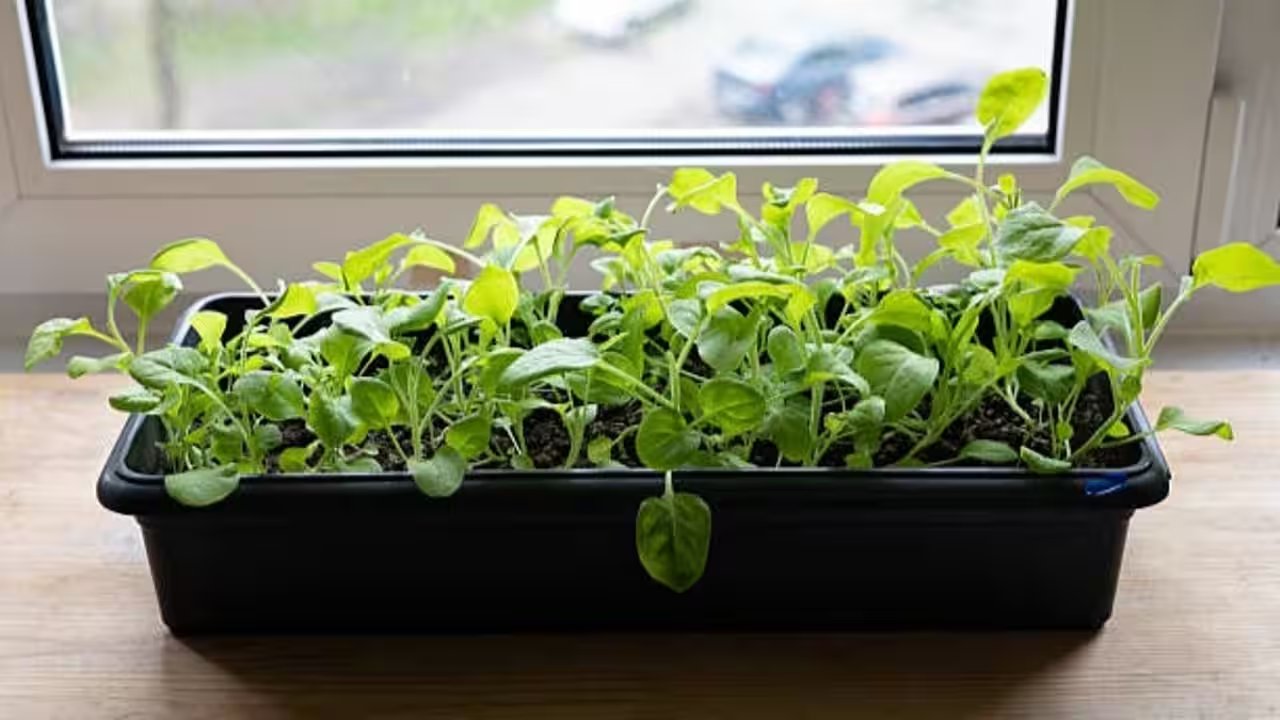
Start with a container that’s at least six to eight inches deep and has drainage holes, because spinach roots hate sitting in water. A wide trough works better than a small round pot since it fits more plants. Fill it with a light, well-draining potting mix enriched with compost or vermicompost; skip heavy garden soil, which packs down in pots and stunts growth. Scatter the seeds about an inch apart, cover them with half an inch of soil, press gently, and water lightly. Soaking the seeds in water for a few hours beforehand speeds up germination, which usually takes about a week. Once the seedlings are a couple of inches tall, thin them out to give each plant space, and toss the thinnings straight into a salad rather than throwing them away.
Light and temperature are the make-or-break factors here. Spinach needs four to six hours of bright light daily, so an east or south-facing window is ideal, but a simple LED grow light on a 12-to-14-hour timer fills the gap if your home is dim. Keep the temperature between 15 and 21 degrees Celsius, as spinach is a cool-season crop that bolts—flowers and turns bitter—when it gets too hot. In warmer months, move the pot to a cooler, airier spot away from direct afternoon sun to keep the leaves sweet and tender.
Watering is about consistency, not saturation. Push a finger an inch into the soil and water only when it feels dry, aiming for the base to keep the leaves dry and mold-free. Since spinach is a leafy crop that loves nitrogen, feed it with a diluted liquid fertilizer or a spoonful of compost every two to three weeks to keep the leaves lush and green. If you notice pale, yellowing leaves, the plant likely needs feeding or the soil is too wet.
Harvesting is where the real payoff begins. Start picking when the leaves are three to four inches long, usually four to six weeks after sowing. Snip the outer leaves first and leave the center intact so the plant keeps producing for weeks. To maintain a steady supply, sow a fresh batch of seeds every two weeks instead of planting everything at once. If a plant starts flowering, pull it out immediately and replace it, since the leaves turn bitter once it bolts.