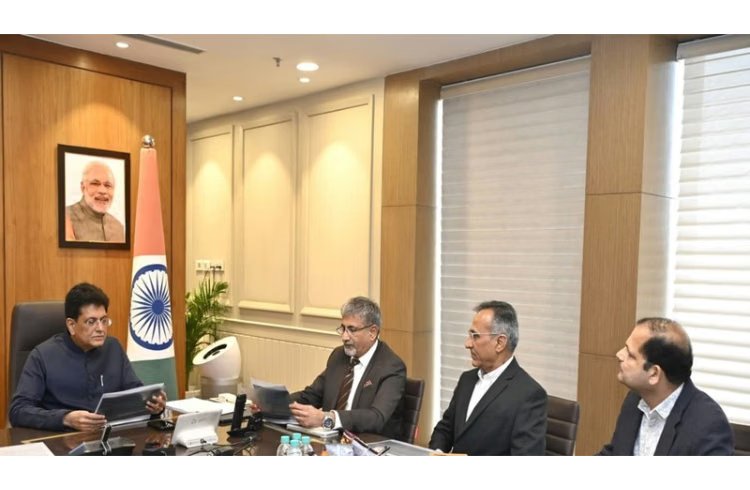
If you are waiting for European automotive engineering to become more affordable to buy and maintain in India, the manufacturing math may finally be shifting. Commerce and Industry Minister Piyush Goyal met with a corporate delegation led by Škoda Auto Volkswagen India Private Limited (SAVWIPL) Managing Director and Chief Executive Officer Piyush Arora in New Delhi to sketch out a aggressive manufacturing blueprint. On the table: ramping up car shipments to global ports, building out domestic assembly lines for electric vehicles, and plugging Indian parts makers directly into international production networks.
Official statements confirmed that the high-level talks centered on expanding automobile exports, strengthening India's standing as a worldwide manufacturing base, and speeding up electric vehicle assembly across the country. But for Indian car buyers, the real significance lies beneath the high-level policy phrasing. The dialogue zeroed in on aggressive product localization and domestic supply chain integration—the exact industrial levers required to lower showroom sticker prices and spare parts bills.
German industrial giants are preparing to double or triple their investments and growth in India over the next three to five years, Goyal noted during wider bilateral trade interactions. SAVWIPL represents the automotive tip of that spear. By knitting domestic component vendors straight into the group's worldwide procurement grids, the carmaker aims to shield its assembly plants from international shipping disruptions while cutting localized production costs.
Cost discipline reshapes the showroom floor. When European architectures rely heavily on imported sub-assemblies, retail prices carry punitive import duties and sharp currency exposure. By moving electric vehicle assembly onto Indian soil and sourcing components locally, the group creates room to price future battery-electric models competitively against entrenched Asian rivals.
Next comes factory-level implementation. With strategic terms aligned between the Commerce Ministry and SAVWIPL leadership, industry eyes now turn to concrete production rollouts, supplier agreements, and export consignment targets out of Indian ports over the coming quarters.