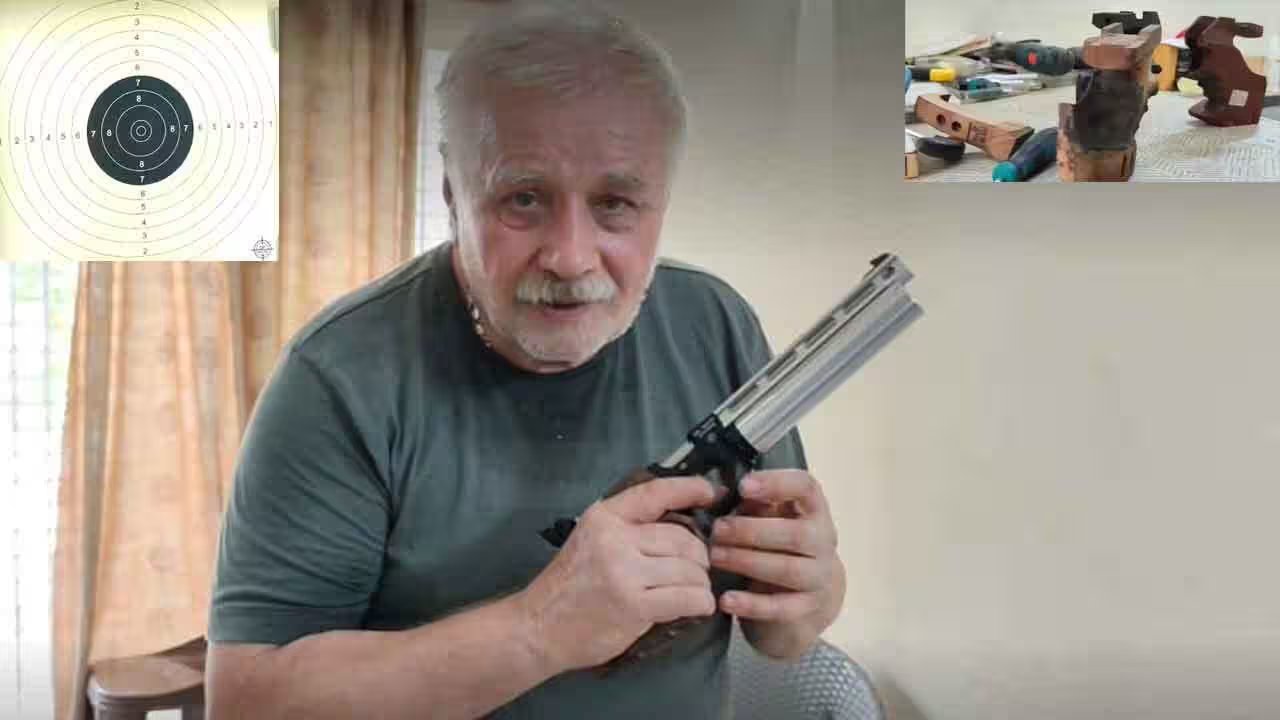
Lisichko’s workshop in Greater Noida is a quiet but fierce arena where the fate of a shooter’s career can hinge on a few centimeters of wood. Anish Bhanwala, fresh off his 2022 Asian Games gold, walked into the room with a pistol that felt off—just a sliver of imbalance that could cost him the title.
He set his sights on the target, fired a handful of shots, and the coach’s hands moved in a steady rhythm, carving the grip to fit the wrist like a custom glove. When Bhanwala’s first shot hit the bullseye, the room exhaled; that was the moment the grip made the difference.
Lisichko’s craft isn’t a one‑off trick. He’s worked with Jitu Rai, Manu Bhaker and Sarabjit Singh, each of whom come to him when a standard grip feels off. The coach says, "I study the hand, the wrist, the way the pistol sits, and then I mold the wood—no paste, no old pieces. I want the shooter to feel it in their bones." The result is a feel‑right grip that lets the athlete focus on the target.
The man behind the wood is a Ukrainian by birth, arrived in India in 2009 to coach the Army. His 200‑page CV, filled with European Championship experience, landed him in Indore’s Infantry School, then on to the national squad. Over the years, his name has become a cornerstone in Delhi’s shooting circles, where athletes line up for a minute of his time before they even hit the range.
As Delhi gears up for the Paris 2024 Olympics, Lisichko’s grips are being tested on the world’s biggest stage. Every shooter who trains under him brings a promise of a more precise, more confident fire.
The next test? The Paris Games, where every millimeter of grip can mean the difference between a podium finish and a quiet return home.