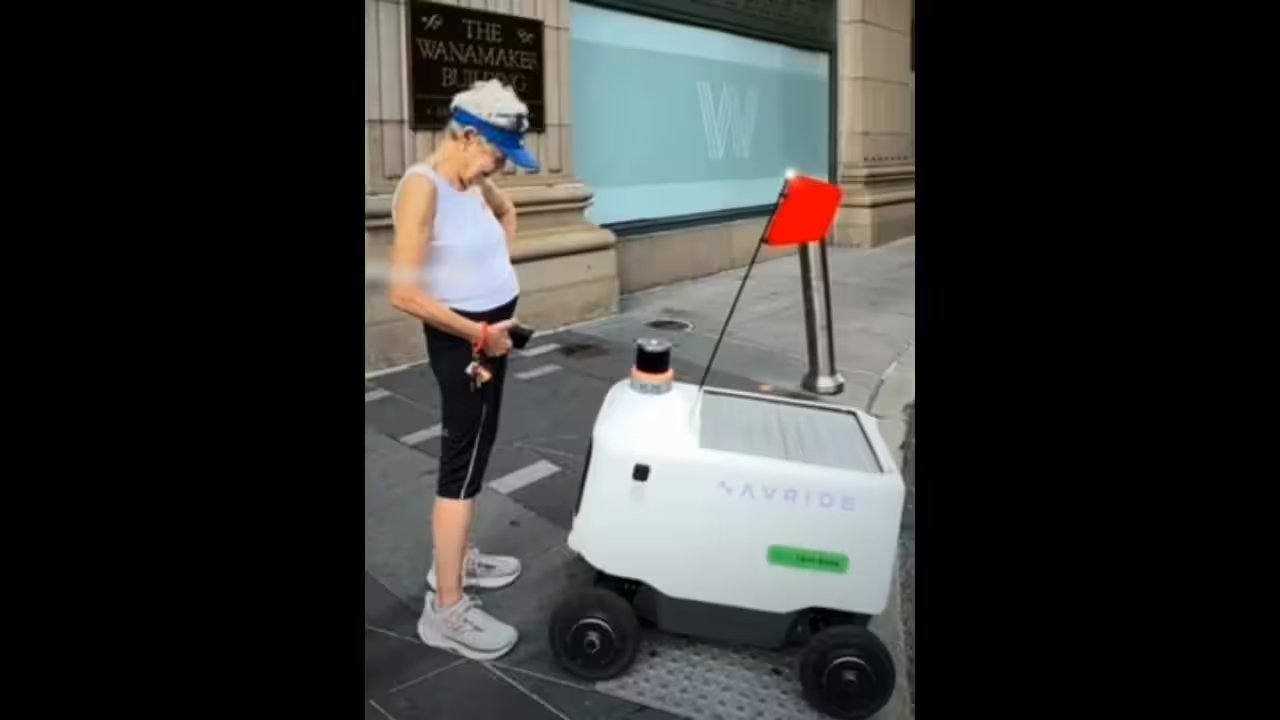
Carolyn Marvin did not plan to spend her evening in a police car. The 78-year-old retired communications professor from the University of Pennsylvania was returning home on October 14, clutching a jar of enchilada sauce in one hand and a container of chicken biryani in the other, when she decided to stop again. She positioned herself directly in the path of an autonomous delivery robot. This was not her first time.
Marvin has been blocking the wheeled machines on Philadelphia sidewalks since they started appearing in the city. She told CNN she was under the impression she had more legal rights than the machine. "I wasn’t impeding any persons. I was impeding a machine," she said. But the Philadelphia Police Department disagreed. In an email, officials stated they responded to a report of "criminal mischief involving a delivery robot" and found a woman refusing to allow it to pass. Officers issued multiple commands. Marvin refused to budge. They handcuffed her and issued a citation for disorderly conduct.
A larger-than-usual crowd gathered at the busy intersection. Some supporters cheered; others criticized her. Marvin suspects someone in that crowd called the police. Her friend summed up the absurdity of the situation best: "Well, you got a disorderly conduct charge for impeding capitalism."
This incident highlights a legal gray area in Pennsylvania. In 2020, the state legislature passed a bill classifying these "personal delivery devices" as pedestrians, not vehicles. John Mattiacci, a Philadelphia personal injury attorney, noted that while cars must yield to the robots at crosswalks, the robots must also yield to humans in pedestrian areas. Marvin argues this law is flawed. She sees the robots as part of a wider trend where technology is surrendering public space. "We’ve surrendered the streets to cars long ago, and I don’t think we should surrender the sidewalks to machines," she said.
Marvin views her actions as a symbolic protest against the displacement of low-income delivery workers and privacy concerns linked to the robots' cameras. She has a long history of activism, from opposing the Vietnam War to supporting Black Lives Matter. She plans to continue her protest. "I would do it again," she said. The next step is a court date for the disorderly conduct charge, though Marvin remains undeterred by the legal framework.