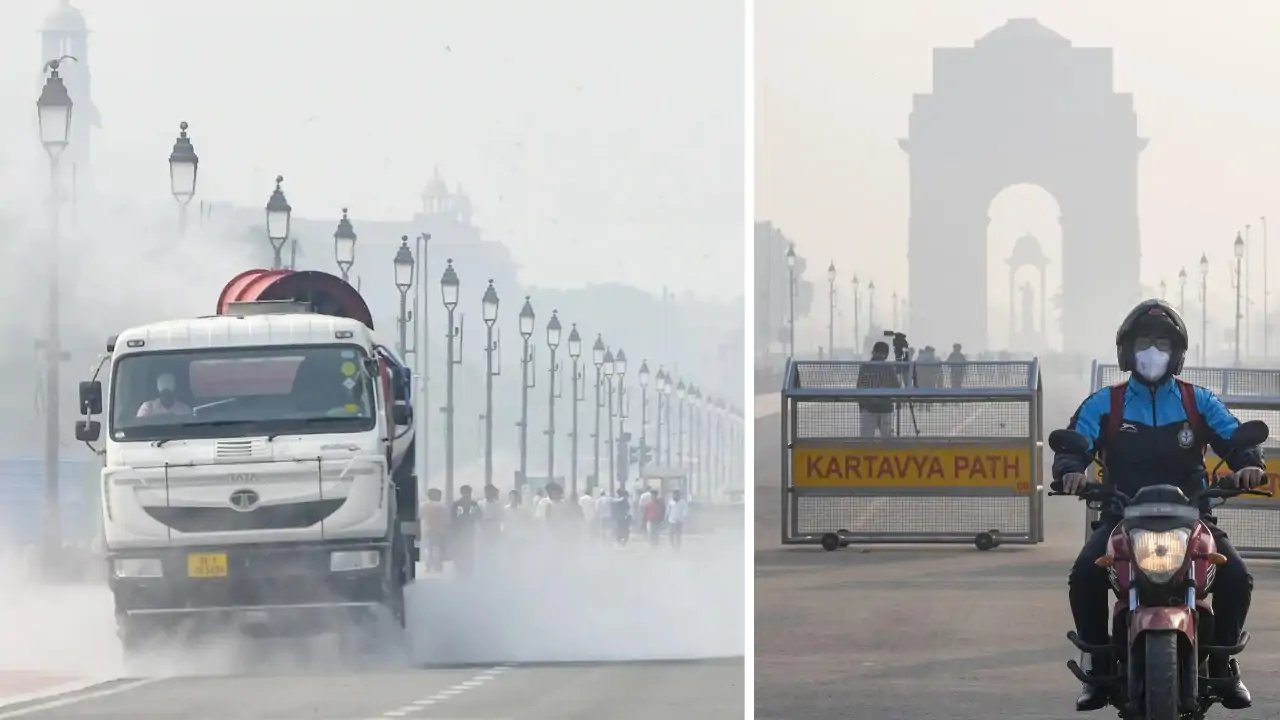
NEW DELHI — The Parliamentary Standing Committee on Home Affairs has scrubbed Delhi-NCR’s escalating air pollution crisis from its November 17 agenda, shelving an urgent review into enforcement failures across the choking capital.
The decision triggered sharp pushback from within the panel. Congress MP Ajay Maken wrote directly to committee chairman Radha Mohan Das Agrawal, demanding that parliamentary leaders reinstate the hearing immediately or set a firm alternative date before sittings commence.
The scrutiny vanished overnight. On November 5, the parliamentary panel circulated a formal notice summoning officials from the Ministry of Home Affairs and regulatory bodies for a 2 p.m. session on November 17. The mandate was clear: examine regulatory enforcement, scrutinize the Graded Response Action Plan (GRAP), evaluate protections for vulnerable populations, and review coordination among police and government agencies. By November 6, a revised notice erased every trace of the air quality review.
Parliamentary managers swapped out the air emergency for an inquiry into "drug trafficking and narcotics control: Emerging threats and institutional response."
Instead of questioning air pollution regulators, the panel will now hear testimony from the Ministry of Ports, Shipping and Waterways alongside the Ministry of Social Justice and Empowerment.
Agrawal pushed back against the criticism, stating he was not aware of Maken's letter and declined to discuss internal committee decisions in public.
Maken argued that canceling parliamentary scrutiny during a full-blown environmental hazard compromises public health oversight.
I wish to register my objection to the omission of the air-pollution hearing from the revised agenda for 17 November. Given the urgency of the health risks, I request that this change be reconsidered and the hearing restored to that date.
Ajay Maken, Member of Parliament
The dropped hearing followed a structured timeline. Maken originally pressed for a formal inquiry on November 2. Chairman Agrawal subsequently admitted air pollution into the panel’s 2026–27 schedule, cataloged as Item 13 in Parliamentary Bulletin Part II on November 6.
Yet the sitting itself vanished without explanation.
Maken warned that official pollution figures conceal the true severity of what citizens inhale. The Central Pollution Control Board (CPCB) caps its public air quality index display at 500, effectively blinding the public once toxic particulate matter crosses critical thresholds.
Under CPCB calculation formulas, monitoring stations lock at the maximum 500 mark as soon as 24-hour PM2.5 levels reach 380 micrograms per cubic metre, or PM10 levels hit 510 micrograms per cubic metre. When ambient PM2.5 surges to 600 micrograms per cubic metre, the underlying mathematical formula generates a score of 669.2. The public display, however, remains frozen at 500.
| Regulatory Parameter | Measured Threshold | Public Dashboard Reading |
|---|---|---|
| PM2.5 24-Hour Saturation | 380 µg/m³ | Capped at 500 |
| PM10 24-Hour Saturation | 510 µg/m³ | Capped at 500 |
| Severe PM2.5 Spike (600 µg/m³) | Yields 669.2 under CPCB Formula | Capped at 500 |
| Annual Programme Listing | Bulletin Part II, Item 13 | Slated for 2026–27 |
As of November 10, the parliamentary committee’s official calendar lists sittings for November 16 and 17 with no air pollution hearing scheduled, leaving Chairman Agrawal facing calls to provide an official explanation before the panel convenes at 2 p.m. on Monday.