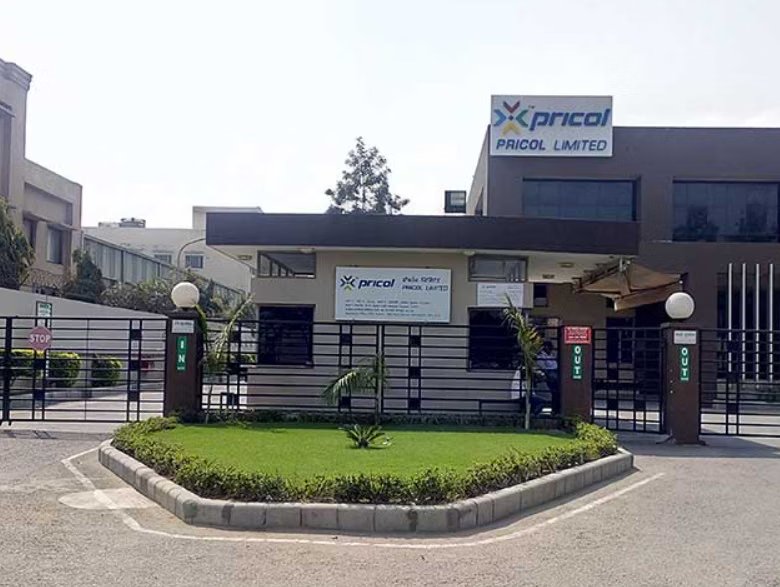
Global private equity firm Warburg Pincus has agreed to buy the promoter group’s entire 38.51% stake in Pricol Autotech Limited for ₹1,663 crore. The transaction transfers control of one of India's biggest vehicle instrument and electronics suppliers into private equity hands. The Mohan family steps aside from the electronics arm. But they keep the rest.
The buyout hinges on the corporate demerger announced by parent Pricol Limited on 27 June 2026. Under that scheme, Pricol is carving out its high-growth Driver Information and Connected Vehicle Solutions (DICVS) unit into Pricol Autotech. Once regulatory tribunals clear the separation, Pricol Autotech will list on the National Stock Exchange and the BSE. That listing rings the opening bell for Warburg Pincus to step in, buy the promoter block, and mount a mandatory open offer for an additional 26% stake from public shareholders.
Warburg Pincus will emerge as the undisputed single largest shareholder.
The split creates two distinct operating companies with sharply divided industrial mandates. Pricol Autotech takes the digital crown jewels. The DICVS business brought in approximately ₹2,400 crore in revenue during FY26—a haul that represented roughly 60% of Pricol’s total consolidated top line.
| Transaction Parameter | Detail | Operational Scope |
|---|---|---|
| Promoter Stake Acquired | 38.51% equity holding | Full exit of Mohan family from electronics unit |
| Deal Consideration | ₹1,663 crore | Warburg Pincus primary transaction value |
| Subsequent Open Offer | Up to 26.00% public float | Mandatory takeover code requirement |
| Unit FY26 Revenue | ~₹2,400 crore | ~60% of Pricol's consolidated revenue |
| Core Products Carved Out | DICVS Division | E-cockpits, instrument clusters, telematics, sensors |
| Retained Pricol Businesses | ACFMS & Polymers |
Pricol Limited retains its mechanical roots. The parent company will continue running its Actuation, Control and Fluid Management Systems (ACFMS) unit. Its industrial polymer operations will sit inside a wholly owned subsidiary, Pricol Precision Products Private Limited. Both businesses stay entirely under the ownership and daily command of the Mohan family, with zero changes to their existing shareholding pattern.
Market Context: Modern vehicles have shifted from mechanical workhorses to rolling software platforms. Instrument clusters, connected telematics, and multi-display digital cockpits command an ever-widening share of the bill-of-materials on factory floors. By shedding mechanical fluid lines and pumps to focus entirely on silicon and sensors, Pricol Autotech positions itself to hunt higher operating margins across global supply chains.
Pricol Autotech does not operate as a speculative technology startup. Its hardware sits inside millions of cabins and handlebars. The DICVS arm manufactures digital instrument clusters, telematics gateways, electronic sensors, and integrated e-cockpit modules. Its client roster spans practically every automotive vertical in the country—two-wheelers, three-wheelers, passenger cars, heavy commercial haulers, and off-highway agricultural machinery.
Vikram Mohan, Chairman and Managing Director of Pricol Limited, stated that the split gives the electronics company dedicated operational focus while tapping foreign backing:
The demerger provides Pricol Autotech with greater focus and independence to pursue its growth plans. Warburg Pincus’ automotive sector experience, resources and international network will support the business in its next phase. Pricol Limited, meanwhile, will continue to focus on developing its retained businesses.
Private equity leadership views the cash infusion as a springboard into global platforms. Anish Saraf, Managing Director at Warburg Pincus, said the investment intends to build on the tier-one supplier's long-standing OEM contracts, domestic engineering talent, and product pipelines to capture international supply programs.
Automotive electronics are expanding beyond simple analogue dials and warning lights. Connected telematics boxes, battery telemetry units, and driver monitoring systems are fast becoming mandatory regulatory standards or consumer baseline expectations.
Swapnil Sinha, Managing Director at Warburg Pincus, noted that the rapid electronification of commercial and passenger fleets offers fertile ground for inorganic scale. The private equity firm plans to pump fresh capital into engineering talent, expand software-defined vehicle capabilities, deepen ties with existing OEMs, and bankroll targeted strategic acquisitions.
The regulatory demerger process now moves through statutory filings and shareholder approvals ahead of the stock exchange debuts on the NSE and BSE. Following those formal listings, Warburg Pincus will execute the share purchase agreement with the Mohan family and publish its formal letter of offer for the 26% retail open offer.
| Actuation, fluid management, Precision Products unit |