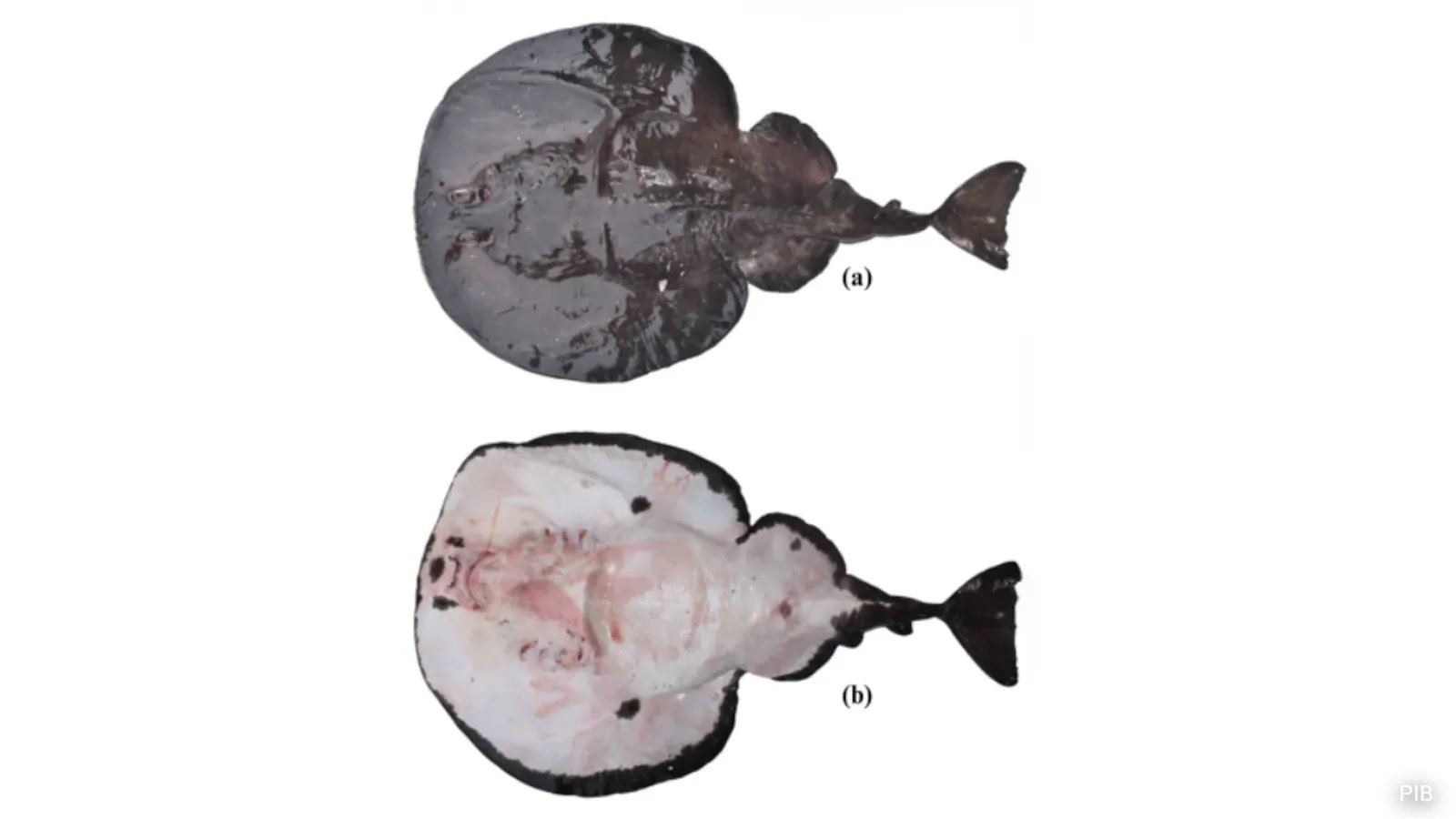
The Zoological Survey of India (ZSI) announced that a previously unknown electric ray, Tetronarce Ramanamurthy, was caught off the coast of southeastern Arabian Sea. The specimen, collected at depths of 400–600 meters, displays a uniformly dark bluish‑black dorsal side, a disc wider than its length, and a vertebral count of 99. DNA sequencing of mitochondrial COI and ND2 genes confirmed it as a distinct evolutionary lineage within the genus Tetronarce.
This marks the first confirmed record of Tetronarce in the northern Indian Ocean, a region that has yielded few deep‑sea discoveries. The find was part of the Ministry of Earth Sciences' Deep Ocean Mission project, which aims to map and document the biodiversity of India's abyssal zones. Dr. M V Ramana Murthy, mission director, praised the team's perseverance in navigating the ocean's most elusive habitats.
According to the ZSI press release, electric rays can generate shocks of 8–220 volts, but this new species possesses comparatively smaller electric organs. "The unique combination of morphological and genetic traits underscores the hidden diversity beneath the waves," said research lead Dr. A. K. Patel.
The species was formally described in the peer‑reviewed journal Zootaxa, the standard outlet for marine taxonomy. As the first Tetronarce in this area, it will be incorporated into global marine species databases, providing a baseline for future conservation assessments.