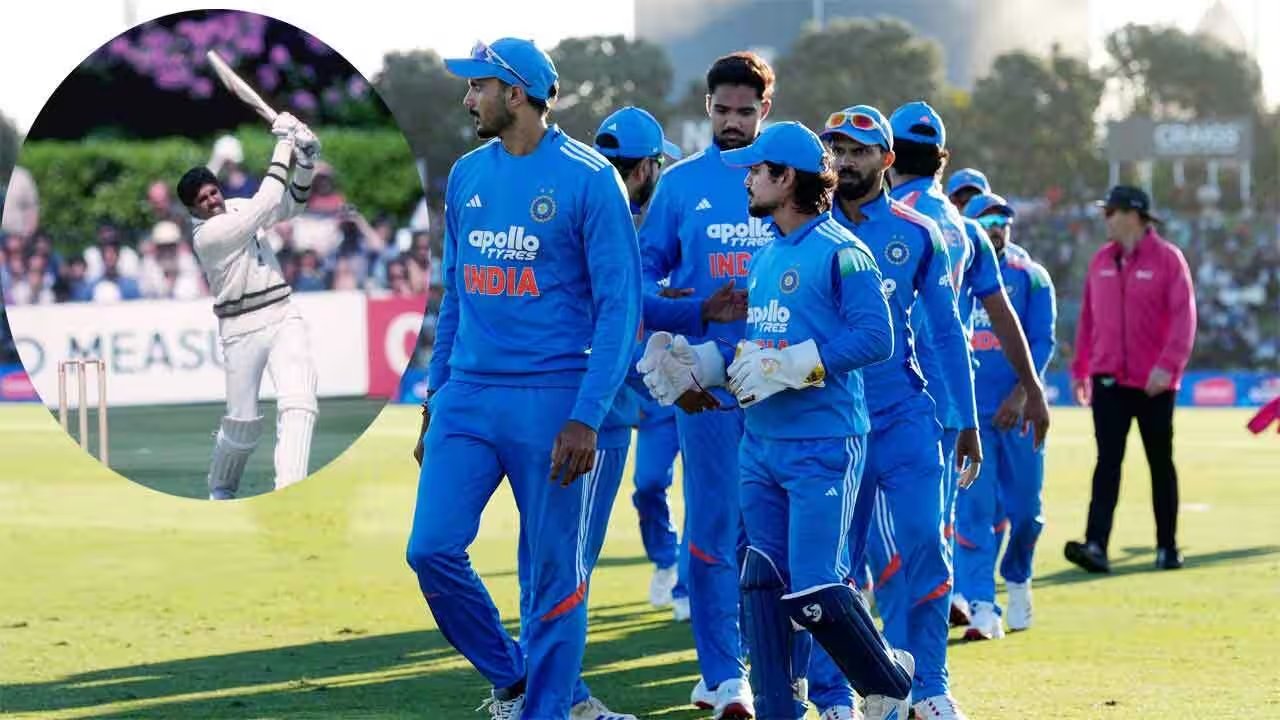
Matt Henry dismantled India's batting lineup inside one devastating opening burst on Friday. Chasing 334 in the fourth ODI at Bay Oval, India crashed to zero for three before the scorers had inked a single run, ultimately slumping to 9 for 4 in Mount Maunganui. It was sheer bedlam.
The wreckage revived the ghosts of Tunbridge Wells. Exactly 43 years after Kapil Dev had to rescue an identical 9 for 4 horror show against Zimbabwe during the 1983 World Cup, India walked into the exact same statistical nightmare. This was only the second time in their 50-over history that four Indian wickets surrendered for fewer than ten runs.
Henry struck with the very first ball of the chase. He extracted seam movement from the Bay Oval surface, found Rohit Sharma's outside edge, and watched Finn Allen snap up the catch at first slip. Rohit walked for a golden duck. With that dismissal, the opener joined an unwanted fraternity—Sunil Gavaskar, Ravi Shastri, Kris Srikkanth, and Manoj Prabhakar—who have each fallen on the first ball of an ODI innings once. Only Sourav Ganguly and Virender Sehwag have suffered that indignity more often, with three golden dismissals apiece.
Yet the onslaught was just beginning.
Two balls later, Henry breached Virat Kohli's defence with a sharp incoming delivery that knocked back his stumps for a duck. And before the opening over gasped to a halt, the New Zealand quick trapped Indian captain Shreyas Iyer leg-before-wicket. While the on-field umpire initially turned down the appeal, Black Caps skipper Mitchell Santner signaled an immediate review, and ball-tracking confirmed the ball was smashing into leg stump.
India were 0 for 3. Three elite batters gone in six deliveries.
Ruturaj Gaikwad managed five runs before he poked at a probing line and departed, leaving India reeling at 9 for 4. It marked only the second time in their decorated white-ball careers that Rohit and Kohli were dismissed for ducks in the exact same match—the only prior occasion arriving against Sri Lanka at Dambulla in 2010.
| Batter | Dismissal Method | Bowler | Score |
|---|---|---|---|
| Rohit Sharma | c Finn Allen | Matt Henry | 0 (1b) |
| Virat Kohli | bowled | Matt Henry | 0 (2b) |
| Shreyas Iyer (c) | lbw (reviewed) | Matt Henry | 0 (3b) |
| Ruturaj Gaikwad | caught |
The Bay Oval disaster instantly evoked June 18, 1983. In that historic World Cup fixture at Tunbridge Wells, India slumped to 9 for 4 and then 17 for 5 before Kapil Dev unleashed an unbeaten 175 to author one of cricket's greatest escapes. On Friday, there was no immediate sanctuary.
India limped to 26 for 4 by the end of the 10-over powerplay. That tally equaled their joint-lowest ten-over total in ODIs since 2018, sitting alongside five other top-order collapses.
| Score After 10 Overs | Opponent | Venue | Year |
|---|---|---|---|
| 21/3 | Australia | Sydney | 2019 |
| 22/4 | New Zealand | Wellington | 2019 |
| 24/4 | New Zealand | Old Trafford (World Cup) | 2019 |
| 24/2 | South Africa |
Friday's collapse also thrust India onto an exclusive list of top-order washouts. They became only the fifth team in ODI history to lose their first three wickets without scoring a run, joining Pakistan (1983 vs New Zealand; 1997 vs South Africa), Bangladesh (2003 vs Sri Lanka), and Australia (2026 vs Bangladesh in Mirpur).
With New Zealand firmly in command after posting 334, India face an uphill task to keep the five-match series alive heading into the final fixture.
| - |
| 5 |
| Lucknow |
| 2022 |
| 26/1 | Australia | Melbourne | 2019 |
| 26/4 | New Zealand | Mount Maunganui | 2026 |