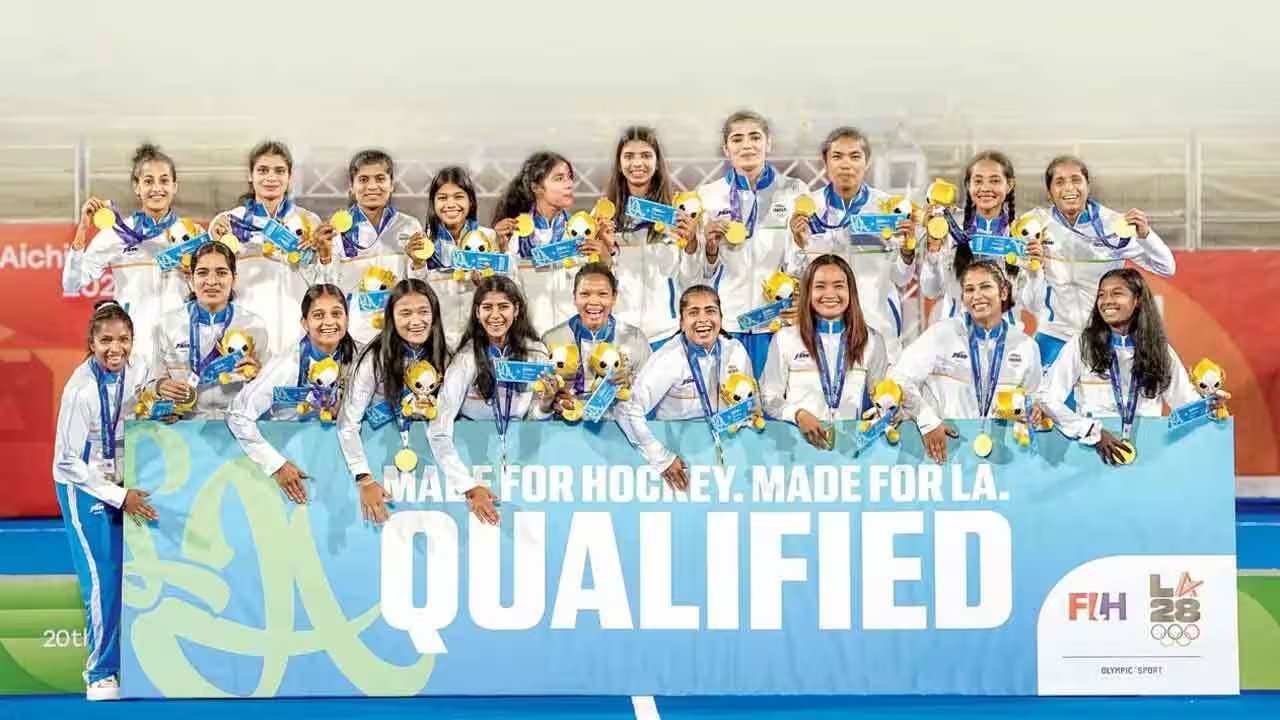
Tears fell at the Gifu Prefectural Green Stadium. 5,500 kilometers away, a small but fiercely loyal fanbase in India erupted. India’s women’s hockey team did the unthinkable: they won gold, ending a 44-year drought, and locked up a direct ticket to Los Angeles. It wasn’t just a win; it was a resurrection. The team that had stumbled in Paris, plagued by injuries and internal strife, now moved with a terrifying blend of skill, fitness, and belief.
Sjoerd Marijne didn’t wave a magic wand. He built a system. The Dutch coach credits his entire staff for the turnaround, emphasizing the deep connection between the coaching crew and the players. But the real workhorse behind the scenes was Wayne Lombard, the head of athletic performance. Lombard arrived to find a squad that was mentally and physically broken. He didn’t just run drills; he rebuilt the players from the ground up.
The priority wasn’t just getting faster; it was getting healthy. Lombard brought in scientific advisers Rodet and Caira Yila to overhaul the injury management. He introduced the 30-15 intermittent fitness test, a grueling protocol where players sprinted for 30 seconds, rested for 15, and increased their speed by 0.5 kmph at every stage across a 40m grid. It was a muscle-by-muscle reconstruction. The players had to buy in, understanding that physical resilience was as critical as tactical brilliance. As the year wore on, the collection of talented individuals started looking like a machine.
There’s a poetic sting to the Japan victory. Two years earlier, Japan had been the team that knocked India out of the Paris qualifiers. Now, on Japanese soil, India cleared that exact hurdle. It’s the perfect narrative arc for a team that refused to stay down. The stakes are higher now, though. With the gold medal and the Olympic spot secured, the pressure has shifted from survival to dominance.
The next stop is Los Angeles. The ticket is in hand, but the journey is far from over.