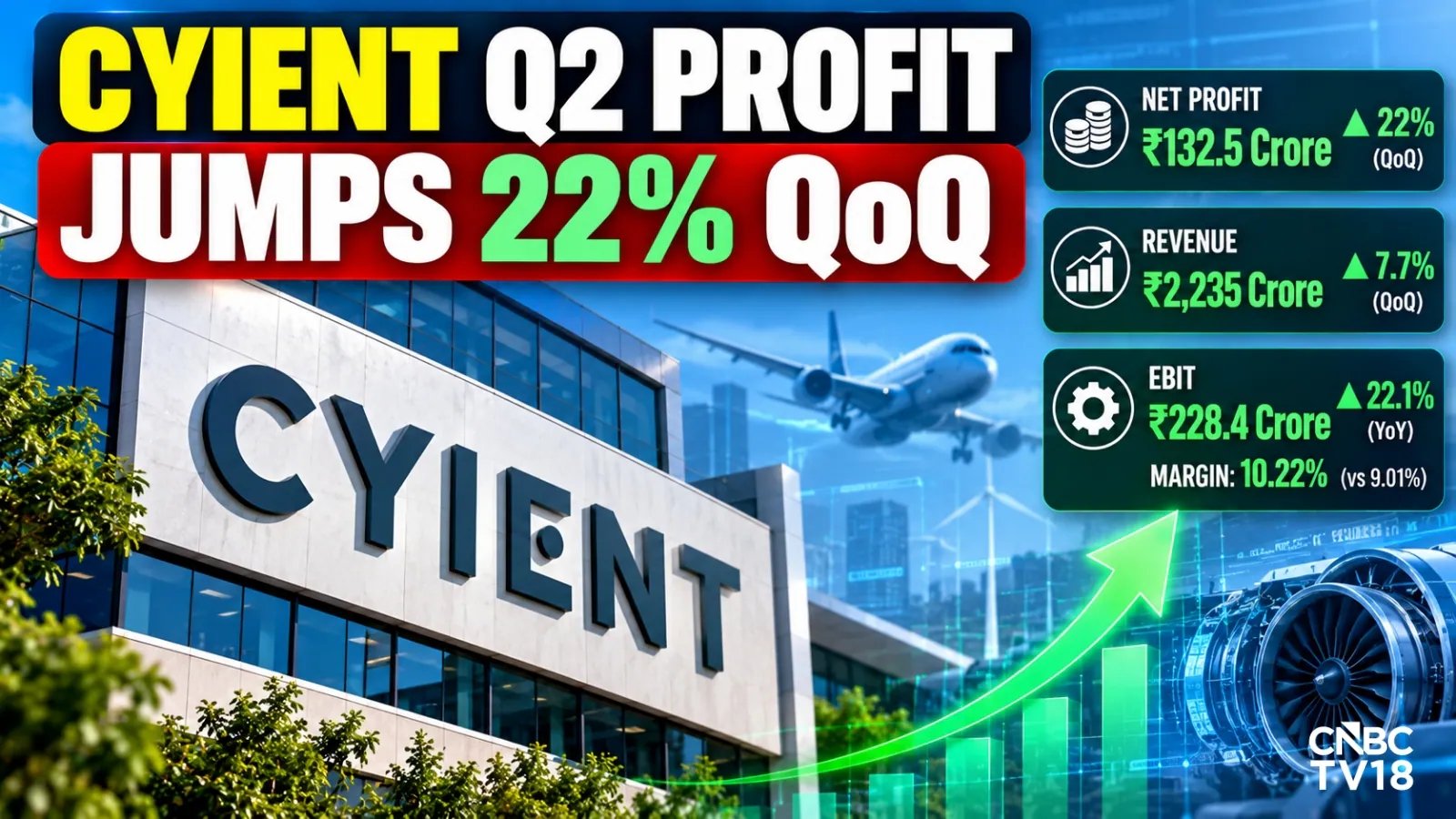
Cyient’s bottom line did the heavy lifting this quarter. Consolidated net profit climbed 22% quarter-on-quarter to ₹132.5 crore, up from ₹108.7 crore in the June quarter. Revenue from operations followed suit, ticking up 7.7% sequentially to ₹2,235 crore against ₹2,075.7 crore previously. The key metric for margin-watching investors? EBIT. It surged 22.1% year-on-year to ₹228.4 crore, pushing the EBIT margin to 10.22% from 9.01% a year ago. That’s the highest EBIT in ten quarters, according to CEO Sukamal Banerjee.
Segment breakdowns reveal where the engine is sputtering and where it’s roaring. The Digital, Engineering and Technology (DET) segment drove most of the growth, with revenue hitting ₹1,664 crore—up 15.7% year-on-year. Its EBIT margin expanded to 14.2% from 12.2% in the year-ago period. Design Led Manufacturing (DLM) reported ₹393.1 crore in revenue, up from ₹373.8 crore in the prior quarter. The semiconductor unit, smaller in scale, posted ₹184.7 crore, a 26.5% jump from ₹54.2 crore a year earlier. Banerjee noted that technology order intake grew 39.7% year-on-year, citing customer demand for AI grounded in engineering.
Not everything is green. While Transportation and Mobility grew 16.5% in constant currency for its sixth straight quarter, the company flagged a headwind. Memory supply constraints could weigh on near-term growth and margins for the semiconductor business. DLM, however, sits on a record order book with a book-to-bill ratio above 1.6 times, driven by aerospace and industrial demand. The board also approved the acquisition of the remaining 49% stake in Cyient Solutions and Systems, making it a wholly owned subsidiary.
The market’s reaction was muted, at best. Cyient shares dipped nearly 2% to close at ₹1,148 on Thursday, trading ahead of the formal results release. On a broader horizon, the stock has gained 3.5% in 2026 but remains down more than 5% over the last 12 months. The board declared an interim dividend of ₹12 per equity share, a 240% payout on the ₹5 face value.
Looking ahead, management points to defence, semiconductors, and AI as the primary growth vectors. Banerjee emphasized the integration of TAO Digital to bolster platform software and data engineering capabilities for enterprise AI adoption. Investors should watch for how the company navigates the flagged memory supply tightness while trying to sustain the 10%+ EBIT margin trend into the December quarter.