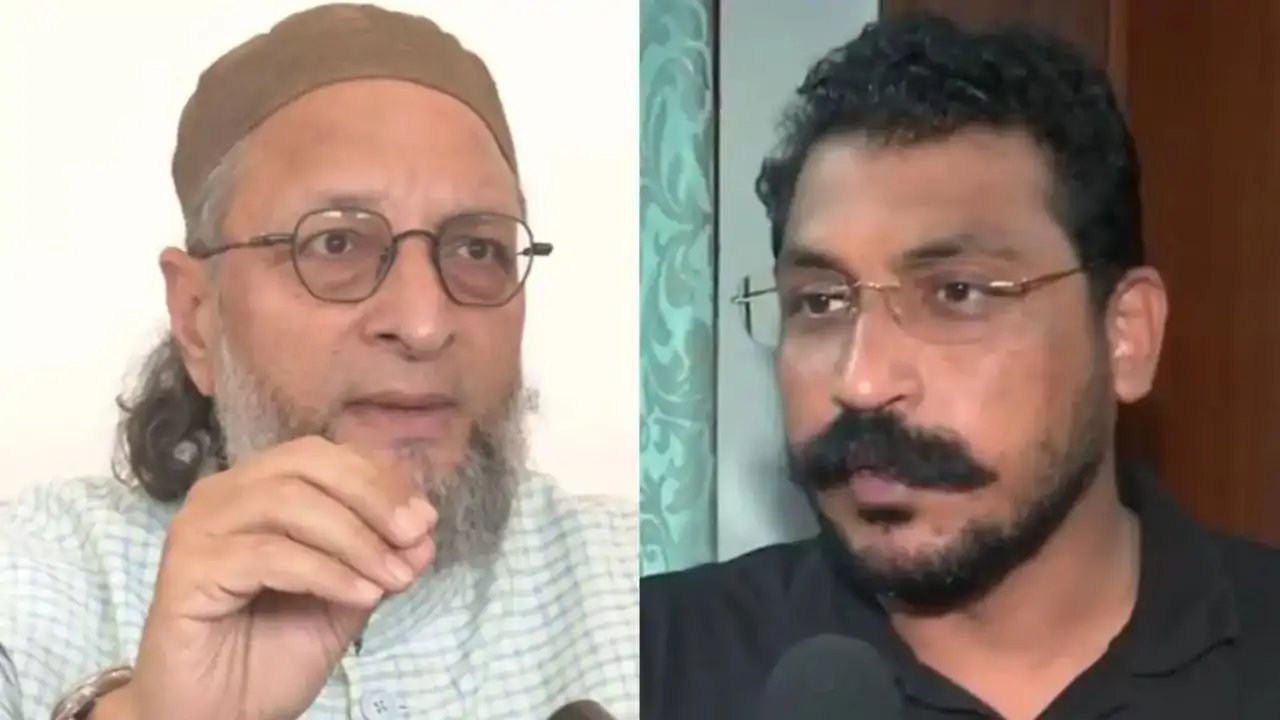
LUCKNOW — All India Majlis-e-Ittehadul Muslimeen president Asaduddin Owaisi and Azad Samaj Party (Kanshi Ram) chief Chandrashekhar Azad will launch a joint political front in Lucknow on Thursday, mounting a direct electoral assault ahead of the 2027 Uttar Pradesh Assembly elections.
Power dynamics in Hindi heartland politics are shifting fast. By pairing Hyderabad-based AIMIM with Azad's grassroots Dalit cadre, the two leaders intend to fuse Scheduled Caste and Muslim electorates into an independent voting bloc. The arithmetic is formidable on paper. Muslims represent roughly 19 per cent of Uttar Pradesh's population, while Scheduled Castes constitute approximately 21 per cent. Bound together, they command 40 per cent of the state's electorate — a numeric share capable of altering seat projections across dozens of eastern and western constituencies.
But translating raw demographic shares into legislative seats demands disciplined booth management. AIMIM has spent years seeking inroads beyond its home fortress of Telangana, pushing aggressively into northern territory. Yet Owaisi's high-decibel campaigns repeatedly faltered at the ballot box in Uttar Pradesh, drawing measurable vote tallies while failing to flip Assembly seats.
Azad brings physical ground momentum to the equation. His victory in western Uttar Pradesh's Nagina constituency during the 2024 Lok Sabha elections demonstrated an ability to breach established party bastions and gave the Azad Samaj Party sharp statewide visibility. Azad has spent recent months hammering the Yogi Adityanath administration over rural joblessness, rural distress, and governance lapses.
We will work to empower the youth, farmers and weaker sections of Uttar Pradesh, protect their rights and bring deprived communities into the mainstream. We will work hard, win the public's trust and fight strongly in the elections... I believe the BJP's policies are not good, but the public will decide whom they support...
Chandrashekhar Azad, President, Azad Samaj Party (Kanshi Ram)
The partnership delivers an immediate tactical blow to Akhilesh Yadav's Samajwadi Party. For two years, the SP anchored its counter-offensive against the ruling Bharatiya Janata Party on the 'PDA' framework — Pichhda (backward classes), Dalit, and Alpsankhyak (minorities). An aggressive Owaisi-Azad front strikes at the core of that coalition, threatening to split anti-BJP ballots and siphon minority and Scheduled Caste voters who previously backed the SP.
| Electorate Demographic & Strategic Baseline | Official Share / Indicator | Key Political Stakeholder |
|---|---|---|
| Scheduled Caste Population Share | Approximately 21% | Azad Samaj Party (Kanshi Ram) |
| Muslim Population Share | Approximately 19% | AIMIM |
| Combined Core Target Electorate | ~40% of Uttar Pradesh | Owaisi-Azad Front |
| Nagina Lok Sabha 2024 Result | Won by Chandrashekhar Azad | Azad Samaj Party Baseline |
Azad made clear that economic grievances will headline the campaign, linking administrative decisions directly to household distress among marginalised youth.
There are many issues we need to discuss. Issues like vote theft are before us. We are still suffering the consequences of demonetisation, but the bigger concern is the declining number of government jobs. Educated young people from Dalit and backward communities are struggling despite having degrees... The government will have to answer to the people for all these failures in the coming elections.
Chandrashekhar Azad, Nagina MP
Electoral success now hinges on tactical execution: seat-sharing ratios, candidate vetting, local district command structures, and whether rural Dalit voters and urban Muslim pockets can coordinate at local polling booths. Owaisi and Azad take the stage together at their joint Lucknow press conference on Thursday to outline the coalition's formal manifesto and initial constituency targets.
| Competing Opposition Strategy |
| PDA (Backward, Dalit, Minorities) |
| Samajwadi Party |