Nitesh Tiwari’s high-stakes live-action epic Ramayana: Part 1 stormed global theatres on November 5, 2026, hauling over ₹100 crore in India and blasting past ₹200 crore worldwide in just 48 hours. The numbers are staggering. The spectacle is undeniable. Yet as Ranbir Kapoor’s Rama steps into the frame alongside Sai Pallavi’s Sita and Yash’s brooding Ravana, filmgoers are turning their gaze backward—toward a thirty-four-year-old hand-drawn masterpiece crafted thousands of miles away in Tokyo.
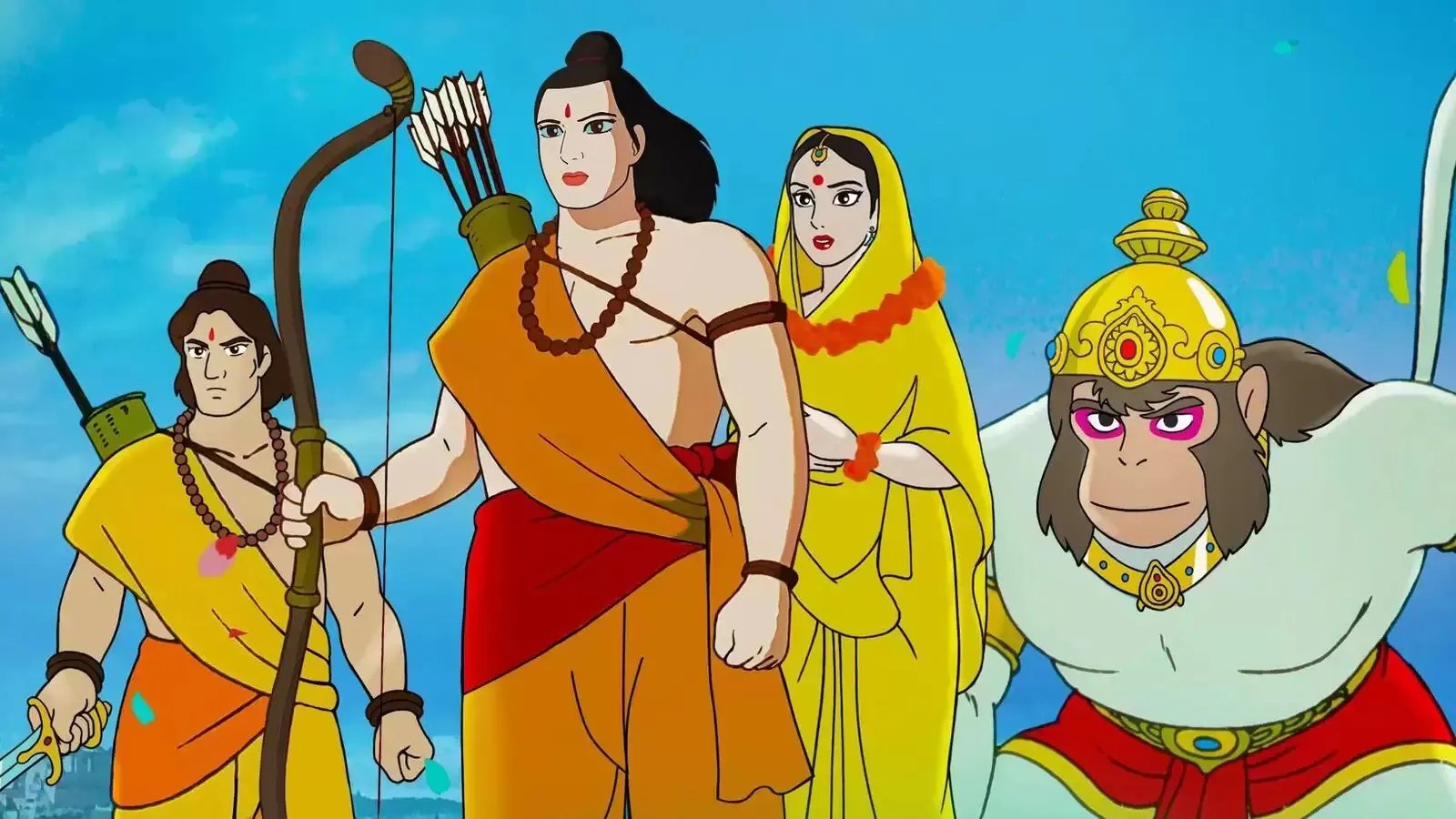
Yugo Sako’s 1992 animated film, Ramayana: The Legend of Prince Rama, is back in the cultural crosshairs. It happens every time Indian cinema mounts a modern retelling of the epic. Whenever digital wizardry falters under scrutiny, audiences hunt down Sako’s cel animation for emotional grounding. The Japanese filmmaker first encountered the epic while working on an archaeological documentary in India with Dr B. B. Lal. Sako quickly made a creative choice that defied conventional thinking: he bypassed live-action entirely. He saw Rama as divine, concluding that only the purity of animation could capture gods without human distraction.
Cinema purists are dissecting the two adaptations frame by frame. Tiwari’s production, backed by producer Namit Malhotra, casts Yash as the demon king—a performance winning plaudits for sheer charisma, but drawing sharp pushback over claims of whitewashing and glorification. By contrast, Sako’s Indo-Japanese crew stuck rigorously to Sage Valmiki’s text. Their 1992 staging of the conversation between Shurpanakha and Ravana showed an abduction driven purely by desire, not vengeance. Sako’s version did not soften corners or polish character flaws for modern palates.
Produced alongside Indian animation doyen Ram Mohan and co-director Koichi Sasaki, Sako’s film assembled a powerhouse squad of 450 Japanese and Indian artists, wrapping production in December 1992 with an orchestral score composed by Vanraj Bhatia. The voice cast brought legendary gravity—Bryan Cranston lent his voice to Rama in English, while Arun Govil handled Hindi duties. But history dealt the film an agonizing blow. Premiered on January 10, 1993, at the 24th International Film Festival of India (IFFI) and screened at the Vancouver International Film Festival, the movie was shut out of Indian theatres. The 1992 Babri Masjid demolition had triggered communal tensions, and protests spearheaded by the Vishva Hindu Parishad (VHP) condemned the idea of a foreign director animating revered deities.
Sako’s creation had to settle for a theatrical run in Japan on November 3, 1997. Indian children ultimately discovered it through television broadcasts on Doordarshan and Cartoon Network, building a devoted cult following across generations. That persistence paid off when Geek Pictures India rolled out a 4K theatrical restoration in January 2025 across English, Hindi, Tamil, and Telugu.
The conversation around Tiwari's two-part franchise—which also features Ravie Dubey as Lakshman, Sunny Deol as Hanuman, and Anupam Kher as Jatayu—is only beginning. As the box office numbers swell, cinephiles continue to measure cutting-edge digital spectacle against the enduring brushstrokes of Sako's hand-crafted devotion.