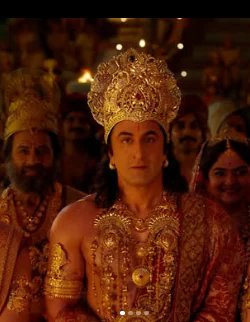
Arun Govil, the man who made millions of Indians believe in a living Rama, told a behind‑the‑scenes clip that Ranbir Kapoor "walks, sits, looks and speaks" like the avatar. He recalled the way the ancient king would stroll through the forest, sit beside a river, and speak with calm authority—details he says the 44‑year‑old captures effortlessly. "He even touches my feet when he should have stayed in his own shoes," Govil chuckled, hinting at the humility that makes the role truly authentic.
Sai Pallavi, who will play Sita, admitted she was "awestruck" at the uncanny overlap between her Rama image and Ranbir’s. Ravi Dubey, who plays Lakshmana, pointed out that the innocence he sees in Ranbir mirrors the boy‑like charm of the epic hero. Yet, some netizens have taken a swipe at Ranbir’s filmography, arguing it doesn’t fit the sanctity of a divine legend, while others mock his supposed culinary habits.
Producer Namit Malhotra, in a rare candid interview with Prakhar Gupta, outlined a staggering Rs 4,000 crore budget—roughly $500 million for both parts. He likened the project to the largest film ever made, stating that the scale is "ambitious yet grounded" and that they are "making the biggest film in the world for the greatest epic that deserves to be seen globally." The echo of budget talk has already sparked speculation about how the money will be spent on special effects and set design.
The first chapter of this six‑year juggernaut is slated for a worldwide release on 24th October 2026, just before Diwali, with the second part promised for Diwali 2027. Fans are already lining up for the teaser, while critics wait to see if Ranbir’s portrayal lives up to the legacy of Govil’s iconic 1980s portrayal. The promise is clear: a cinematic spectacle that could redefine mythological storytelling in India.