Patna Municipal Corporation cracked open institutional debt markets on Tuesday. Its debut ₹200-crore municipal bond officially listed on the National Stock Exchange in Mumbai, establishing the first municipal bond issuance from Bihar on the premier bourse. The paper gives Bihar’s urban local bodies an alternative channel to secure commercial capital rather than waiting on state treasury allocations.
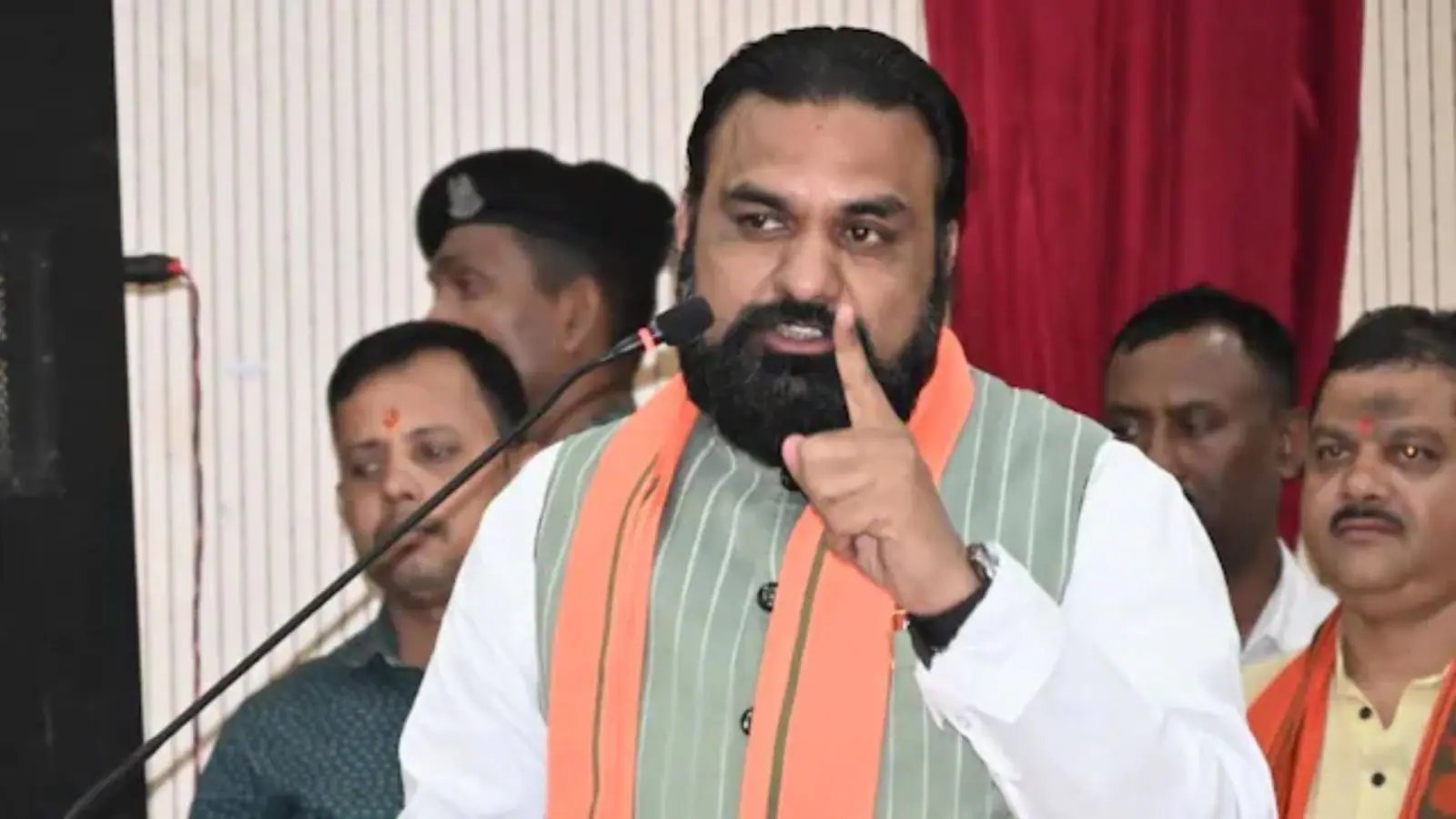
Capital discipline took center stage at the listing ceremony in Patna. Samrat Choudhary inaugurated the listing alongside Deputy Chief Ministers Vijay Kumar Choudhary and Bijendra Prasad Yadav, Urban Development and Housing Minister Nitish Mishra, Patna Mayor Sita Sahu, Chief Secretary Pratyaya Amrit, and NSE executive leadership. The directive to civic administrators was immediate: deploy proceeds into self-sustaining, revenue-yielding municipal works capable of servicing coupons and returning principal while building capital reserves for follow-on projects.
Choudhary pressed other municipal corporations across Bihar to duplicate the bond route. Government departments received matching instructions to audit dormant state assets and establish recurring non-tax revenue lines.
Bihar is actively steering civic works toward public-private partnerships. The fiscal shift follows protracted execution timelines under traditional cash-funded contracts. The existing 26-kilometer Marine Drive in Patna, built entirely out of government funds, took 13 years to finish. Officials are now bypassing direct treasury financing for its extension, structuring a 126-kilometer Marine Drive corridor under a public-private partnership expected to draw roughly ₹30,000 crore in private commitments.
A parallel brownfield concession model will govern newly constructed state medical colleges and hospitals. The state intends to transfer operational administration to private healthcare operators and specialist clinical groups, aiming to reduce recurrent operational drain on public coffers while upgrading delivery standards.
Energy procurement volatility has prompted a secondary financial restructuring. Choudhary confirmed that Bihar is assembling large-scale capital deployments across solar power, battery storage, and pumped hydro systems to curb escalating peak-hour power acquisition costs.
Prime Minister Narendra Modi is scheduled to arrive in Bihar on November 21, when the state expects to execute commercial memorandums of understanding for grid-scale battery and pumped storage installations. State officials project these frameworks will unlock private capital outlays worth several lakh crore rupees across regional power transmission and renewable assets.
Consumer power economics are shifting alongside industrial utility deals. The government provides capital subsidies of approximately ₹98,000 for residential 3-kilowatt rooftop solar installations and will buy back excess domestic generation. Choudhary called on affluent households to surrender their state-subsidized 125 units of free electricity voluntarily, diverting private consumption onto self-funded solar arrays.
| Project / Initiative | Structure / Target | Capital Commitment / Scale | Status / Timeline |
| :--- | :--- | :--- | :--- |
|---|---|---|---|
| Patna Municipal Bond | Civic Debt Issue | ₹200 Crore | Listed on NSE (Tuesday) |
| Marine Drive Extension | Public-Private Partnership (PPP) | ₹30,000 Crore | 126 km proposed corridor |
| Pataliputra Satellite Township | Greenfield Civic Hub | ~₹5 Lakh Crore | Planning / Land pipeline |
| Energy Storage MoUs |
Patna’s civic balance sheet forms only the baseline of a broader municipal expansion. Urban development planners have blueprinted 12 greenfield satellite townships bearing regional historical names to meet surging housing density across urban centers. The centerpiece development—the proposed Pataliputra Township in Patna—is designed to capture approximately ₹5 lakh crore in commercial real estate, high-rise residential construction, and modern transport linkages.
Yet capital creation plans extend into natural resource management. The administration is advancing commercial contracts for river desilting. Dredging heavy silt accumulations from arterial riverbeds will mitigate chronic seasonal flooding while turning the extracted aggregate into marketable building material to generate direct non-tax receipts.
Market Context: Bihar’s municipal market entrance reflects a structural economic migration away from direct budgetary support. Since the bifurcation of Jharkhand in 2000—which stripped Bihar of substantial mineral royalties, industrial land, and heavy forest wealth—the state had to rebuild its revenue base from an operational budget of barely ₹6,000 crore. Today, that spending program reaches nearly ₹3.5 lakh crore, serving a domestic consumer base of nearly 14 crore residents. Alongside commercial bond obligations, state cash management recently cleared ₹1,205.91 crore in direct social welfare transfers.
Debt capital markets will now test execution. Patna Municipal Corporation faces the immediate operational mandate of locking ₹200 crore into revenue-generative works, while market watchers eye the upcoming November 21 bilateral energy signings for the next signal on institutional inflows into the state.
| Battery & Pumped Storage |
| Multi-lakh crore pipeline |
| Signing scheduled Nov 21 |
| Rooftop Solar Programme | 3-kW Residential Grid | ₹98,000 State Subsidy | Active deployment |