India slid to 113 for 7 chasing just 135 in Wellington. The ball seamed violently under heavy skies, variable bounce bit off the deck, and the middle order panicked after Virat Kohli fell early. Rain and the Duckworth-Lewis-Stern method spared India an outright embarrassment, but the scorecard exposed an uncomfortable reality. India’s most equipped middle-order technician walked out at No. 6 instead of anchoring the innings at No. 5.
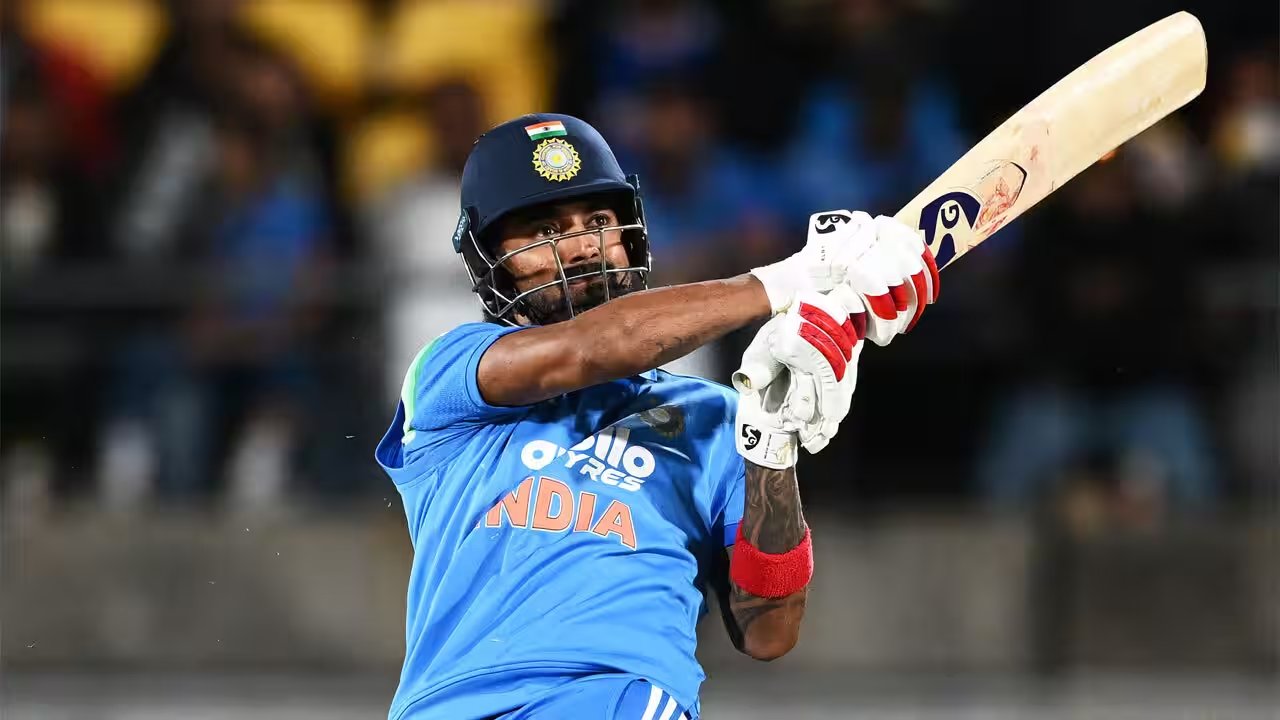
KL Rahul played an unbeaten 26 that will never dominate highlight reels, yet it kept the team from total capitulation. Alongside Shreyas Iyer, Rahul silenced ego and leaned on defensive discipline. The puzzle lies in why he arrived so late. Team management instead promoted Axar Patel to No. 5 for the second straight match, prioritizing left-right matchups over survival instincts. In Auckland, the middle order wobbled; in Wellington, it fractured completely.
Axar’s promotion made tactical sense on sluggish tracks across India, the 2024 T20 World Cup, and the Champions Trophy in the United Arab Emirates, where tackling spin mattered most. But on greentops offering lateral movement to quicks, the theory disintegrated. Axar averages 30.41 at No. 5, a figure that plunges below 20 on overseas surfaces. Rahul, by contrast, operates in elite air in the slot. In ODIs at No. 5, Rahul has amassed 1,646 runs at a bruising average of 68.58, scoring at a strike rate north of 103.
For a decade, Rahul has served as Indian cricket’s ultimate contingency plan. He has opened, held the middle, kept wickets, and finished games. He absorbed every reshuffle without complaint. When Gautam Gambhir provided unambiguous backing as a specialist Test opener in the 2024-2025 Border-Gavaskar Trophy, Rahul responded immediately with match-defining stability. Clarity produced output. In ODIs, that exact clarity is slipping away again.
Part of the shuffle stems from Hardik Pandya’s absence at No. 6, compelling the leadership to stretch batting depth down to No. 8. Yet compensating for an all-rounder by dislodging a proven linchpin weakens the entire spine. With the 2027 World Cup slated for South Africa, Zimbabwe, and Namibia—where morning starts and spicy pitches mirror New Zealand—technical assurance must trump floating experiments. If Rahul at five and Pandya at six represents the tournament blueprint, delaying its execution risks unraveling the foundation.