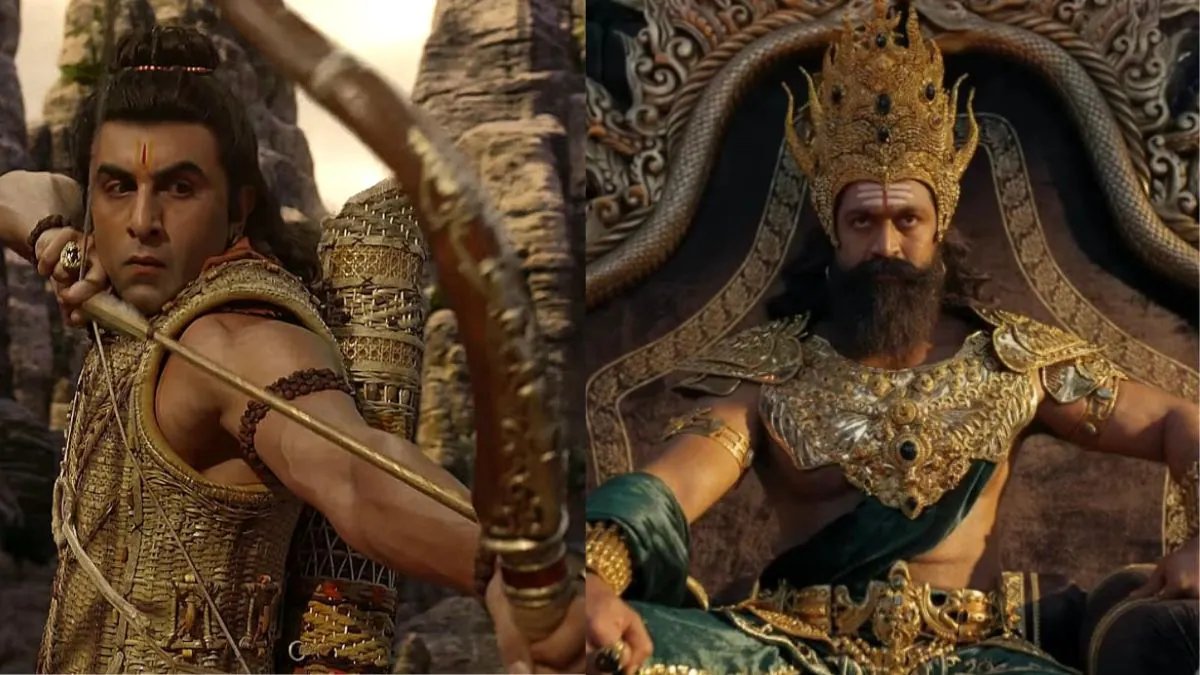
Scale is the first thing that hits you. It is also, across three relentless hours, nearly the only element that truly lingers. Director Nitesh Tiwari’s Ramayana—mounted on an eye-watering ₹4,000-crore budget by Namit Malhotra’s Prime Focus Studios and Yash’s Monster Mind Creations—roars onto screens behind flying war elephants, galloping rhinos, and chariot-towing felines. The technical wizardry never falters. Yet the relentless bombardment of computer-generated excess wears the viewer down, squandering the philosophical weight and human intimacy of an epic etched into the subcontinent’s DNA.
Pre-release strategy made the intent transparent: this production was engineered for global conquest rather than quiet contemplation. Distributed internationally by Sony Pictures Entertainment, with Hollywood heavyweight Hans Zimmer sharing score credits alongside AR Rahman, the film frames itself as India’s answer to The Odyssey. That global ambition has already yielded massive early dividends, raking in ₹2.21 billion worldwide across its opening two days. To ensure seamless crossover appeal, Tiwari and co-writer Shridhar Raghavan broadcast every plot turn in the broadest strokes imaginable. But in shaving off complex moral ambiguities for universal consumption, they flatten ancient poetry into a breathless assembly line of sensory set pieces.
The duel between ethical extremities rests upon two starkly opposed performance styles. Ranbir Kapoor plays Rama with deliberate quietude. He lacks the classical "lotus eyes" of the texts, but he brings a grounded, earnest dignity to the exiled prince, stripping away star ego to channel stoic resolve. Then Yash arrives. In his first Hindi film outing, the Kannada superstar approaches Ravana as an unchained tempest of malice, leaning entirely into operatic theatricality. When the two energies collide, the screen sparks—most effectively during an aerial duel with Jatayu, voiced with gravelly weight by Anupam Kher, and in Ravana's combative post-interval clash with Vivek Oberoi’s Vidyutjihva.
Humanity survives in the margins. Sai Pallavi offers a serene, watchful anchor as Sita, refusing to reduce the character to a passive icon, while Ravie Dubey brings crisp, protective discipline to Lakshman. Behind the camera, cinematographers Pankaj Kumar and Mahesh Limaye deliver frames of undeniable splendour, bathing forest exile and gilded palaces in painterly light. The craft on display is unimpeachable. The pixels gleam.
Yet opulence ultimately suffocates interior drama. By treating nearly every sequence as a self-contained showcase of computer graphics, the narrative loses the cumulative emotional ache that gives the sacred narrative its lasting power. The layers vanish under the polish. Even as its box office tally races to historic heights worldwide, Ramayana stands as a monumental technological triumph that forgot to leave room for a beating heart.