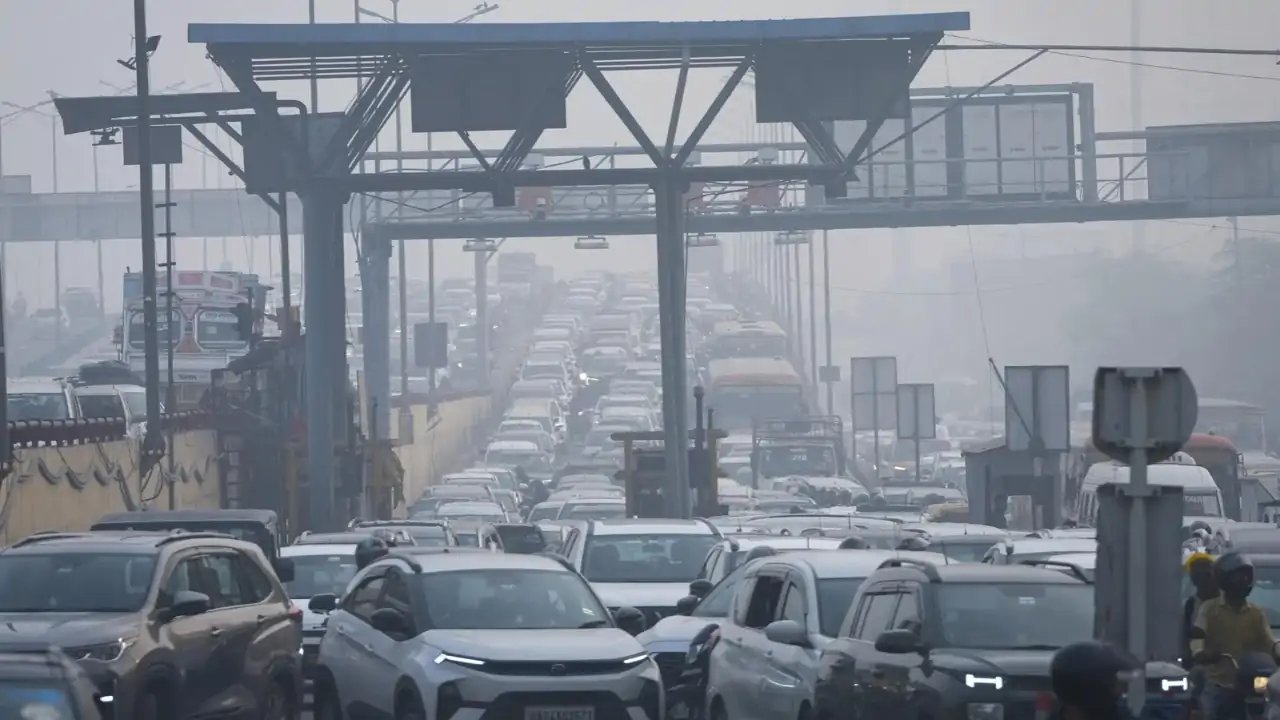
NEW DELHI — Toxic haze smothered the national capital on Saturday as the city's air quality index hovered deep inside the severe bracket, handing the opposition fresh political ammunition against the Union government.
The Congress seized on the public health crisis to mock Prime Minister Narendra Modi. Party general secretary Jairam Ramesh turned the ruling party's 2024 general election campaign pitch on its head, branding the capital's environmental collapse a direct failure of governance.
"Abki baar, AQI 400-paar," Ramesh wrote in a Hindi post on X on Saturday. "The 'pravachanmantri's' [preaching minister's] slogan is coming true when it comes to AQI!"
Modi had coined the "400-paar" war cry during the 2024 national elections to demand a 400-seat Lok Sabha mandate for the National Democratic Alliance.
Now, the numbers tell a grimmer story.
Delhi's citywide average air quality index punched through the critical 400 threshold on Friday. Multiple monitoring stations across the metropolis recorded readings pinned between 400 and 500 throughout Saturday, locking the territory in the hazardous 'severe' bracket.
"Delhi has become the most polluted city in the world," Ramesh said. "The air is so toxic that breathing has become difficult. Children and the elderly are paying the heaviest price. The crisis in breathing is worsening, and so is the number of patients in hospitals. Slogans were tossed into the air; now the air itself has turned to poison!"
Facing escalating public anger, Union Environment Minister Bhupender Yadav convened an emergency review meeting on Saturday with senior officials from Delhi, Haryana, Uttar Pradesh, and Rajasthan.
Yadav pushed back against localized blame-shifting.
"Air pollution does not recognise state boundaries," Yadav said during the review, demanding unified execution across the entire National Capital Region (NCR).
To break administrative inertia, Yadav ordered state administrations to assign secretary-level bureaucrats directly to ground oversight. These senior officers must conduct mandatory field inspections across high-emission municipal clusters and submit weekly compliance dossiers directly to the Commission for Air Quality Management (CAQM).
| State | Designated Cities Under Secretarial Monitoring | Key Mandated Interventions |
|---|---|---|
| Haryana | 7 Municipal Clusters | Field inspections, industrial emission checks |
| Uttar Pradesh | 4 Municipal Clusters | Construction shutdown enforcement, dust abatement |
| Rajasthan | 4 Municipal Clusters | Biomass burning curbs, vehicular traffic controls |
| Delhi (NCT) | Territory-wide Hotspots | Work-from-home protocols, mechanical sweepers, GRAP |
Yadav directed all municipal and state agencies to enforce the Graded Response Action Plan (GRAP) without exemptions. He instructed the adjoining states to duplicate Delhi's hotspot-targeted winter operational manual.
The battle plan hinges on immediate municipal curbs. States must clamp down on construction dust, ban open waste burning, optimize traffic flow, and implement work-from-home options to suppress peak-hour vehicular density.
The designated secretary-level officers across Haryana, Uttar Pradesh, and Rajasthan will table their first round of weekly field verification reports before the CAQM in the coming days.