Prime Minister Narendra Modi's office summoned Telecommunications Secretary Amit Agrawal on Saturday, demanding an immediate explanation after officials ordered internet service providers to block 129 websites based on forged High Court orders.
Agrawal had to cut short an official out-of-state trip to appear before the Prime Minister's Office in New Delhi. The summons followed revelations that impostors posing as advocates emailed counterfeit court mandates straight into the Department of Telecommunications—and bureaucrats acted on them without verifying court records.
The breach was absolute.
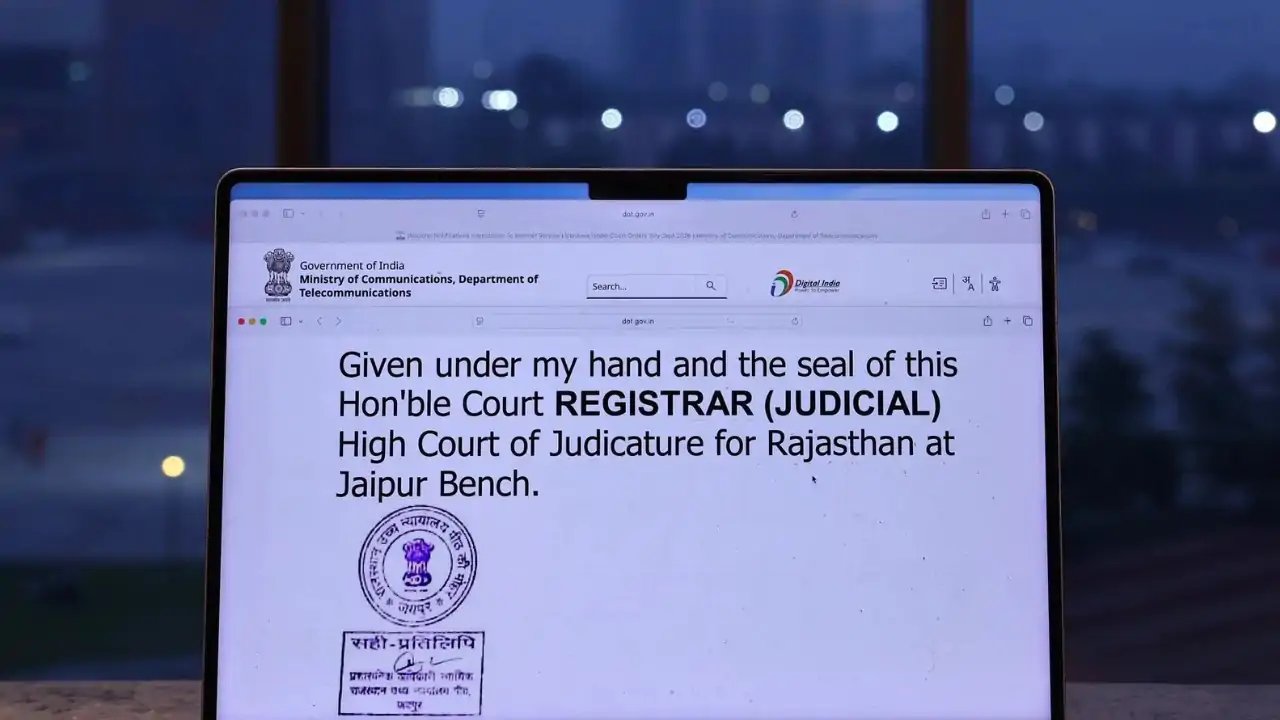
The Department of Telecommunications issued two nationwide blocking directives to internet service providers—the first on July 21 and the second on September 2—attaching fabricated orders purportedly stamped by the Rajasthan High Court and the Allahabad High Court. When registry audits were conducted, officials discovered that neither order existed in judicial archives. Both cases were entirely fabricated to deceive the central regulatory apparatus into purging targeted betting domains.
Police investigators have now formally demanded internal ministry communications and files to trace the fraudulent emails. Simultaneously, the telecom ministry opened an internal administrative probe to determine how field staff accepted unverified PDF attachments as authentic judicial rulings.
"The action taken by the Department of Telecommunications against betting accounts was carried out through the relevant field officers," a senior government official confirmed, addressing the departmental mechanism that bypassed basic registry checks.
| Breach Parameter | Official Investigation Detail |
|---|---|
| Summoned Official | Telecom Secretary Amit Agrawal |
| Targeted Domains | 129 illegal betting websites |
| Counterfeit Documents | Forged Rajasthan & Allahabad High Court orders |
| Ministry Directives Issued | July 21 and September 2 |
| Transmitted Via | Fraudulent emails from impostors posing as lawyers |
| Active Investigations | Joint internal vigilance inquiry and police criminal probe |
The episode exposes critical operational blindspots within central digital enforcement units, arriving amid mounting judicial anxiety over fabricated legal papers and synthetic case precedents.
Last year, Supreme Court justices issued a stern warning against the circulation of fabricated judicial documents, observing that the practice "bearing forged signatures of Judges strikes at the very foundation of public trust" and ruling that "such grave criminal acts cannot be treated as ordinary or routine offences." That scrutiny escalated in July, when the Supreme Court set aside tribunal orders that relied on fictitious legal citations.
Police cyber units are currently analyzing digital footprints and email headers used by the impostors, while Telecom Secretary Agrawal prepares a formal briefing on revised verification protocols for the Prime Minister's Office.