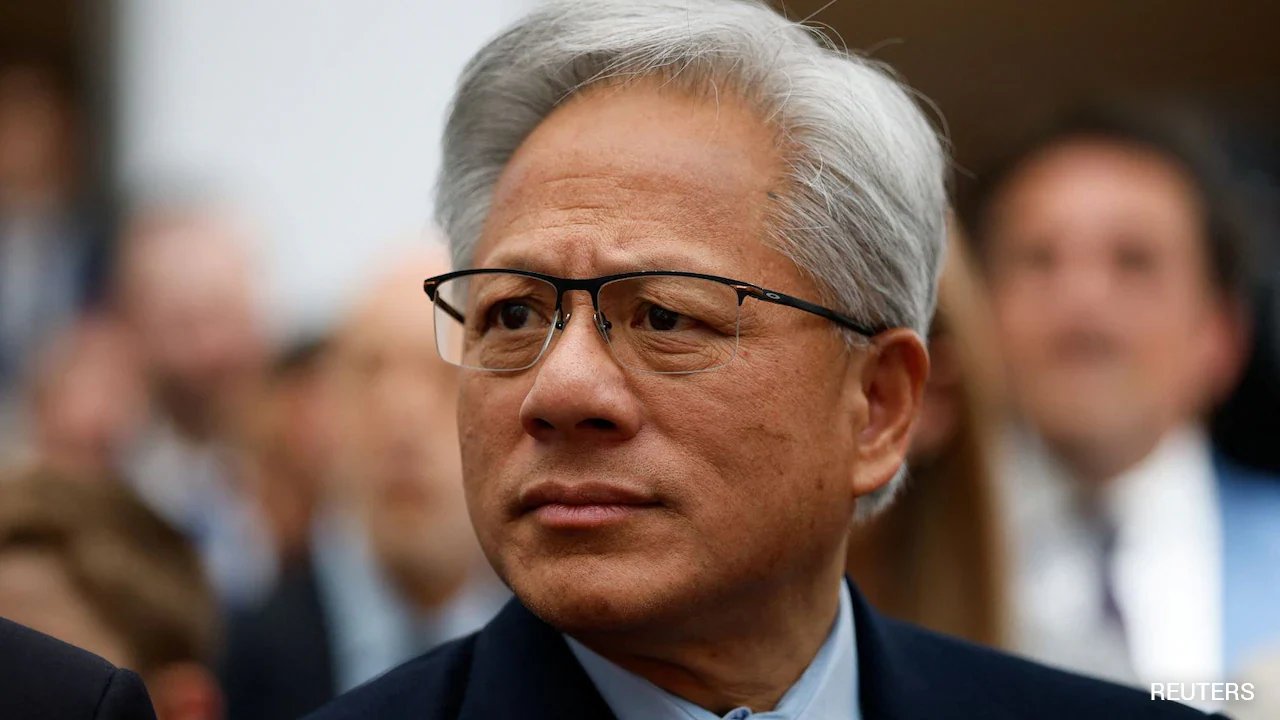
Federal counterintelligence investigators are examining whether Nvidia Chief Executive Jensen Huang was compromised by an alleged Chinese intelligence operative, plunging the $4 trillion computing giant into an unprecedented leadership crisis.
Nvidia shares dropped more than 4% on Monday and slid further during Tuesday morning trading. The sell-off wiped tens of billions of dollars in market value from Wall Street's primary artificial intelligence bellwether. And the pressure is mounting from Washington to Silicon Valley.
President Donald Trump confirmed that the Federal Bureau of Investigation is actively probing Huang's relationship with the suspected foreign agent. Trump stated he spoke directly with the chief executive and concluded Huang had no knowledge of any espionage ties.
He had absolutely no idea that the person in question was a spy.
Donald Trump, President of the United States
The White House intervention failed to calm investors. A shareholder lodged a civil fraud lawsuit against Nvidia and Huang in federal court in California, accusing corporate leadership of deceiving the public in initial responses to the scandal. The legal complaint details Huang's relationship with Alice Huang, an executive and Chinese citizen under counterintelligence scrutiny for suspected work on behalf of Beijing's intelligence apparatus.
The scandal hits an acute corporate vulnerability: Nvidia has no designated heir.
Huang co-founded the graphics pioneer 33 years ago. Today, more than 60 corporate vice presidents report directly to his desk, concentrating product roadmaps, chip architectures, and government relations entirely within his office.
"The Nvidia board is between a rock and a hard spot," said David Yoffie, professor at Harvard Business School. "They have almost no good options. Jensen is Nvidia. And if he has done something wrong and he needs to be removed and they have no successors, that's a terrible outcome."
Yale School of Management leadership professor Jeffrey Sonnenfeld compared Huang's public dominance to Steve Jobs at Apple. Down to the trademark black leather jacket, Huang's personal aura dictates the firm's brand equity. Sonnenfeld currently places the odds of Huang surviving the scandal as chief executive at roughly 50-50.
Yet institutional investors are already reviewing internal leadership rosters. Senior technology executive Chris Malachowsky, who co-founded Nvidia alongside Huang in 1993, and Chief Financial Officer Colette Kress have emerged as the primary internal candidates if the board is forced to act.
| Governance & Case Metric | Official Status | Details | :--- | :--- | :--- | Accused Executive | Jensen Huang | Co-Founder & Chief Executive Officer |
|---|---|---|---|---|---|---|---|---|
| Investigating Agency | Federal Bureau of Investigation | Counterintelligence inquiry | ||||||
| Market Impact | Nvidia Equity (NASDAQ) | Down >4% Monday; extended losses Tuesday |
| Legal Action | U.S. District Court (California) | Shareholder securities fraud complaint filed |
|---|---|---|
| Alleged Foreign Operative | Alice Huang | Chinese citizen & corporate executive |
| Potential Successors | Chris Malachowsky, Colette Kress | Senior Technology Executive & CFO |
Nvidia's board of directors pushed back against allegations of compromised intellectual property. In a formal statement announcing an internal review, directors expressed confidence in Huang's stewardship, asserting the panel found zero evidence that state secrets, classified designs, or proprietary artificial intelligence source code were exposed.
Outside analysts caution that public relations maneuvers cannot mask structural risks across a global workforce of 40,000 employees.
"I think it's important that the company starts to let some of these other folks come out as spokespeople so people feel trust, they feel good about Nvidia and their future, even without Jensen," said Bob O'Donnell, president and chief analyst at TECHnalysis Research. While O'Donnell doubts Huang will step down voluntarily, he acknowledged the risks: "Everybody wanted to have that Midas touch of his when it comes to technology."
Other technology behemoths survived the departure of foundational figures. Oracle under Larry Ellison and Microsoft under Bill Gates maintained market momentum long after their creators relinquished day-to-day command, observed Dan Morgan, senior portfolio manager at Synovus Trust. But Nvidia has never operated a single day without Huang at the controls.
Market Context: Nvidia's graphic processing units underpin almost the entire global foundation of generative artificial intelligence infrastructure. Any disruption to Huang's operational control or security clearances risks freezing federal procurement channels and disrupting multi-billion-dollar data center deployments worldwide.
Political exposure is accelerating in Washington. Huang spent years cultivating access across political lines, building rapport with Trump to advocate for minimal federal regulation over export controls and algorithmic development. That legislative shield is now cracking. U.S. Senator Mark Warner and Representative Hakeem Jeffries announced plans to open formal inquiries into whether foreign intelligence networks penetrated American sovereign technology pipelines.
Federal judges in California will set an initial docket schedule for the shareholder lawsuit in the coming weeks, while congressional oversight panels prepare witness lists for upcoming hearings.