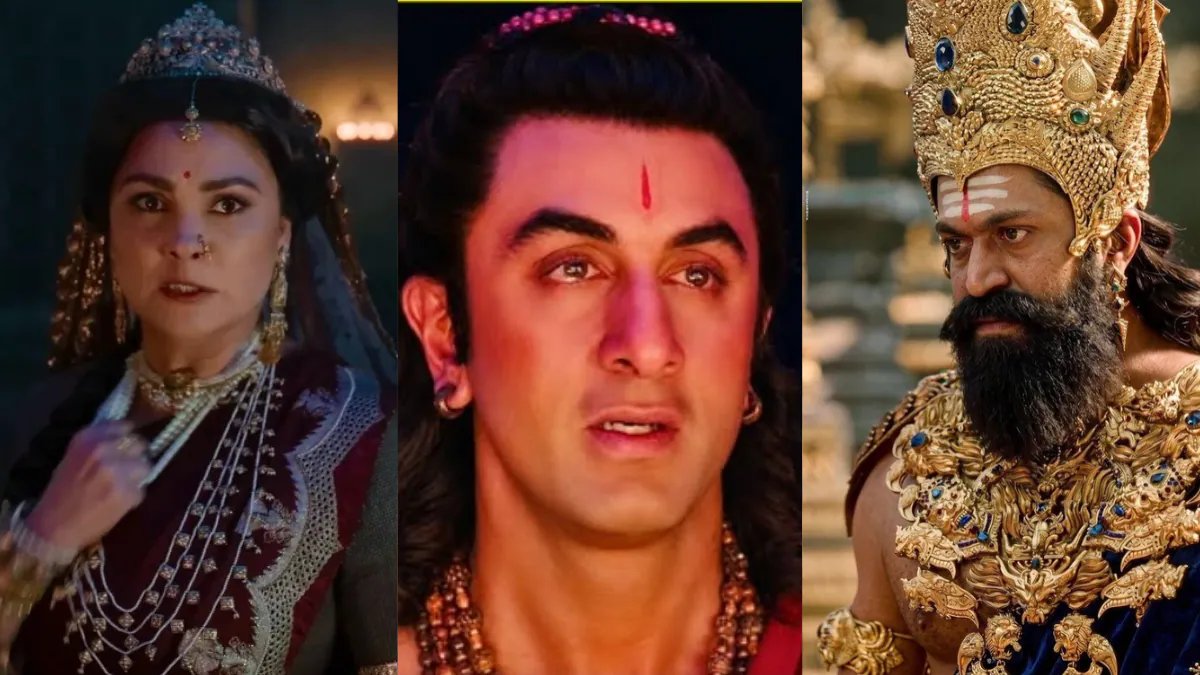
The entire emotional architecture of the epic turns on a single, crushing decree. When Queen Kaikeyi demands that Lord Rama leave Ayodhya for 14 years in the wilderness, the prophecy takes flight. In Nitesh Tiwari's ambitious screen adaptation of Ramayana, Lara Dutta steps into the sandals of the beleaguered warrior queen—a performance that freed her from years of predictable comedy typecasting. Yet as the cameras rolled, the quietest performer in the room shouldered the steepest challenge. Ranbir Kapoor had to strip away his human impulses to portray a deity.
"For Arun Govil, Ranbir and me, we knew that the entire Kop Bhavan sequence was the emotional heart of the Ramayana," Dutta explained. The mood across the set curdled into raw grief as the actors worked through Kaikeyi’s fateful confrontation with King Dasharath. Had the sequence missed its mark, Dutta noted, the dramatic integrity of the entire film would have buckled before Rama took his first steps toward the forest.
Portraying godhood demands unnatural restraint. When Kapoor entered the Rajya Sabha set to receive his decree of exile, Dutta watched an actor systematically dismantle his own toolkit. Standard acting technique leans on expressive eyebrows, quivering lips, and sudden vocal surges to broadcast interior pain. Kapoor had none of that armor available.
It’s the hardest thing for an actor when you’re stripped of all the tools you usually use, your facial expressions, visible emotions, and reactions. At the end of the day, he was embodying divinity. When you’re portraying God, you’re beyond anger, sadness and joy. To maintain that sense of detachment and yet communicate everything through your eyes is incredibly difficult.
The contrast sharpening this dynamic comes straight from Lanka. While Yash commands the antagonist's frame as Ravana, the demon king operates with total emotional freedom. Dutta drew a sharp distinction between both acting tasks.
"Yash is brilliant as Ravana in this film," Dutta stated. "Ravana had access to every emotional tool an actor could use, whereas Rama did not. I hope people realise how much harder it is to embody Rama than it is to embody Ravana."
| Character | Cast Member | Dramatic Challenge Defined by Dutta |
|---|---|---|
| Lord Rama | Ranbir Kapoor | Maintaining divine detachment and silent eye work while stripped of overt emotional tools |
| Ravana | Yash | Unleashing an unrestricted spectrum of fury, arrogance, and theatrical excess |
| Queen Kaikeyi | Lara Dutta | Balancing intense motherly love for Rama against battlefield pride and fateful duty |
| King Dasharath | Arun Govil | Absorbing catastrophic betrayal and grief inside the Kop Bhavan chamber |
Kaikeyi has carried the weight of mythological villainy for centuries. But Dutta and director Tiwari mapped out a warrior princess shaped by genuine battlefield grit. Kaikeyi lost her mother during childbirth, later steered Dasharath’s chariot out of slaughter to save his life, and earned two unshakeable boons from her grateful husband. She was his favourite queen. She loved Rama openly—often cherishing him above her biological son, Bharata.
The rot arrived through whispered manipulation. Manthara struck at Kaikeyi's duty, demanding whether she would stand by while Bharata lost his rightful succession. The resulting collision was not petty greed, but a tragic reckoning driven by pride and cosmic necessity.
"The realisation that I cannot take back my words, I cannot undo what I’ve set in motion," Dutta said of the final Rajya Sabha confrontation. "The remorse, the guilt, the understanding that it’s now out of my hands and there’s nothing I can do. You could genuinely feel all of that on set that day."