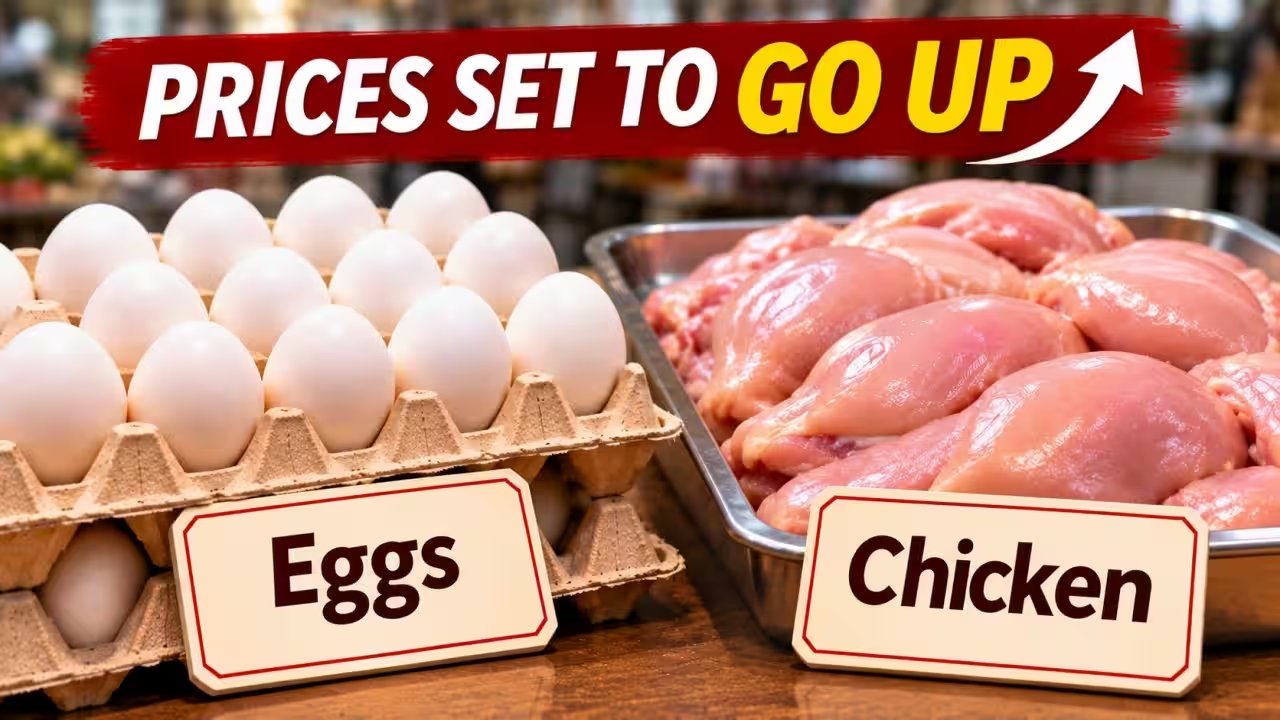
Household food budgets are bracing for a sharp hit this winter as wholesale egg and dressed chicken prices are set to leap 25% to 30% across India by December.
A brutal surge in feed grain costs is driving the price shock. Prices of key poultry feed staples—chiefly maize and broken rice—have jumped between 30% and 45% over the past month alone, effectively doubling compared to year-ago baselines. Wholesale eggs, currently trading between ₹6 and ₹7 per unit, will reach ₹7 to ₹8 by December. Over the same timeline, skinless dressed chicken will climb from its current band of ₹225 to ₹250 per kilogram to between ₹260 and ₹275 per kilogram.
Demand peaks during the winter holidays. Yet supply is running thin.
Traders and farmers are holding back maize stocks in anticipation of further gains, tightening an already stressed open market. Maize that traded at ₹18 per kilogram last year changed hands at ₹26 to ₹27 just a month ago—and has now touched ₹34 per kilogram. Industry traders project the price could climb to ₹40 per kilogram before the year ends, propelled by intermediary stockpiling and heavy diversion of corn stocks toward ethanol blending.
Broken rice reflects an identical trajectory. From ₹14 to ₹15 per kilogram in late 2024, wholesale rates have surged to ₹31 to ₹32 per kilogram. Monsoon deficits across Maharashtra and Karnataka—two core kharif maize hubs—threaten a 15% to 16% contraction in national kharif maize output.
| Commodity / Poultry Product | Baseline Rate | Current Rate | Projected Rate (December) |
|---|---|---|---|
| Wholesale Eggs (per unit) | ₹6.00 – ₹7.00 | ₹6.00 – ₹7.00 | ₹7.00 – ₹8.00 |
| Dressed Chicken (per kg) | ₹225 – ₹250 | ₹225 – ₹250 | ₹260 – ₹275 |
| Poultry Maize (per kg) | ₹18.00 | ₹34.00 | Up to ₹40.00 |
| Broken Rice (per kg) | ₹14.00 – ₹15.00 | ₹31.00 – ₹32.00 | Elevated |
| Kharif Maize Output | Historical Baseline | — |
Alternative grains offer hatcheries no shelter. Coarse cereals that traditionally served as backup feed have also priced out producers.
"Earlier, whenever prices of maize and rice increased, we used to shift to other cereals like jowar, bajra, ragi etc. However, even these cereals are expensive to use in poultry feed now," said KG Anand, general manager of Venkateshwara Hatcheries. "Although the increase in production costs has been high, we cannot pass the entire increase in costs to the consumers."
Farmers are responding by offloading smaller, younger birds to curtail ballooning feed expenditure. As a consequence, domestic poultry production is forecast to drop by more than 20% across December and January, locking in elevated market prices until late-winter supplies stabilize.
| Down 15% – 16% |