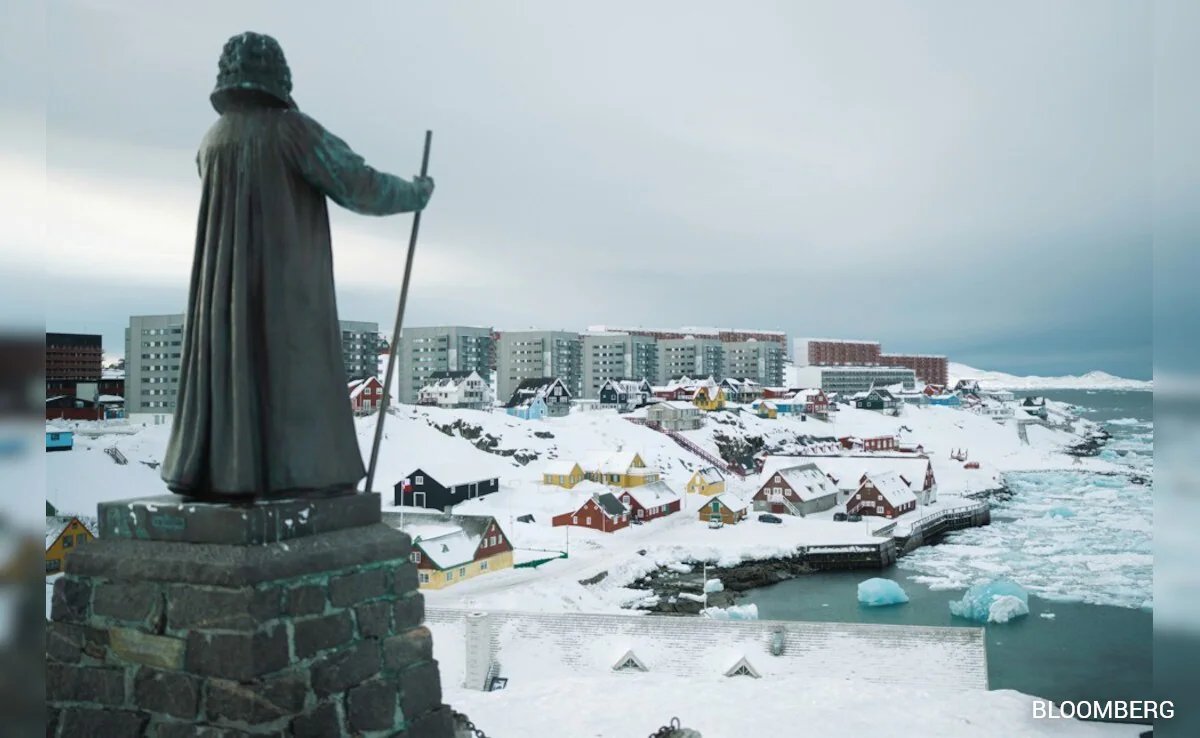
Washington is moving to reactivate two dormant Cold War-era military posts in Greenland, a strategic shift that formalizes US presence in the Arctic without violating Danish sovereignty. The agreement, set for signing at the United Nations General Assembly in New York City at 10:30 a.m. ET on Tuesday, involves the reopening of the Narsarsuaq base and establishing a presence at Mestersvig. Mestersvig, currently occupied by the Danish Sirius Dog Sled Patrol, will see a joint military footprint, while Narsarsuaq sees the return of US infrastructure to a town that has shrunk to a few dozen residents since the 1950s.
This deal caps a volatile winter of diplomacy. President Donald Trump spent months insisting the US must control Greenland, explicitly refusing to rule out economic or military force to achieve it. His rhetoric peaked in January, triggering a crisis within NATO that forced Copenhagen and Nuuk to the negotiating table. The resulting framework keeps the territory under Danish administration but places its security architecture squarely under the North Atlantic Treaty Organization watch, a compromise that satisfies both Washington’s strategic interests and Copenhagen’s sovereignty concerns.
The scale of the change is stark when compared to the current footprint. During the Cold War, the US maintained 17 installations and over 10,000 personnel on the island. Today, only Pituffik Space Base remains, housing roughly 150 US troops. Reopening Narsarsuaq and Mestersvig brings that number up, though still a fraction of 1950s levels. The text of the agreement remains classified until the ink dries, with sources noting that final details are not public until the signing ceremony concludes.
Denmark and Greenland did not immediately respond to requests for comment, and the White House remained silent on the specific terms. However, the move signals a definitive end to the annexation threat. With the bases reopening, the US secures logistical and surveillance capabilities in the high Arctic, while Denmark avoids a humiliating loss of territory. The next step is operational: US military planners will now begin the physical reactivation of the Narsarsuaq airfield and the integration of personnel at Mestersvig, a process expected to ramp up in the coming months.