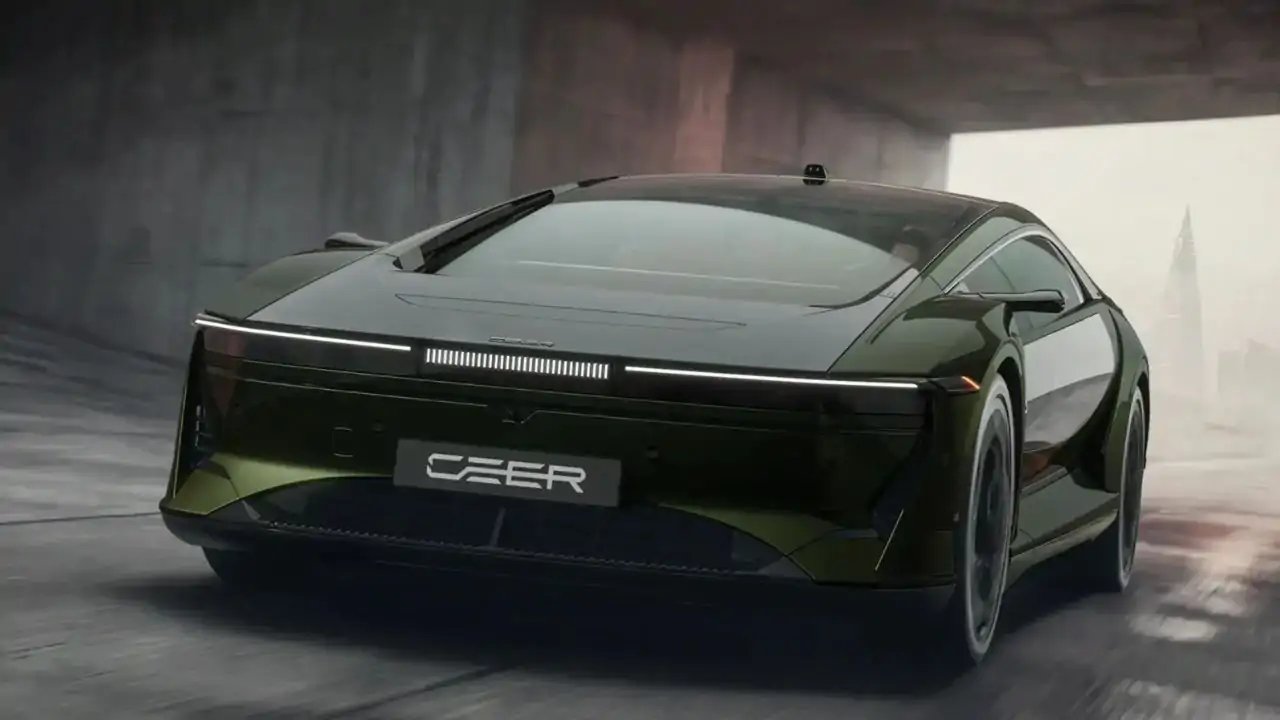
The Exobot’s first look is a 112kWh, 800‑volt tri‑motor beast that shuttles from 0 to 100 km/h in 2.6 seconds and claims up to 670 km on a single charge. Those numbers put it right next to the Porsche Taycan and Tesla Model S when it comes to pure acceleration, while the battery’s fast‑charge capability—10% to 80% in under 30 minutes—keeps it practical for long‑distance trips.
The exterior is a low‑slung wedge that feels like a sci‑fi concept hit a production line. A 3‑meter‑long wing door opens upward, a feature that turns heads in a parking lot and makes entry a conversation starter. Coupled with a 2.4‑metre windshield, the cabin feels open, even though the car itself is a little over 5 meters long.
Inside, the 48‑inch curved 8K display stretches across the dashboard, flanked by a 10.4‑inch central touchscreen for the driver and an 8‑inch rear screen for passengers. Despite the digital dominance, physical knobs for gear selection and climate control stay, giving the cabin a touch of classic ergonomics. Steering‑by‑wire and rear‑wheel steering add to the sports‑car feel, while an adaptive air suspension masks the roughness of desert roads.
The market entry of the Exobot is a direct challenge to the likes of Tesla’s Model S and Porsche’s Taycan in the Gulf. While those models sit in the $80,000–$100,000 range, CEER has not yet disclosed a price, but early chatter suggests a more aggressive positioning aimed at buyers looking for high performance without the hefty European import tax. The First Edition’s black‑and‑red leather, bespoke floor mats, and numbered plaque hint at a niche luxury angle.
A higher‑performance variant is on the way, pushing the power up to 1,111hp and torque to 1,500Nm; that trims the 0–100 time to 2.1 seconds for the sedan and 2.4 for the SUV. The difference lies not just in speed but in a slightly reduced range of 560 km for the SUV version, reflecting the trade‑off between power and efficiency.
Sales kick off in early 2027, but the cars are limited to Saudi Arabia initially. Buyers can expect to see them at Riyadh’s flagship showrooms, with the first deliveries projected for mid‑2027. What follows will be how CEER builds out the charging network and whether the local market will embrace a homegrown performance EV or stick with the established names.
Keep your eyes on the upcoming CEER EV charging infrastructure rollout and the company’s plans to export the Exobot to neighboring Gulf states—those moves will tell whether Saudi Arabia’s ambitious entry into the performance EV segment can sustain momentum beyond its borders.