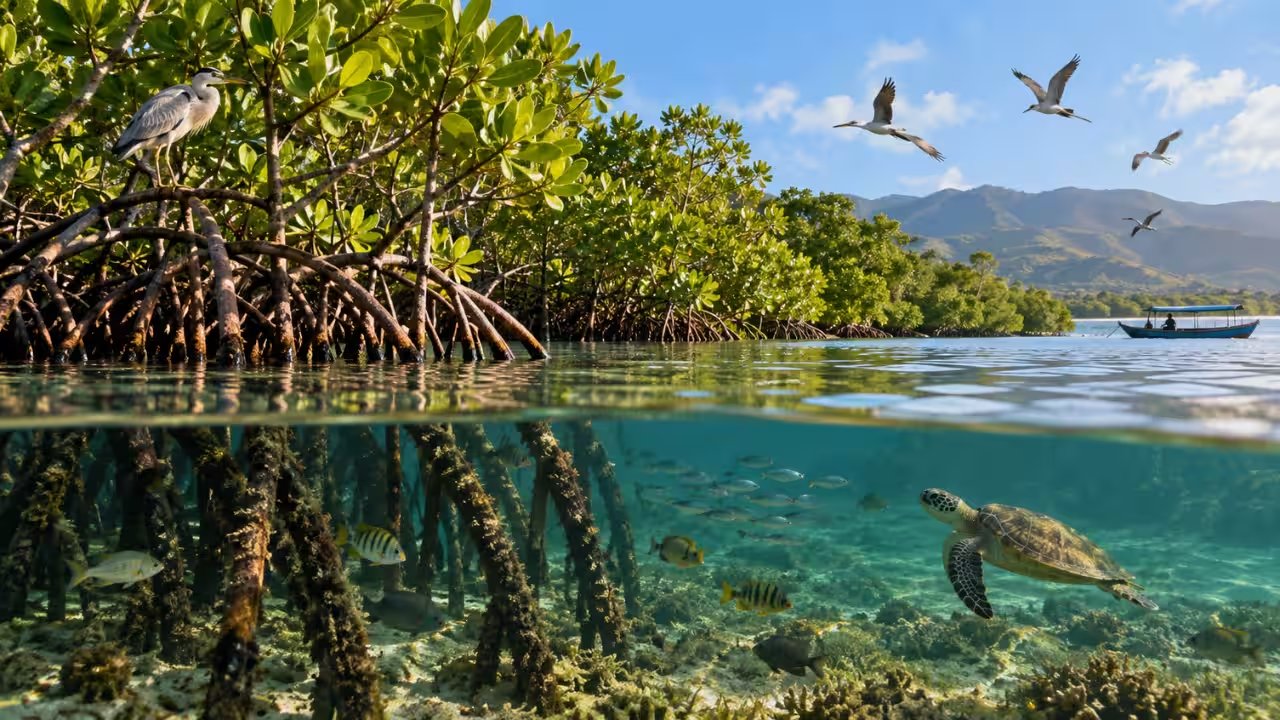
Scientists from a University of Indonesia research team surveyed three reforested locations—Bangkoor, Kolisia, and Talibura—on Flores Island in 2023, cataloguing 10 mangrove species and 10 faunal species. Kolisia boasted the greatest plant diversity with eight mangrove species, while Talibura recorded the highest animal diversity with eight faunal species, including the endangered crab‑eating macaque.
Carbon storage measurements revealed a range of 28.69 to 70.02 Mg CO₂ per hectare, with Rhizophora apiculata achieving the highest sequestration at 47.37 kg CO₂. Energy storage spanned 30.54×10⁴ to 54.07×10⁴ MJ per hectare, led by Bruguiera gymnorhiza at 645.22 MJ, all calculated from above‑ground biomass.
Site‑specific variations emerged: Talibura’s deeper waters and lack of mature trees limited mangrove richness, whereas Kolisia’s higher water depth supported unique species such as Avicennia marina. Bangkoor’s unique presence of Excoecaria agallocha and Lumnitzera rasemosa illustrates micro‑habitat diversity across the island.
Local fishermen in Talibura reported a 15% rise in shrimp catches since the replanting, underscoring the socio‑economic benefits of mangrove restoration. The research team stresses that continuous monitoring will be essential to track resilience and inform policy.
With these results, the Indonesian Ministry of Environment is slated to review its national mangrove restoration strategy in August, aiming to scale up efforts and integrate carbon credit mechanisms.