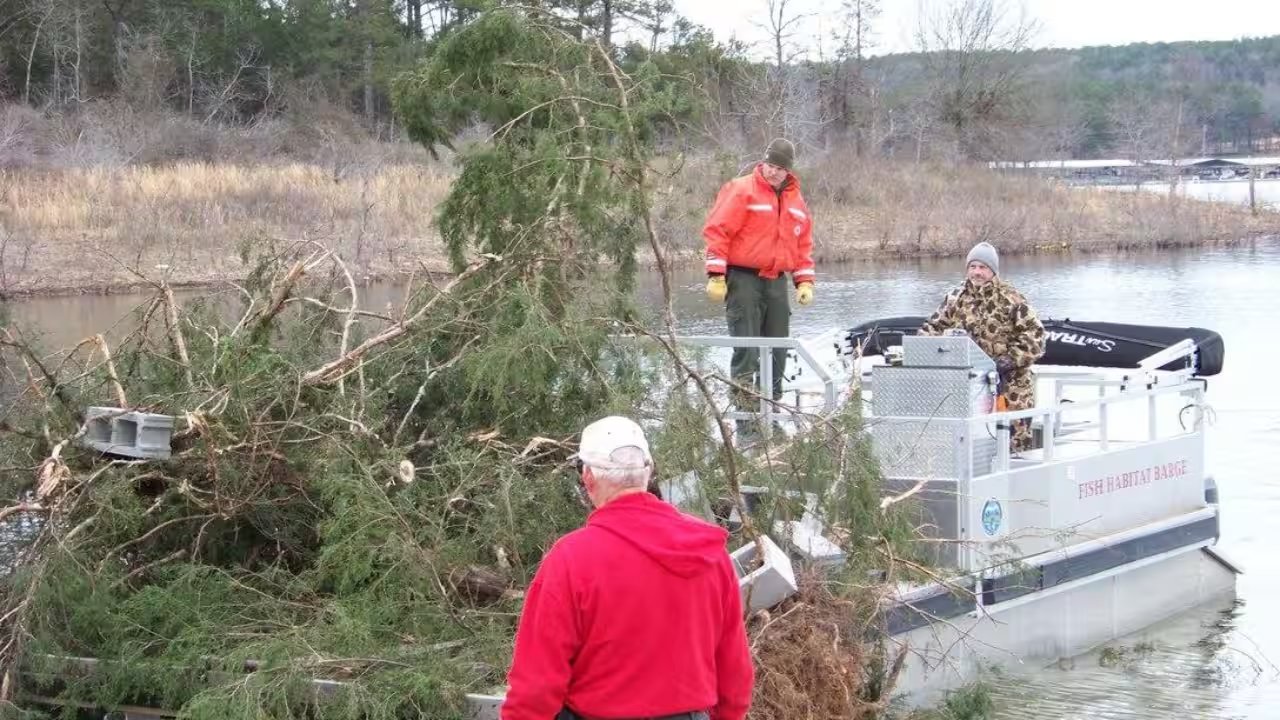
Nebraska Game and Parks Commission crews submerged 150 cedar and Russian olive trees at 16 predetermined sites in Bridgeport State Recreation Area’s two lakes in September 2026, using a specialized Aquatic Habitat Barge to position each trunk precisely beneath the surface. The operation aimed to create a network of underwater woody structures that offer hiding spots for young fish while simultaneously clearing overgrown shoreline to open up angling access.
The removal of dense brush from the southeast and middle lakes’ banks not only solved a long‑standing access problem for anglers but also redirected the wood to serve a new ecological purpose. Anglers now report that the submerged trees act as natural bait, attracting bass, bluegill and yellow perch that otherwise would avoid predator‑dense waters.
Nebraska’s Aquatic Habitat Program, established in 1997, has spent more than $90 million on projects across 137 water bodies, including the 2025 rock shoals at Medicine Creek Reservoir and the 2023 Swanson Reservoir upgrades. The Bridgeport initiative follows a pattern of using woody habitat to diversify underwater environments.
While the commission has not yet released post‑project monitoring data, it has made the placement maps available to the public and plans a series of quarterly surveys to track fish population changes. The first set of surveys is slated for March 2027, the results of which will determine whether the submerged trees achieve the intended ecological benefits.
Local angler Rajesh Patel told reporters that the new dive spots have already attracted a noticeable increase in bass catches, hinting that the project may soon show tangible gains for both fish and fishermen alike.