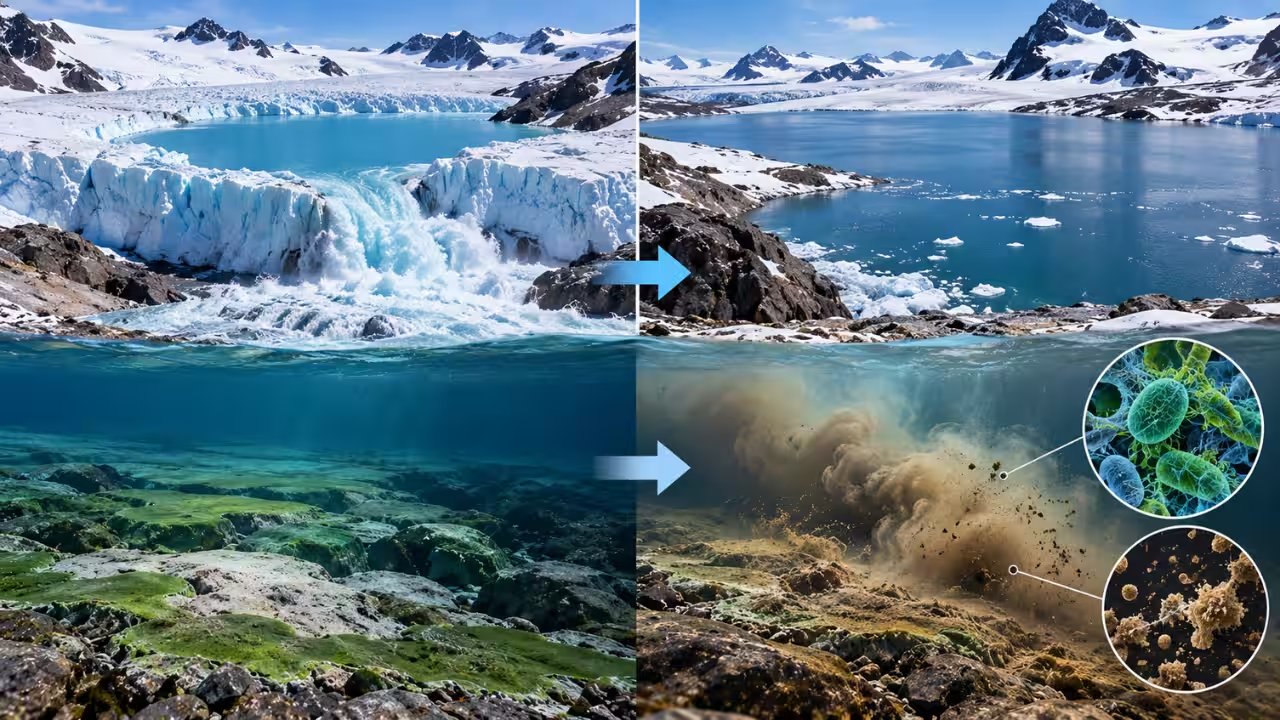
The outburst began on 14–15 January 2019 when a breach in Lake Obersee’s ice channel unleashed 17.5 million cubic metres of water, carving an 8.3‑km channel through the moraine. The flood poured into Lake Untersee, raising its water level by 2 metres and inflating its volume by 3 percent.
The sudden swell altered the lake’s chemistry: pH dropped from 10.5 to 9.5, conductivity fell from 505–520 µS/cm to 485 µS/cm, and dissolved oxygen dropped from 150 % to 128 % saturation.
Total inorganic carbon surged from 0.35 mg C/L to 0.5 mg C/L, and the flood water, with a pH of 7.7 and 1.8 mg C/L, introduced fresh carbon that benthic mats began to absorb, amplifying photosynthetic activity.
Microscopic analysis of the mats revealed dominance by cyanobacteria such as Tychonema and Phormidium, and erosion patterns that matched previous flood signatures, indicating that similar events have reshaped the lake’s carbon budget for thousands of years.
Now working with the Norwegian Polar Institute, the research team will publish their full analysis in 2026 and present at the International Polar Science Conference, while a field squad prepares for a second expedition in 2027 to monitor long‑term recovery. One scientist, who trekked across 8 km of ice with a pack of scientific gear, said the experience felt like stepping into a living laboratory.