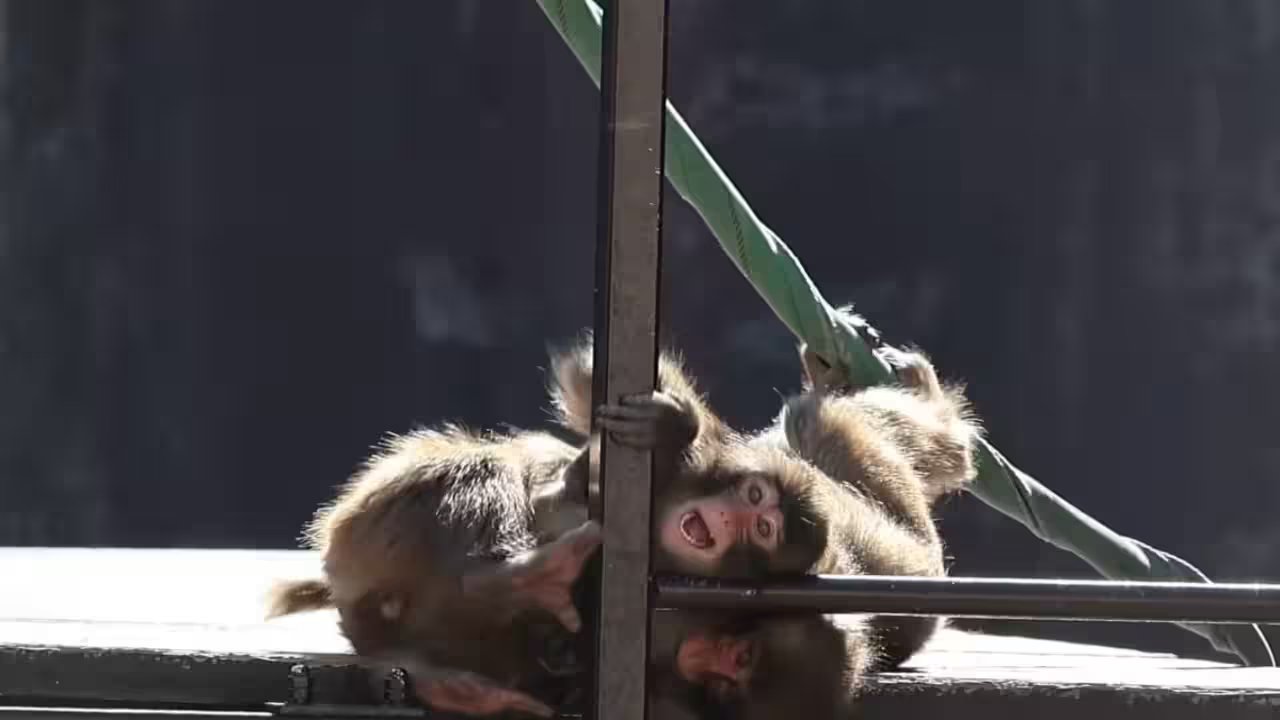
ICHIKAWA, Japan — Punch is finally stepping out from behind his stuffed surrogate.
New video released by the Ichikawa City Zoo and Botanical Gardens shows the celebrated young Japanese macaque walking up to a younger infant inside the monkey enclosure, marking his tentative shift from an isolated, hand-reared orphan into an active troop participant. The gesture drew immediate international attention. For months, millions watched the diminutive primate drag a plush toy across concrete enclosures, seeking refuge whenever older monkeys chased him away.
Now, the dynamic is shifting.
Born in July 2025, Punch suffered immediate abandonment when his biological mother failed to provide maternal care. Japanese macaque infants rely on constant physical contact to build grip strength, regulate stress, and master complex troop communication. Deprived of that lifeline, Punch faced lethal failure-to-thrive risks until zookeepers stepped in with round-the-clock bottle feedings.
Surrogates proved hard to establish. Keepers initially offered towels and fleece fabric, yet the young primate rejected them. Staff then introduced an oversized orange stuffed orangutan purchased from IKEA. Punch gripped the plushie instantly. He dragged the synthetic ape through sleeping quarters, buried his face in its fur during feeding sessions, and retreated into its arms whenever troop noises startled him. Footage of the routine ignited the global social campaign #HangInTherePunch.
Punch's milestones reflect months of structured clinical intervention:
| Milestone Parameter | Case Record |
|---|---|
| Primate Subject | Punch (Japanese macaque / Macaca fuscata) |
| Facility | Ichikawa City Zoo and Botanical Gardens, Japan |
| Birth Date | July 2025 |
| Maternal Care Status | Abandoned shortly after birth; hand-reared by keepers |
| Surrogate Device | Orange IKEA stuffed orangutan plush toy |
| Public Engagement | Exceeded 2,500 international birthday cards |
| Current Social Status | Independent foraging; initiated contact with younger infant |
Reintegrating a hand-reared primate into a wild-style enclosure carries severe risks. As keepers began reintroducing Punch to the broader troop, older macaques repeatedly snapped at him, mounted displays of dominance, and chased him off feeding perches. Distressed viewers interpreted the encounters as unmitigated bullying, but zoo officials countered that such friction is indispensable. Japanese macaques run on strict, matrilineal pecking orders; young monkeys must learn submission, posture cues, and boundaries to avoid lethal adult violence.
Punch endured the pressure. Over successive months, keepers recorded a marked decline in his reliance on the plush toy, replaced by reciprocal grooming attempts and shared foraging with lower-ranking juveniles. By his first birthday in July, supporters across dozens of countries had mailed more than 2,500 greeting cards directly to the zoo's administration office.
Punch and the other animals’ conditions change from day to day. We observe them, interact with them, and provide care.
Ichikawa City Zoo and Botanical Gardens Administration
The facility noted that keepers still recalibrate feeding formulas and meal times to match seasonal swings and changing weather patterns, ensuring Punch maintains physical parity with his peers.
Zoo specialists will continue daily behavioral tracking through the coming season, watching to see whether Punch establishes a lasting kinship bond with the infant or secures a stable tier within the troop's permanent hierarchy.