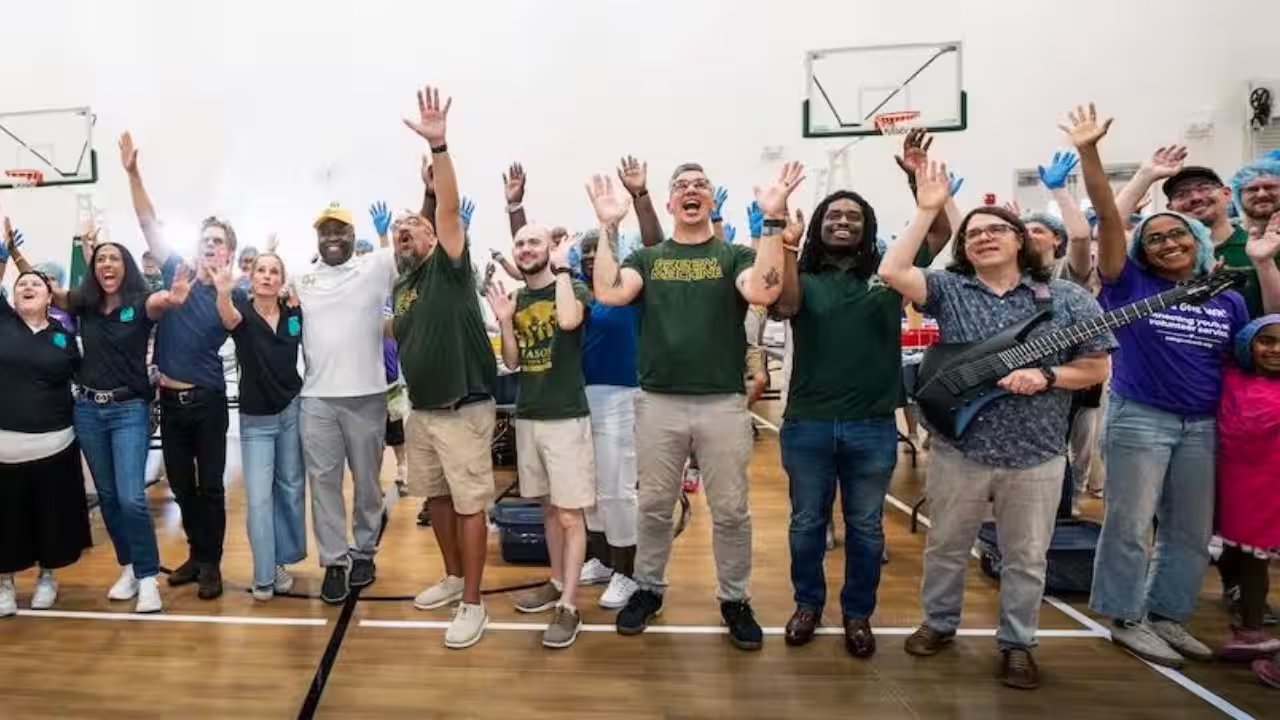
It’s rare to see a Hollywood name step away from the red carpet and into the dusty, fluorescent-lit reality of a campus warehouse. That’s exactly where Kevin Bacon was on July 19, standing alongside more than 100 volunteers at George Mason University’s Fairfax Campus. They weren’t there for a premiere or a press junket. They were there to pack. Specifically, to build 35,000 meal kits and 400 mental health resource packs in a single, intense day of labor. It’s a stark contrast to the usual celebrity philanthropy that often feels performative. Instead, this was sweat, cardboard, and immediate necessity.
The food kits are heading to families and students across Northern Virginia, many of whom struggle with basic food insecurity. Most will flow through Food for Others, a local nonprofit, while a portion is reserved for George Mason’s Patriot Pantry. Stacy Huston, CEO of SixDegrees.org, noted that the university’s existing support structures made it a logical partner. It’s not just about dropping off groceries; it’s about ensuring that a student doesn’t have to choose between dinner and rent, or between a textbook and a hot meal. The logistical precision required to pack 35,000 individual units in one day is a feat of organizational muscle that goes beyond the usual donation drive.
But the meal kits are only half the story. The other half is quieter, heavier. Volunteers also assembled 400 mental health kits in partnership with Find Your Anchor, an organization focused on suicide prevention. These aren’t just pamphlets. They contain practical resources, encouraging messages, and tools designed to reach students in moments of acute distress. Rachel Wernicke, George Mason’s chief mental health officer, emphasized that these kits are meant to be distributed throughout the year during well-being events. The goal is simple but difficult to execute: to remind a struggling student that help is available and that they are not alone. It’s a tangible reminder of hope in a system that often feels cold.
The collaboration extends beyond the physical packing. Global health professor Ali Weinstein is working with SixDegrees.org on a research project to understand how tangible support impacts both recipients and volunteers. Professor Gregory Washington, the university president, framed the partnership as a commitment to student well-being that goes beyond grades and academic performance. It’s a broader view of education, one that acknowledges the human behind the transcript. Bacon, who founded the nonprofit in 2007, summed it up with a phrase that feels earned after a day of hard work: "Action is hope." It’s a sentiment that resonates far beyond the walls of the Fairfax Campus.
As the boxes are closed and the volunteers disperse, the real work begins. These kits will sit in pantries, be handed out in counseling centers, and open on kitchen tables across Virginia. The impact won’t be measured in likes or shares, but in the quiet relief of a family that has food on the table and a student who knows where to turn when the weight gets too heavy. It’s a model that could be replicated elsewhere, a blueprint for how communities can come together to address complex, interconnected needs. For now, the boxes are packed, and the hope is tangible.