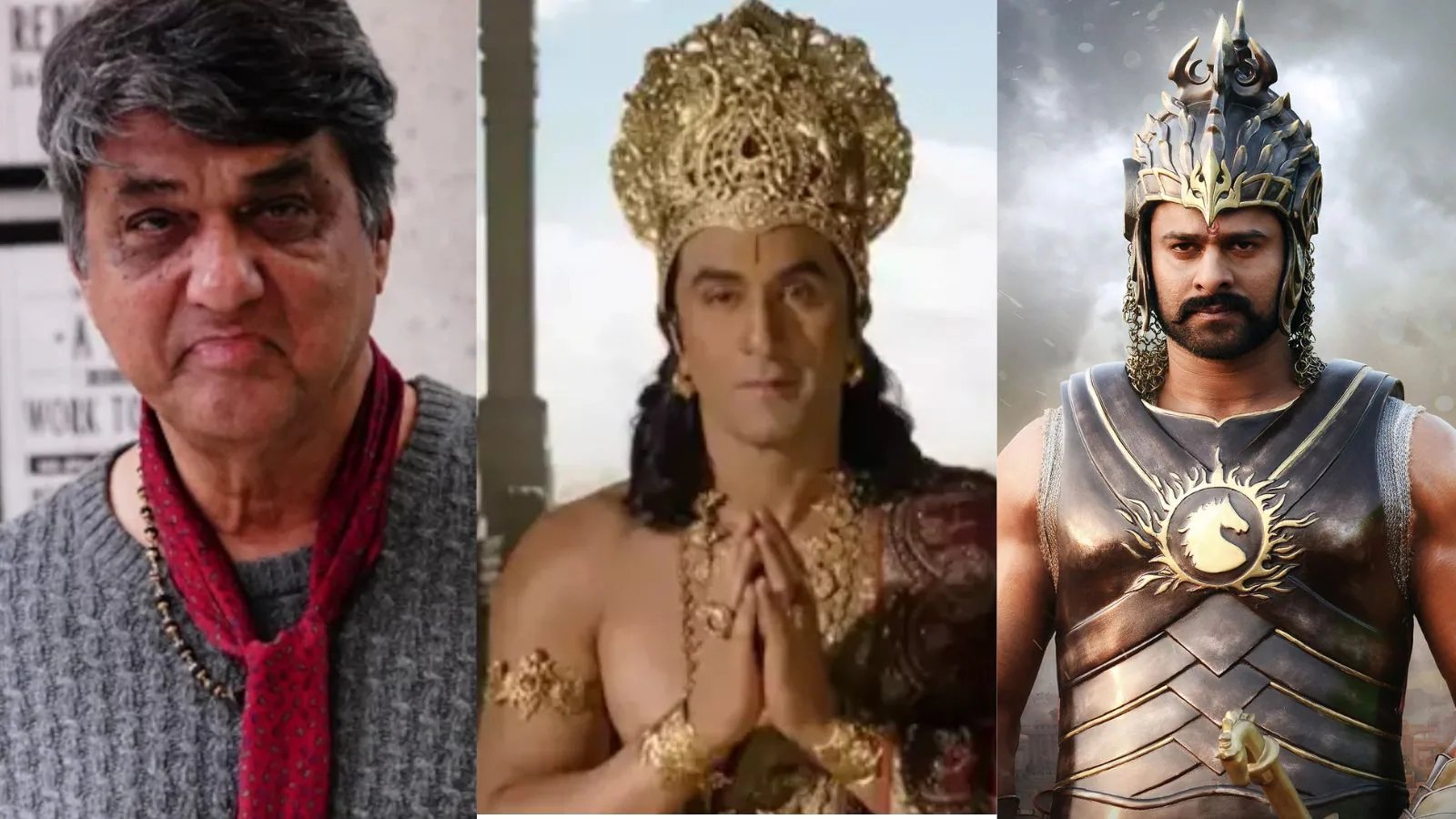
Spectacle cannot substitute for soul. Veteran television icon Mukesh Khanna made that plain in a scathing critique of the modern cinematic adaptation of the Ramayana, warning its makers that no amount of multi-crore computer graphics can rescue a production that strips away emotional and spiritual reverence.
Khanna, revered nationwide for his portrayal of Bhishma Pitamah in B.R. Chopra's landmark 1988 television epic Mahabharat, addressed the growing buzz surrounding the venture starring Ranbir Kapoor as Lord Rama, Yash as Ravana, and Sai Pallavi as Sita. The production—bankrolled on an unprecedented scale with producer Namit Malhotra championing Hollywood-grade visual effects—has made its technical pedigree a central marketing pillar. Khanna was unimpressed.
"Kehna chahunga ki bhavya ki aad mein bhav ko mat sacrifice karo," Khanna said in a video address. "In the pursuit of grandeur, do not sacrifice emotions."
The veteran actor drew an uncompromising distinction between mythological scripture and modern cinematic fantasies. Director S.S. Rajamouli's record-smashing Baahubali franchise earned full license to stage over-the-top battlefield mayhem because its characters sprang from pure fiction. The Ramayana, Khanna insisted, carries an entirely different burden of sanctity.
Just because you think you can bring giant demons on screen using massive special effects and people will marvel at the size—sir, do not turn this into Baahubali. In Baahubali you can do anything. It had extraordinary battles, and I even said at the time that its warfare looked like the Mahabharata. That was acceptable because it is not the story of the Ramayana. It is the tale of an imaginary king. But the moment you adapt Rama and the Ramayana, you cannot sacrifice character dignity just to make visual effects appear towering.
For Khanna, the commercial obsession with technical wizardry misses the heartbeat of the narrative entirely. The story has outlasted centuries of empire and upheaval without the aid of green screens.
It belongs to the living room, not the rendering farm.
| Production Element | Production Claim / Strategy | Mukesh Khanna's Stance |
|---|---|---|
| Visual Effects (VFX) | International post-production studios; Hollywood-grade digital scale | Excessive; cannot substitute for emotional depth |
| Core Narrative Priority | Cinematic grandeur, massive demon designs, spectacle | Dignity, family bonds, and spiritual devotion (bhav) |
| Comparative Benchmark | Global franchise filmmaking, modern action blockbusters | Disallowed; Baahubali allowed fiction, Ramayana demands reverence |
| Promotional Pivot | Multi-crore budgets and foreign technical collaborators |
Khanna grounded his argument in personal memory. He recalled watching his own mother sit under lamplight at night, steadily chanting verses from the Ramcharitmanas despite the tongue-twisting cadences of the classical Awadhi verse. Millions of Indian households still repeat that ritual daily.
"The Ramayana will stand entirely on its own strength," Khanna said. "It is read in homes across this land. If you feel compelled to hire overseas visual effects specialists to mount it, go ahead. But do not turn the money you spent into your main bragging point. I do not want empty grandeur. I want true emotion."
Khanna issued an explicit plea to the creative team behind the production: safeguard the delicate relationships at the heart of the text.
"Do not tamper with the emotions, the devotion, or the sacred bonds within this story," Khanna said. "Do not dilute the family relationships depicted here, and under no circumstances compromise its dignity and grace."
| Irrelevant; scripture endures through daily home recitation |