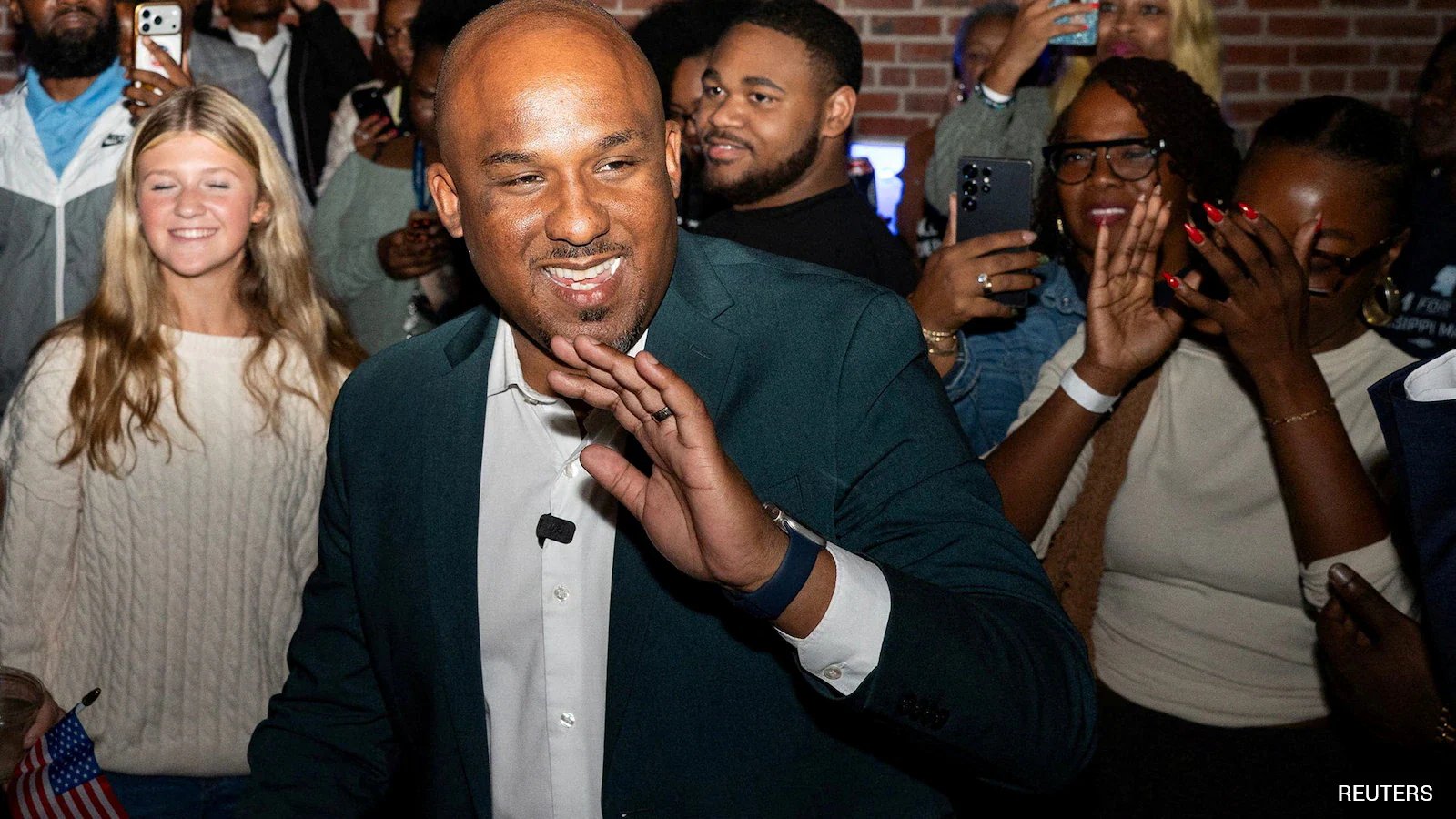
JACKSON, Miss. — Democrat Scott Colom broke a 152-year racial barrier on Wednesday, defeating incumbent Republican Senator Cindy Hyde-Smith in a razor-close election that gives Mississippi its first Black US senator since Reconstruction.
Election officials clinched the outcome after tallying thousands of stubborn absentee and affidavit ballots that held the contest in limbo for days. The 43-year-old local prosecutor chipped through a bastion of conservative power that had shut Democrats out of the Senate for decades. His victory marks the first time Mississippi has sent a Democrat to the upper chamber since 1982, and the first time it elected a new one since 1947, when voters backed an unrepentant segregationist.
Hyde-Smith conceded by phone before releasing a brief two-minute video address to voters.
While this is not the outcome we worked for or hoped for, I respect the decision of Mississippi voters. I want to congratulate Scott Colom and wish him well as he takes on the tremendous responsibility of representing our great state.
Cindy Hyde — Smith, US Senator from Mississippi
Political maps cracked. Mississippi holds the highest proportion of Black residents in the United States, yet white conservatives have dominated its statewide apparatus for generations. Colom built an aggressive, nimble coalition across rural counties, drawing heavily on Black turnout and disaffected working-class communities stung by inflation.
The campaign seized decisively on voter frustration. When Hyde-Smith brushed off soaring beef prices by telling consumers to choose alternate proteins, Colom answered with a blistering 30-second television spot featuring exasperated grocery shoppers who pledged to choose another senator instead. That ad resonated statewide. It pierced through months of partisan noise, forcing the race into national contention despite late investment from party institutions.
Federal campaign leaders initially hesitated, directing capital elsewhere before Black senators, including Raphael Warnock of Georgia and Angela Alsobrooks of Maryland, pushed national donors to recognize the shifting ground. Late rallies followed, including an appearance by former President Bill Clinton, who crossed the state line from Arkansas to rally voters alongside the young prosecutor.
Colom is no stranger to unorthodox political terrain. The son of a former Republican who served in President Ronald Reagan's administration, the prosecutor framed his candidacy not around narrow party dogmas, but basic material realities.
They actually deserve a senator that will listen to them, that actually cares about what they think, actually cares about what they're going through. It's got to be about having a party that represents rural America again, suburban America, urban America — a party that makes sure we actually deliver for voters in ways that make their lives better.
Scott Colom, Mississippi US Senator — Elect
Supporters began converging on downtown Jackson on Wednesday evening for Colom's victory celebration. Among them was Vera Finley, whose family history mirrored the staggering historical arc of the day's vote.
"I am here to celebrate my parents and my grandparents. I am not one generation out of the cotton fields," Finley said. "Both of my parents picked cotton. And my great grandmother was sold here as a slave from Virginia to here. So I am so excited to be on this side of history."
| Race Parameter | Official Election Detail |
|---|---|
| Winning Candidate | Scott Colom (Democrat) |
| Incumbent Defeated | Cindy Hyde-Smith (Republican) |
| Historic Milestone | First Black Mississippi Senator Since 1874 |
| Party Milestone | First Democratic Senate Victory in State Since 1982 |
| Decisive Factor | Late-Count Absentee and Affidavit Ballots |
NAAACP President Derrick Johnson, himself a Mississippian, framed the outcome as a triumph over systemic disenfranchisement, declaring that voters "made history because they refused to be intimidated, discouraged, or counted out."
Certification of the final tally by county election boards will conclude in the coming days, clearing the path for Colom to take the oath of office on Capitol Hill when the 120th United States Congress convenes in January.