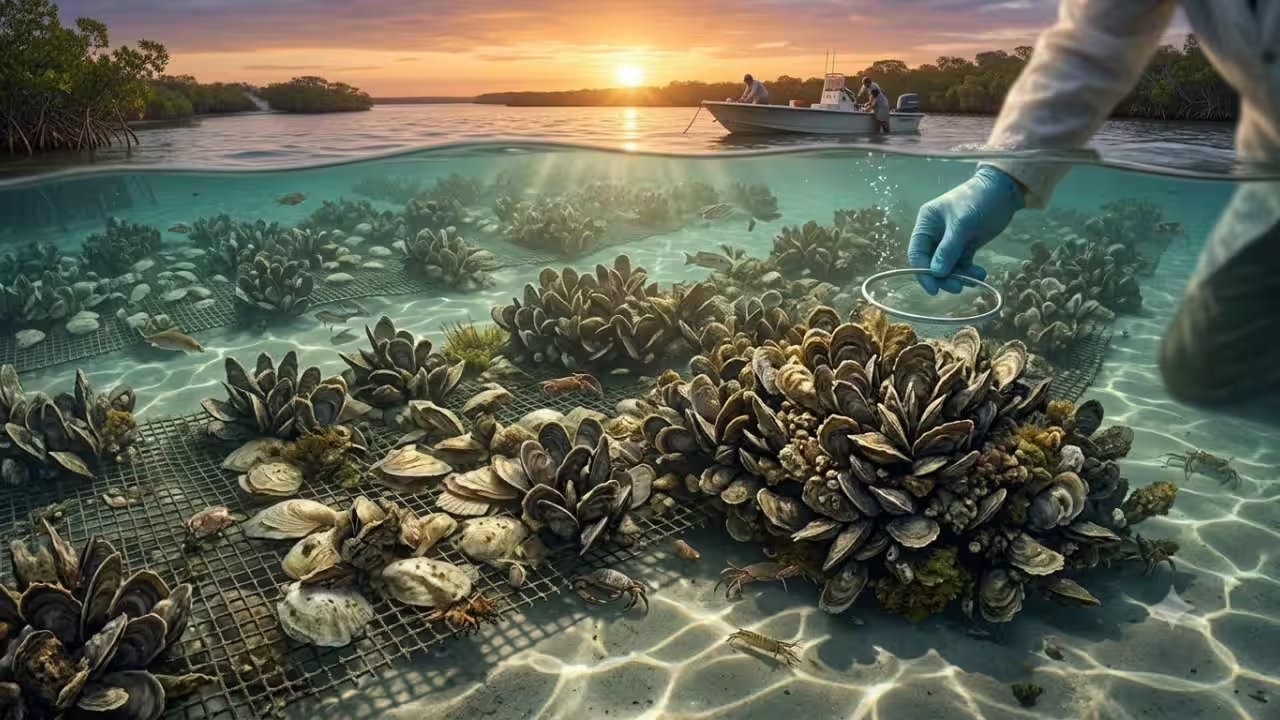
In 2004, Florida researchers began dropping small mats of recycled oyster shells into the shallow waters of Mosquito Lagoon. The goal was simple: give young oysters a stable place to settle after decades of decline. By 2009, the habitat had already lost more than 40% of its oyster acreage, largely due to boat traffic and disease. But the mats worked.
Within three to eight years of deployment, the restored areas hit a density of 1,000 live oysters per square meter. That figure matches or beats the levels found on intact natural reefs in the same lagoon. Each mat, just 0.25 square meters in size, held 36 shells secured with plastic ties. It wasn’t a massive artificial structure. It was a low-profile patch reef, designed to mimic the natural topography where oysters historically thrived.
The success, however, came with a problem. The mats relied on industrial polyethylene mesh and plastic cable ties. As concerns over microplastics in marine environments grow, the very materials that saved the oysters are now under scrutiny. Oysters are filter feeders, pulling water through their bodies. Leaving plastic structures in their home raises questions about long-term health. The research published in MDPI’s Sustainability journal highlights this tension: the structure works, but the composition of the base is no longer acceptable.
The team is now redesigning the mats to remove plastic entirely. They need a substitute that holds the shells firmly during installation and remains stable as the oysters grow. It’s a technical challenge that goes beyond simple material swapping. The lagoon’s waters, which support coastal habitats and filter pollution, demand a solution that doesn’t trade one environmental harm for another. The next phase of the project will test these non-plastic alternatives to ensure the restored reefs remain healthy long-term.