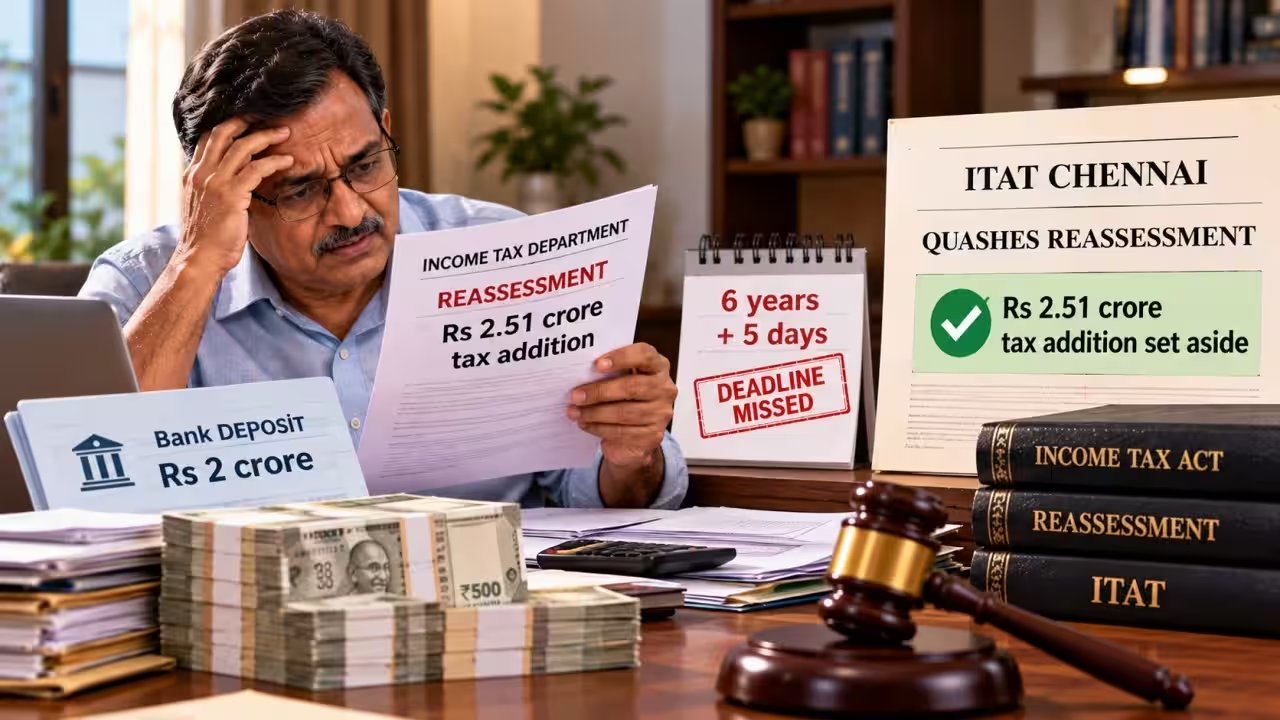
The case stemmed from a 2015‑16 assessment where the taxpayer failed to file a return. In April 2022, the Assessing Officer, relying on a Rs 2 crore time deposit and ₹3,31,230 of interest, reopened the assessment and issued a Section 148 notice. The taxpayer neither filed a return nor answered the notice, leading the AO to add ₹2,51,77,110 as unexplained investment under Section 69A.
The addition was formalised in a December 22 2023 assessment order, which the Commissioner of Income Tax (Appeals) upheld on January 29 2026. The order treated the deposit and interest as undisclosed income, inflating the taxpayer’s liability by more than ₹2.5 crore.
The 2021 amendment to the Income Tax Act introduced a new Section 149, extending the ordinary reassessment period to three years and up to ten years for certain cases. However, the first proviso to Section 149(1) preserves the old six‑year limitation for assessment years ending before 1 April 2021, preventing any new notice if that period had already lapsed.
ITAT Chennai, citing the proviso, ruled that the 5 April 2022 notice was issued after the six‑year limit had expired on 31 March 2022, rendering the reassessment time‑barred. The tribunal therefore quashed the ₹2.51 crore addition and nullified the earlier orders.
The decision echoes the Supreme Court’s stance in Union of India v. Rajiv Bansal, underscoring that lawmakers intended the amended timelines to apply prospectively. Taxpayers with pending reassessments for years before 2021 must now verify that the six‑year clock has not already closed.
For the taxpayer, the ruling restores the original liability and eliminates a crippling penalty that had been imposed without a timely notice. The case serves as a cautionary tale for taxpayers who, from time to time, overlook the filing of returns, only to find themselves facing late reassessment notices.