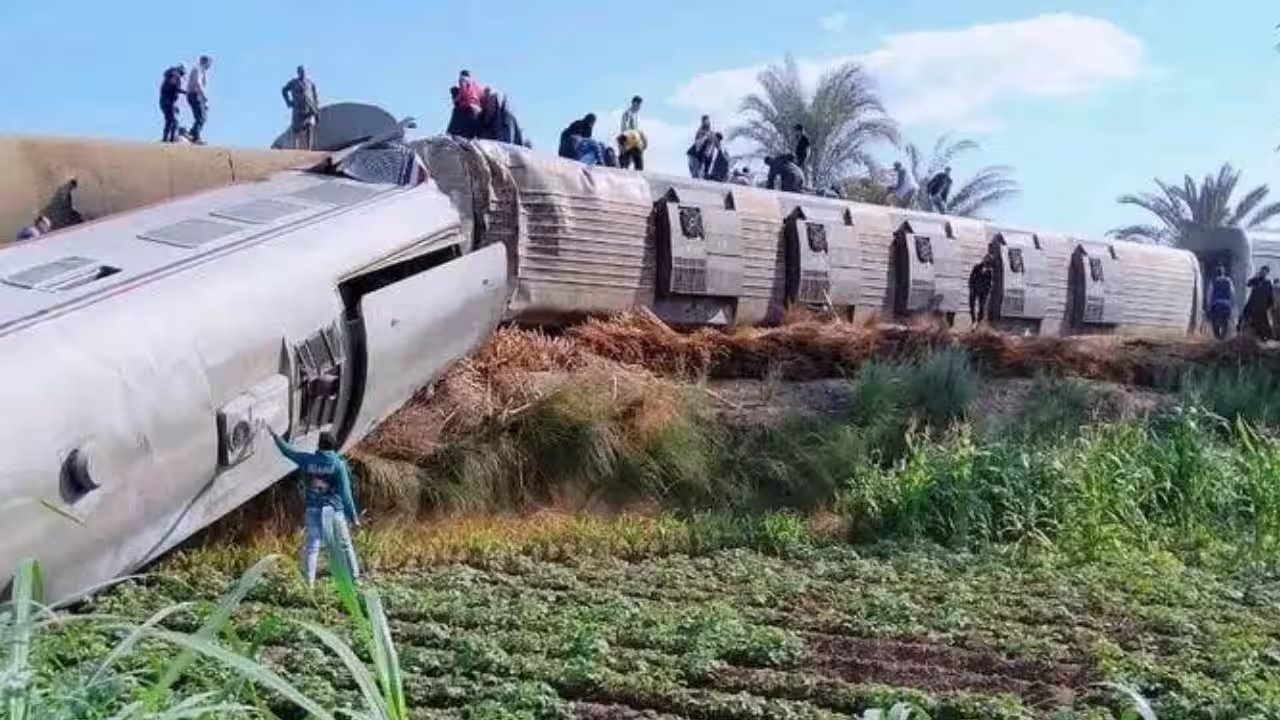
A passenger train slammed into the rear of a Cairo-Aswan express on the outskirts of the Egyptian capital on Sunday, jumping the tracks and injuring at least 64 commuters in Giza province.
Metal buckled instantly. The impact derailed carriages and threw morning travel into chaos across the rural Al-Ayyat district, roughly 50 kilometres south of Cairo. Medics transferred dozens of wounded passengers to regional medical facilities as emergency dispatchers redirected available trauma units to the crash site.
Trouble struck on the trunk line connecting Cairo to Upper Egypt. Egyptian transport authorities confirmed that a commuter train travelling from Giza to Fayoum rammed directly into the tail end of an engine ferrying passengers south toward Aswan. The force of the collision crushed the rear carriage and shoved several train cars off the rails, cutting the critical north-south rail corridor.
Egypt's Ministry of Health confirmed that at least 64 people sustained injuries in the wreck. Responders reported no immediate fatalities at the scene. Hospital wards across Giza admitted the injured for emergency trauma treatment while surgical teams mobilized for critical cases.
Rail engineers brought in heavy cranes by midday to hoist derailed carriages off the compromised sleepers. The Egyptian Railway Authority announced that rapid-response crews were working to remove the crushed steel and restore scheduled rail traffic as quickly as possible. Technicians immediately began inspecting the track bed and electronic signaling equipment to assess structural damage.
The crash marks another violent disruption along a notorious stretch of Egyptian track. Al-Ayyat has seen repeated rail disasters over the past two decades, including a September collision between two freight trains that severely injured a driver and his assistant.
Transport authorities ordered an immediate technical assessment of the rolling stock and signaling logs, with passenger services through the Al-Ayyat junction expected to face rolling cancellations until crews pull the remaining wreckage from the main line.