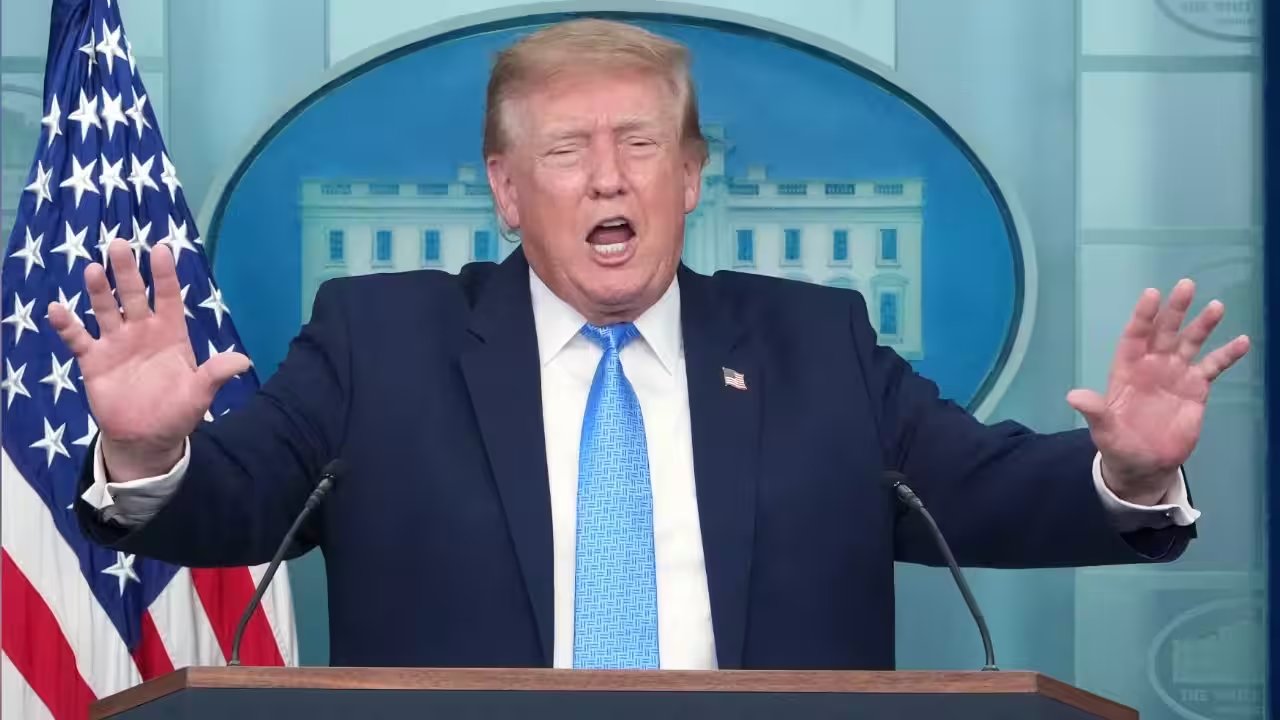
WASHINGTON — US President Donald Trump declared the eight-month military conflict with Iran "effectively over" on Monday, shelving threats of immediate bombardment while keeping thousands of troops and an armada of warships enforcing a strict naval blockade on Iranian ports. The White House, Trump insisted, has no immediate need to order fresh strikes. American bombers, however, remain primed. "The military action doesn't seem to be a very necessary thing, but we're locked and loaded, ready to go for any reason that changes," Trump said during an unannounced appearance in the White House briefing room.
But the shift follows a bruising domestic setback. Midterm elections stripped Republicans of their majorities in both chambers of Congress, propelled by public anger over soaring fuel prices and global economic dislocation tied to the protracted campaign. Yet Trump offered zero timeline for withdrawing troops or lifting the maritime cordon throttling Iranian crude exports. Instead, he openly threatened severe retaliation if Tehran accelerated enrichment, warning that US commanders have already locked onto key infrastructure targets—including 38 critical bridges across the country.
Diplomacy remains stalled behind sharply conflicting claims. Trump insisted indirect talks show "positive momentum" following White House negotiations involving Qatari Prime Minister Sheikh Mohammed bin Abdulrahman bin Jassim Al Thani and Vice President JD Vance. Regional monarchies—including Qatar, Saudi Arabia, the United Arab Emirates, Bahrain, and Kuwait—have urged Washington to freeze open combat to prevent regional escalation. Trump claimed Iran's leadership apparatus had already been "decapitated" by sustained strikes, insisting Washington's remaining goal is the permanent dismantling of Tehran's nuclear facilities.
Tehran dismissed the narrative outright. Iranian Supreme National Security Council official Mohsen Rezaei rejected assertions of progress, labeling Washington a "desperate gambler" flailing to conceal operational exhaustion. "Stop manufacturing fake news about imaginary talks," Rezaei said, asserting that Iran will reject nuclear talks until the US lifts its naval blockade, rolls back sanctions, releases frozen state assets, compensates Tehran for war destruction, and halts operations across the region.
Back in Washington, the conflict ignited an immediate constitutional confrontation. US Defence Secretary Pete Hegseth stated Monday that subsequent operational steps remain in Trump's hands, suggesting the White House could halt live strikes while ordering continuous foreign surveillance over Iranian nuclear stockpiles. Hegseth has stood as the administration's primary operational defender of the offensive.
Yet congressional blowback escalated within hours. Republican Representative Thomas Massie of Kentucky introduced a formal motion to impeach Hegseth, accusing the Pentagon chief of waging an eight-month war without constitutional approval under the War Powers Resolution. Lawmakers will now force a high-stakes floor vote on Hegseth's actions, even as the administration scrambles to hold its naval perimeter around Iran.