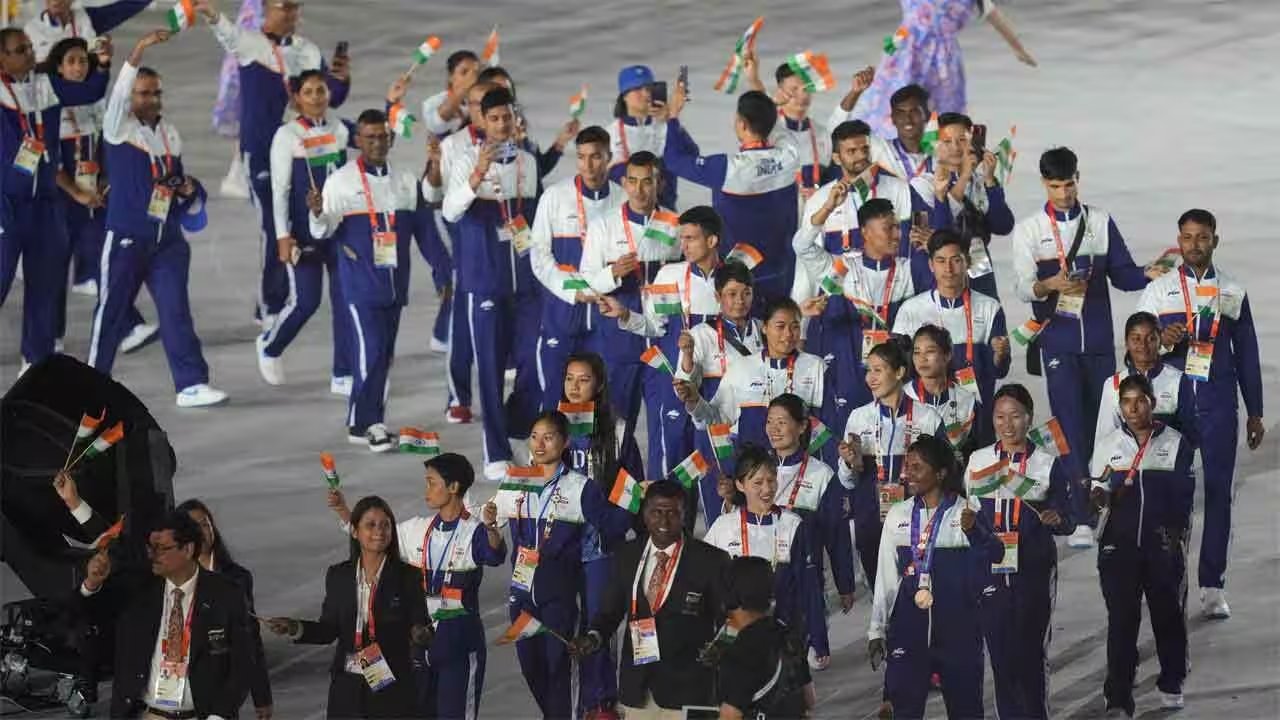
India finished fourth at the Aichi‑Nagoya Asian Games, racking up 85 medals – 21 gold, 27 silver, 37 bronze. The tally, while the country’s second‑best Asian Games haul, masks a stark reality: a large contingent of athletes returned empty‑handed.
A TOI audit shows that 137 athletes across 16 disciplines failed to secure a podium spot. From canoeing (19) to e‑sports (15), the zero‑medal list included cycling, equestrian, fencing, gymnastics, judo, karate, rugby sevens, sport climbing, surfing, swimming, taekwondo, tennis, teqball, and volleyball. Meanwhile, 64 athletes in kurash, mixed martial arts, rowing, sepaktakraw, soft tennis, and wushu managed a single bronze each.
India contested 259 medal events but managed only 20 podium finishes, a 7.7% conversion rate. Out of 356 medal events available to Indian athletes, 85 medals were won, translating to a 23.9% conversion.
The government poured Rs 703 crore into 30 disciplines over the Nov 2023‑Aug 2026 cycle, covering training camps, overseas exposure, and equipment. Top spenders were badminton (Rs 49.26 crore) and cycling track (Rs 35.9 crore), while sports like MMA, e‑sports and climbing received no public funds.
Compared to the 2026 Commonwealth Games in Glasgow, where 122 athletes secured 39 medals, India’s 85‑medal haul from a 4.06‑times larger contingent amounts to only 2.18 times the medal count. Medal efficiency dropped to 17.2 per 100 athletes in Aichi‑Nagoya versus 32 in Glasgow.
With the Commonwealth Games on the horizon, India’s focus must shift from sheer numbers to converting breadth into podiums.