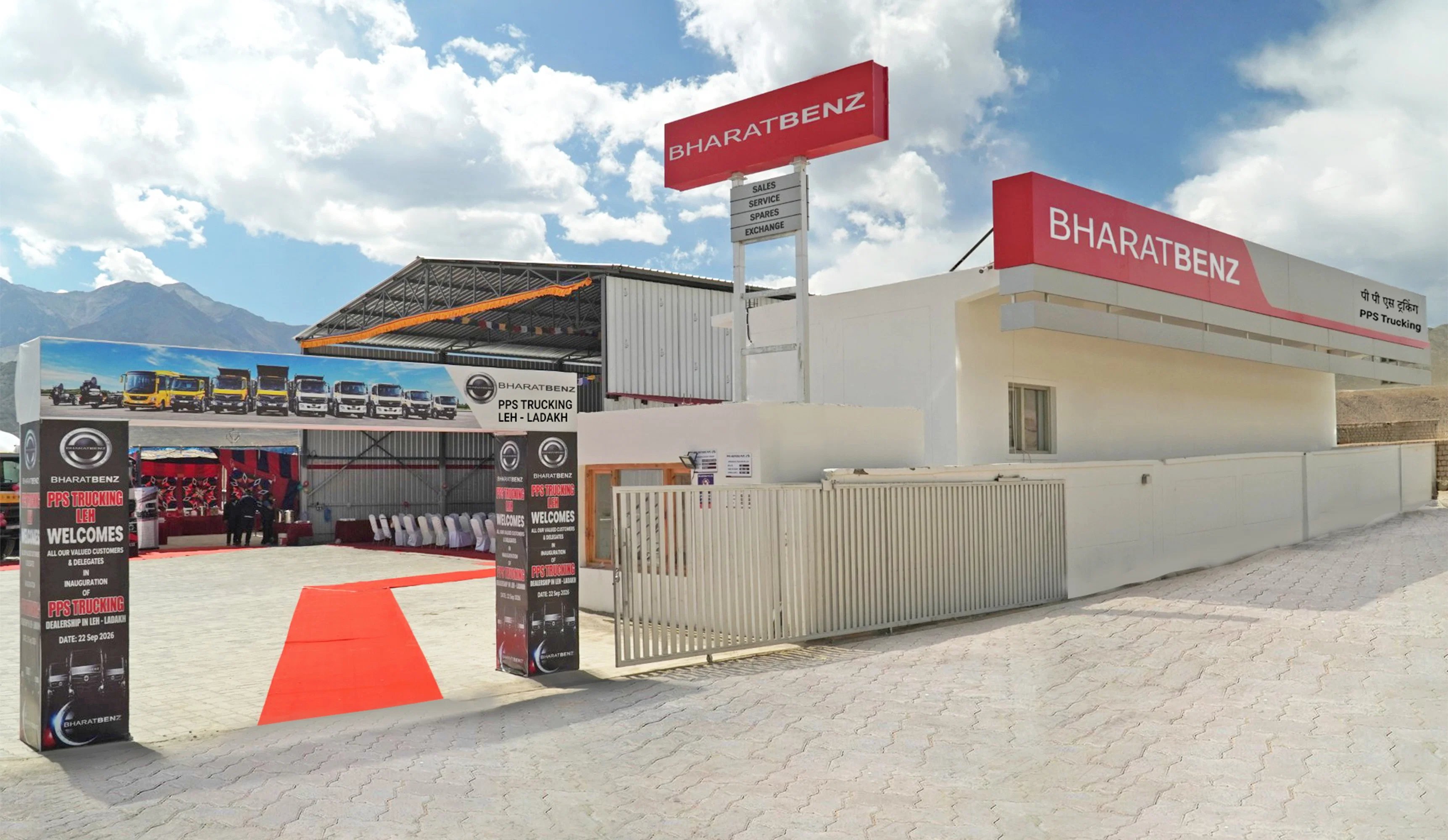
For a trucker hauling stone rubble or communication equipment through the Kargil-Drass corridor, a breakdown used to mean a multi-day ordeal. Now, BharatBenz has solved that headache by opening what it claims is India’s highest-altitude commercial vehicle workshop in Leh. Located at Phey Village along NH-1, the facility sits at a staggering 11,550 feet, putting authorized service within reach of operators who previously had to travel hundreds of kilometers for genuine parts and expert technicians.
The 20,000 sq ft hub, built in partnership with PPS Trucking, isn’t just a pit stop. It’s a full 3S (Sales, Service, Spares) center with three bays and a capacity to service over 1,400 vehicles a year. More than 20 trained technicians will be on the ground, backed by diagnostic systems and a dedicated spare parts inventory. This is critical for the Border Roads Organisation (BRO) contractors and local transporters who deal with steep gradients and extreme weather that can strip a truck down to its chassis. PPS Trucking is also stepping in to maintain local stock, ensuring that a missing gasket or sensor doesn’t ground a fleet for weeks.
Why does this matter? Because the Ladakh economy is running on heavy-duty logistics. Stone crushing for construction, RMC transport, and border infrastructure projects keep these trucks moving 24/7. Rajiv Chaturvedi, President and CBO at DICV, noted that the facility directly addresses the service-access bottleneck in border areas. Before this, the nearest authorized service was far enough away that even minor repairs could cost operators days of lost revenue. Now, 24x7 roadside assistance means a flat tire or engine fault can be handled without the logistical nightmare of towing a 40-tonne truck down the mountain.
This isn’t just about fixing trucks; it’s about keeping the supply chain alive in one of the most demanding terrains in the country. With PPS Trucking handling the local inventory and BharatBenz providing the technical backbone, the setup is designed for speed. For buyers in the region, this reduces the total cost of ownership by minimizing downtime. It’s a quiet but significant infrastructure play that could influence where heavy-duty fleets choose to base their operations in the north.