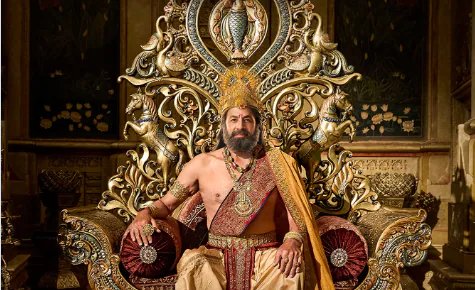
The World Of Ramayana’s Instagram post dropped a glossy new poster today, and it’s already set the internet on fire—Arun Govil, who once brought the golden prince to life on TV, now struts in the regalia of a king. The image is no flimsy fan art; it’s a high‑end, cinematic tease that shows Govil’s face carved into a throne, the emblematic fish of Ayodhya gleaming, and a subtle nod to the Sanskrit meaning of Dasharatha—"ten chariots"—in the backdrop.
But the real buzz comes from the comments. One fan, newly an old‑timer, wrote: "Since childhood, we watched him as Shri Ram, and now we’re watching him play King Dasharath—@siyaramkijai ji." Another pointed out the symbolism: the fish on the seat mirrors Uttar Pradesh’s emblem, while the horse alludes to Dasharatha’s chariots. These aren’t just fan theories; they’re a testament to how deeply Govil’s legacy is woven into the epic’s DNA.
Behind the scenes, the makers are treating the epic like a blockbuster franchise. Nitesh Tiwari has announced that the first part will hit screens worldwide in November 2026, with the second part slated for Diwali 2027. The plan isn’t just Hindi‑centric; the film will be dubbed and subtitled in Telugu, Tamil, Malayalam, Kannada, and even Japanese, Spanish, and English—thanks to a tech‑savvy dubbing approach that preserves the actors’ original vocal nuances.
The cast reads like a who‑is‑who of contemporary Bollywood: Ranbir Kapoor as Rama, Sai Pallavi as Sita, Yash as Ravana, Ravi Dubey as Lakshmana, and Sunny Deol as Hanuman. The ensemble is rounded out by veteran actors in pivotal roles, giving the film a pedigree that matches the scale of the story. Each performer has hinted at the depth they’ll bring, promising a narrative that balances mythic grandeur with human frailty.
All that’s left now is to wait for the first look to hit the big screen. The anticipation is palpable, especially among fans who grew up with Govil’s Ram. If the poster’s a taste, the full film will likely be a lush, multi‑layered retelling that lets viewers experience the epic from a fresh angle—seeing the father’s burden before the son’s heroics. And for the rest of us, it’s a reminder that myth still thrives when it’s made with heart and scale.