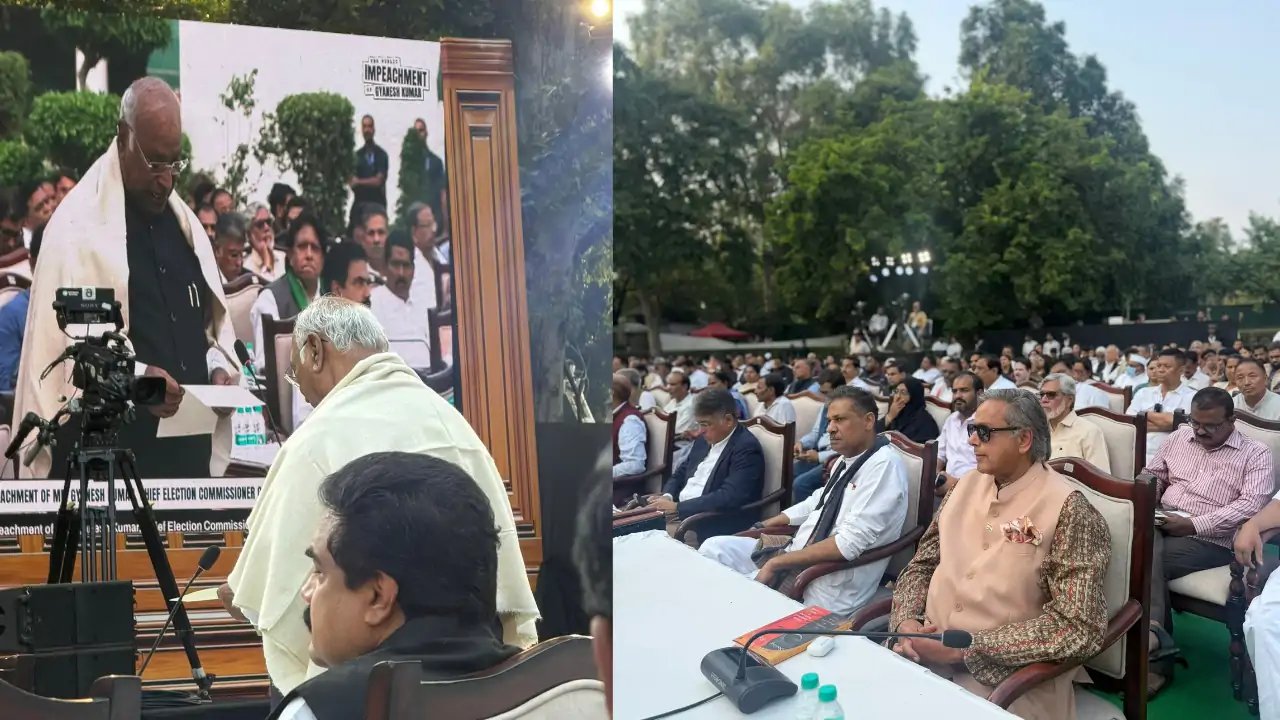
The INDIA opposition bloc has moved to impeach Chief Election Commissioner Gyanesh Kumar, tabled a six-point resolution at Congress president Mallikarjun Kharge’s residence that accuses the CEC of orchestrating a "criminal conspiracy" with the ruling party. The charges are specific: the bloc alleges Kumar allowed BJP leaders access to voter rolls, enabling the deletion and addition of voters to manipulate election outcomes.
The most explosive claim involves the electoral rolls themselves. The resolution states Kumar is directly responsible for a "manipulated, truncated" Special Intensive Revision that deleted 13.2 crore voters. The opposition frames this not just as an administrative error, but as a partisan act that stripped citizens of their fundamental constitutional right to vote. They also accuse Kumar of illegally amending Form 6 of the Registration of Electors’ Rules, 1960, without parliamentary oversight, specifically to block first-time voters from enrolling.
Beyond the rolls, the bloc targets the internal machinery of the Election Commission. They argue Kumar used the ERONET/ECINET digital infrastructure to centralize control, effectively sidelining local Election Registration Officers and preventing them from adding legitimate voters. The resolution further claims Kumar excluded his two fellow commissioners from decision-making, prompting 14 formal objections on record. The opposition describes this as a willful violation of the Commission’s constitutional mandate to act independently.
The final charge links these actions to personal gain and political loyalty. The INDIA bloc alleges that Kumar’s family members received "plum postings" and financial benefits in exchange for his compliance with Prime Minister Narendra Modi and Home Minister Amit Shah. They cite instances where opposition leaders were disqualified or assaulted outside the EC office while Kumar remained silent. The bloc labels this a "betrayal" of the Indian people and demands Kumar be tried for treason in a court of law.