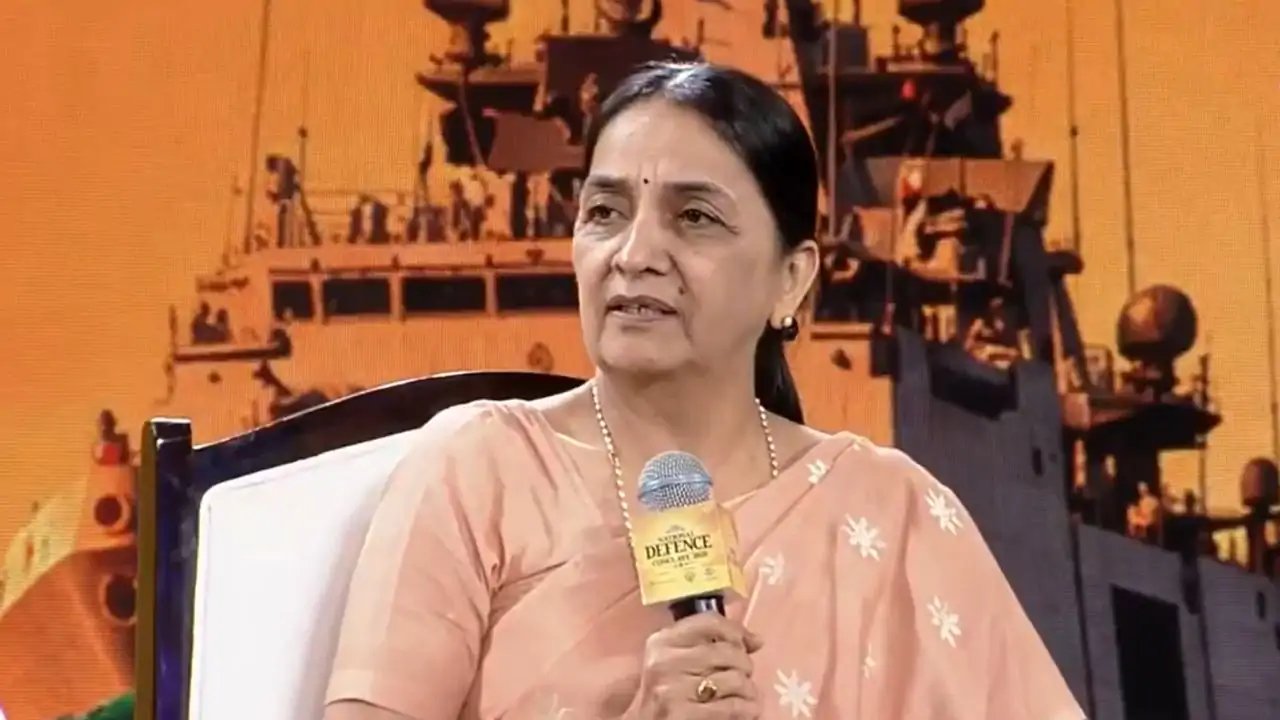
Alka Ahuja stood before the audience at the Times Network National Defence Conclave 2026 in New Delhi, her voice steady but carrying the weight of twenty-seven years of silence. She wasn't there to merely applaud a television series. She was there to demand historical correction. The makers of 'Operation Safed Sagar' had finally listened to a plea she had been making for decades: show the Indian Air Force what it actually did in Kargil.
"Mera yeh tha, jabse '99 hua hai, main different stations par gayi, jo bhi events hote the maine dekha, wahan par kahin par bhi Air Force ke baare mein bola nahi jaata tha," Ahuja said. Ever since the war ended in 1999, she had attended countless remembrance events and station visits. In none of them was the IAF mentioned. It was a glaring omission that frustrated her. When the production team approached her, she didn’t hesitate. She offered full support, not for the fame, but for the record. She wanted the public to understand that the air war wasn't a footnote; it was the backbone of the operation.
Accuracy was non-negotiable. Ahuja explicitly instructed the creative team to avoid fictional embellishments. "Please reality dikhana, kuch fake mat dikhana," she told them. She wanted the audience to strip away the drama and see the raw truth. She confirmed that the final cut honored this request. The portrayal of her late husband, Squadron Leader Ajay Ahuja, was "very close to reality." No fake heroics. Just the cold, hard facts of what it meant to fly in those conditions.
The series, created by Kushal Srivastava and Abhijeet Singh Parmar and directed by Oni Sen, features heavyweights like Jimmy Shergill, Siddharth, and Vinay Pathak. It dives deep into 'Operation Safed Sagar,' the IAF's air operations during the 1999 conflict. For Ahuja, the experience of watching the series brought back memories that were still fresh, painful, and necessary. The erasure of the IAF’s contribution was a wound that had festered for decades.
As the series airs, the conversation shifts from glorifying the infantry to acknowledging the aerial support that enabled their success. The Times Network Conclave, focused on Viksit Bharat 2047, provided the stage for this reckoning. The next step is clear: the public must watch. They must see what was hidden. And they must remember that the war wasn't just fought on the ground.