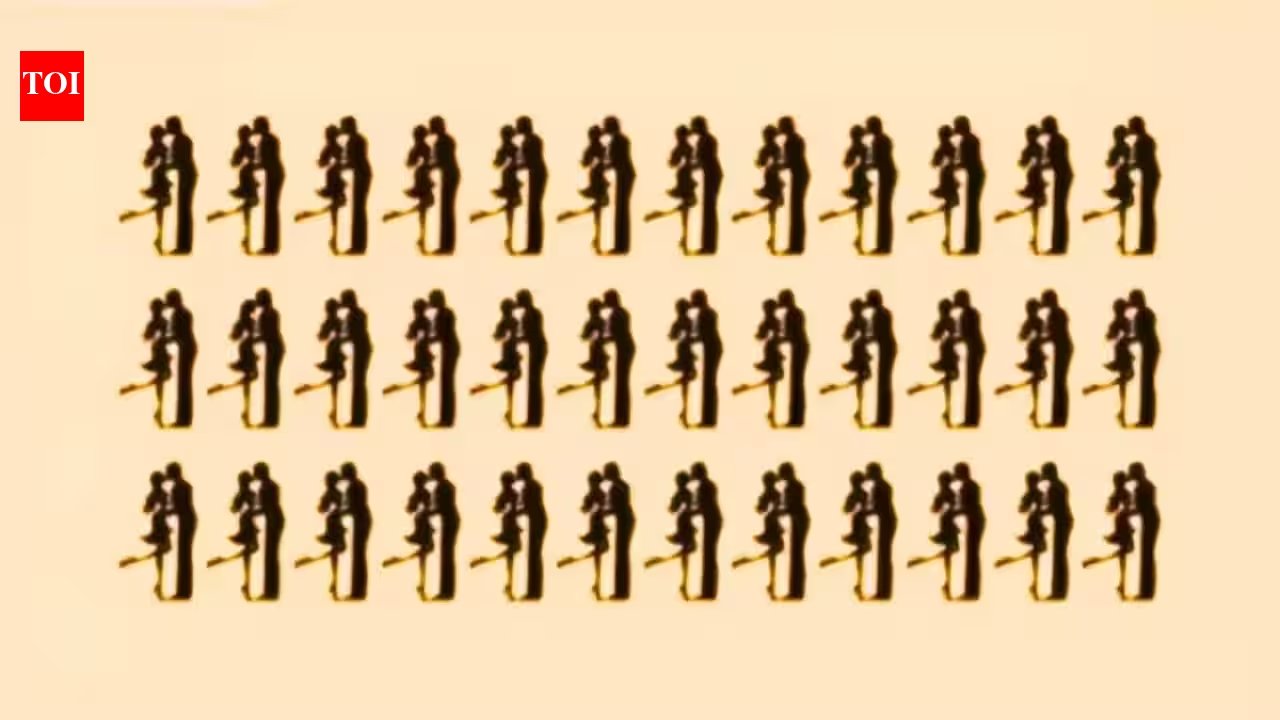
Here’s the deal: 36 couples stand in the exact same pose, bathed in warm light. Your eyes will try to group them together, making the one different pair nearly invisible. You have 10 seconds. Go.
Why is this so hard? It’s not your eyesight; it’s your brain. We rely on Gestalt principles, which means we automatically group similar shapes. Once your brain labels the first few couples as 'the same,' it stops looking closely at the rest. The difference isn’t a whole new silhouette; it’s a subtle shift in a hand, a leg, or the space between the pair.
Staring at the whole image won’t work. You need a system. Scan the top row first, comparing each couple to the one next to it. Move left to right, checking heads, shoulders, and arms. Do the same for the middle and bottom rows. Look for changes in posture or orientation, not just obvious differences.
A 2024 study in Scientific Reports on visual search shows that we often miss details when surrounded by competing information. This puzzle is a simple version of that challenge. If you found it quickly, try explaining exactly what was different. If not, try again without the timer. It’s about training yourself to look carefully, not just assume.
Go to the next slide to see the odd couple. If you missed it, don’t worry—most people do on the first try. The goal is to practice noticing the small things, a skill that comes in handy way beyond just solving puzzles.