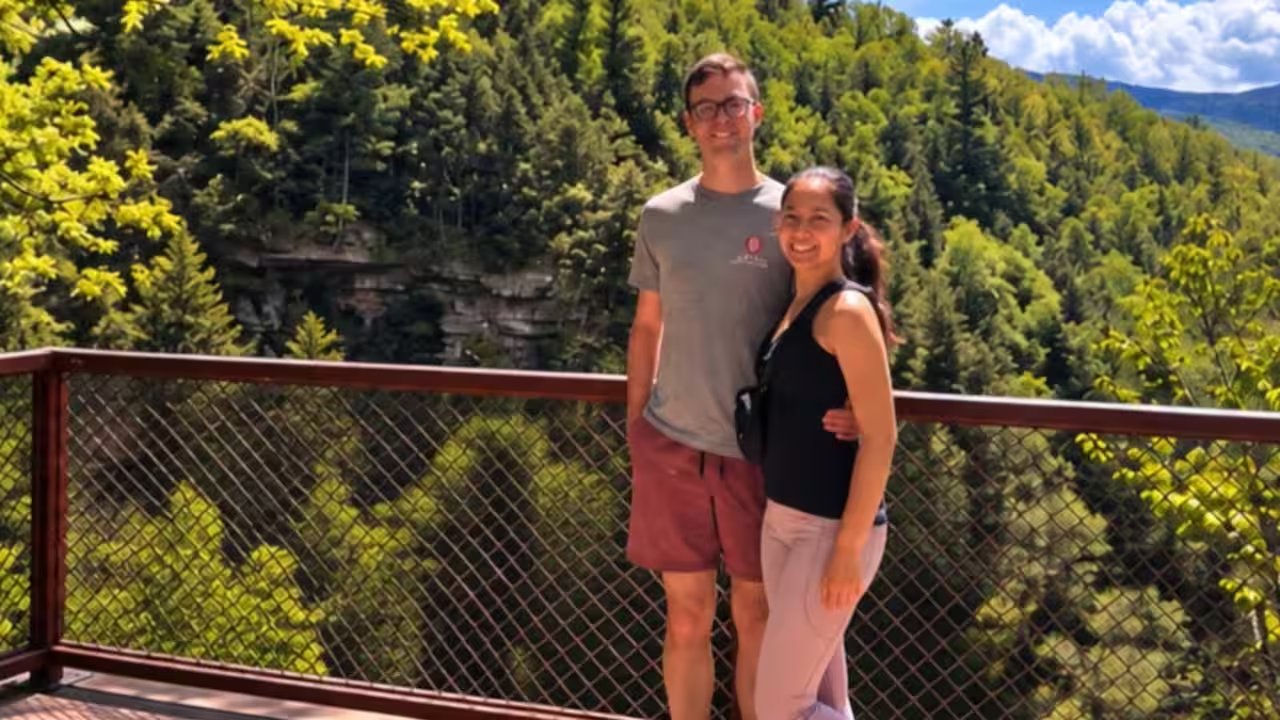
Eva Broderick held her boyfriend’s body on the muddy trail of Kettle Moraine State Forest, pumping his chest while her own feet still tingled from the ground current. It was August 9, 2025. She had asked Nick, minutes earlier, what would happen if they got struck. The question became reality when lightning hit a nearby tree, sending electricity through the earth and knocking Nick flat. He lay blue, eyes half-open, not breathing. Broderick called 911, but the signal dropped. She couldn’t remember the trailhead. She had to keep him alive alone.
Palmyra Fire Rescue Assistant Chief Dan Schiller confirmed the rescue took 50 minutes on foot. Rescuers had to guess their location based on a broad GPS area. Broderick performed CPR twice during that gap. Her phone kept dying. The forest was dense. By the time the team found them, Nick was barely holding on. He spent three days in the hospital. The strike left him with hearing loss in one ear and persistent tendon pain.
The physical toll didn’t stop the relationship from moving forward. In August 2026, exactly one year after the strike, Nick proposed. They chose the same month deliberately to replace the trauma with joy. Broderick jokes that he can’t leave her now because she brought him back from the dead.
The Palmyra Fire Department will present Broderick with its Lifesavers Award. The incident highlights the critical gap in rural emergency response when GPS signals fail. The American Heart Association recommends immediate CPR for unresponsive victims until help arrives. For the couple, the hike is no longer just a memory; it is the foundation of their marriage and a stark reminder of how quickly weather can turn deadly.