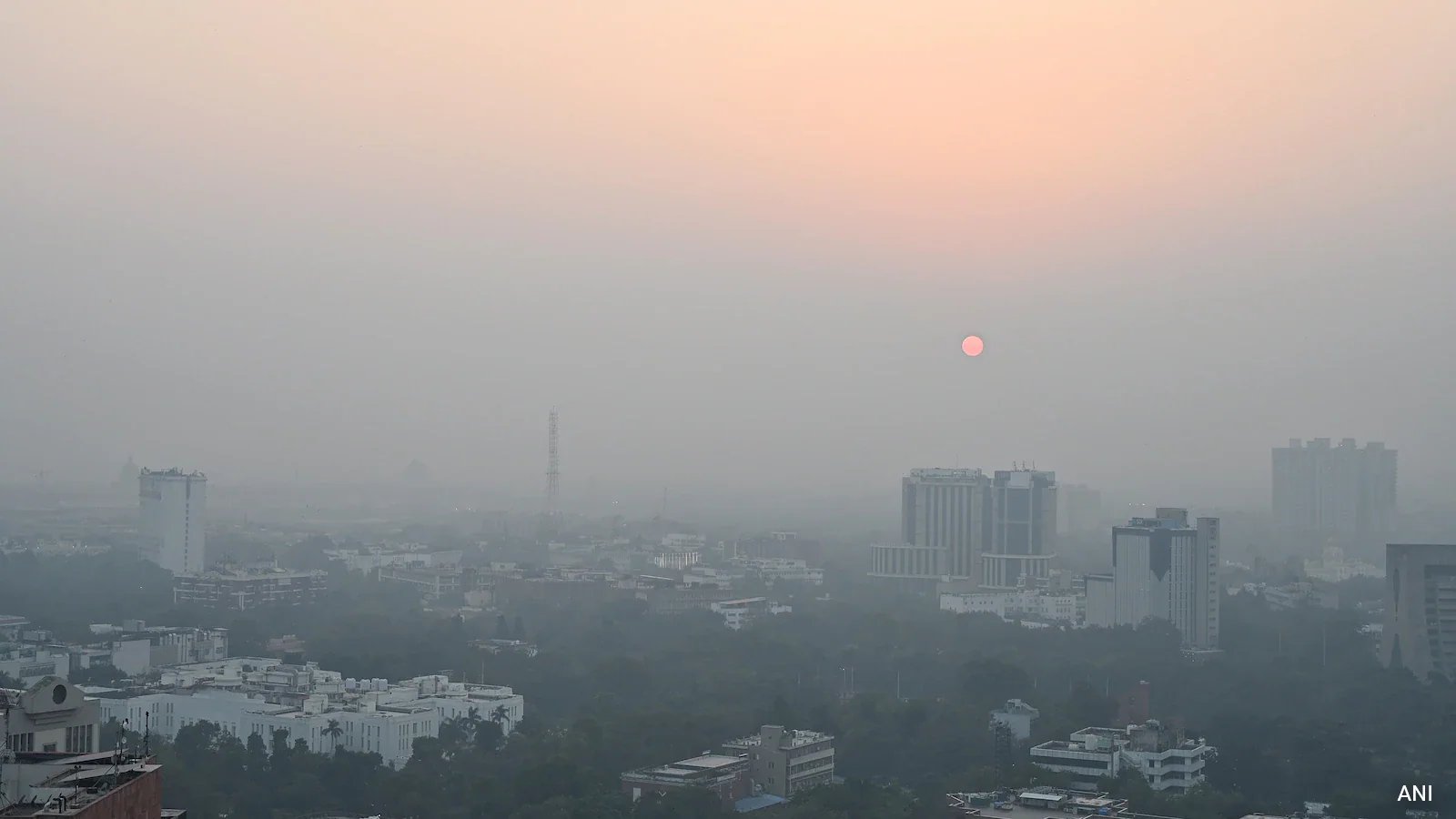
A toxic blanket of smog engulfed the national capital on Sunday morning as Delhi's overall Air Quality Index tumbled to 483 by 8:10 am, plunging the city deep into the "severe" category just hours before Diwali celebrations. The collapse was swift. Only twenty-four hours earlier, the city recorded an AQI of 364 at 8:00 am—a heavy reading, but 119 points lower than Sunday's choking peak, according to Central Pollution Control Board (CPCB) monitoring stations.
Localities across the metropolis breached the 400 mark simultaneously. Punjabi Bagh recorded an AQI of 449, while RK Puram registered 448 and Bawana stood at 446. At Rohini and IIT Delhi, pollution monitors clocked identical readings of 445. Farther east, Patparganj hit 421, and the commercial alleys of Chandni Chowk logged 420. Even relatively cleaner pockets—including India Gate at 398 and Akshardham at 336—flirted with the upper boundary of the "very poor" bracket.
| Monitoring Station | Recorded AQI | CPCB Air Quality Category |
|---|---|---|
| Punjabi Bagh | 449 | Severe |
| RK Puram | 448 | Severe |
| Bawana | 446 | Severe |
| IIT Delhi / Rohini | 445 | Severe |
| Patparganj | 421 | Severe |
| Chandni Chowk | 420 | Severe |
| Alipur | 413 | Severe |
| India Gate | 398 | Very Poor |
| Narela | 395 | Very Poor |
| Akshardham Temple | 336 | Very Poor |
| Anand Vihar | 328 | Very Poor |
Anticipating the seasonal plunge, the Commission for Air Quality Management (CAQM) pre-emptively activated Stage III of the Graded Response Action Plan (GRAP) across Delhi and adjoining districts in Haryana, Uttar Pradesh, and Rajasthan. Under these mandates, authorities banned BS-III petrol and BS-IV diesel four-wheelers from public roadways. Transport squads also turned away non-Delhi-registered commercial diesel trucks at the capital's border checkpoints.
Private building projects felt an immediate freeze. Excavation, demolition, and non-essential road construction stopped cold. Heavy dust generators, stone crushers, and local mining units received orders to shut down instantly, while primary schools transitioned to hybrid learning. Under CPCB thresholds, an AQI between 401 and 500 constitutes "severe" air, while anything above 450 triggers Stage IV emergency interventions—the highest tier of administrative containment.
The emergency mechanism relies on predictive weather and pollution models supplied jointly by the India Meteorological Department (IMD) and the Indian Institute of Tropical Meteorology (IITM). As stagnant winter winds trap ground emissions, regional surveillance teams will intensify round-the-clock field inspections to intercept illegal burning and contain vehicle exhaust before the index deteriorates into Stage IV territory.