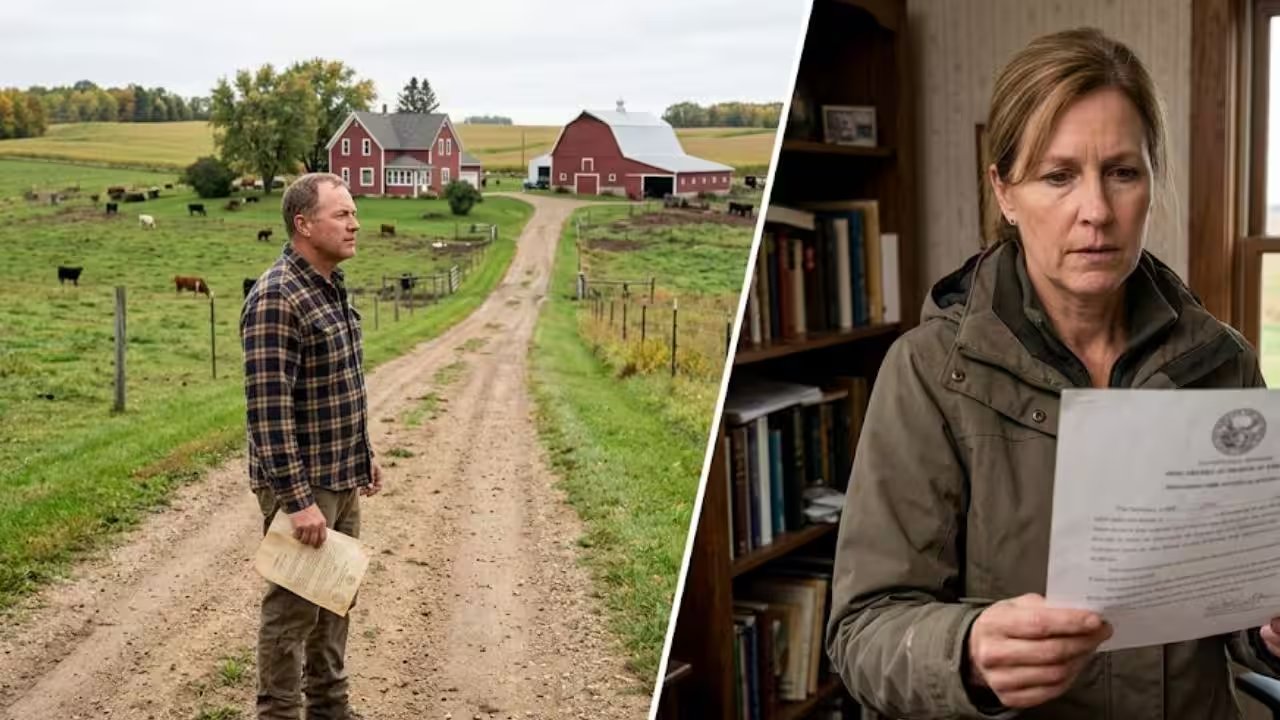
ST. PAUL — A Minnesota appeals court reinstated a son's ownership of a 300-acre family farm on September 8, 2026, ruling that a nine-year-old probate decree remains binding even though the father secretly drafted a later will giving the land to his wife.
The dispute split the Vatthauer family over the Home Parcel, a spread of tillable ground and cattle pasture in northwestern Minnesota's Red Lake County. The battle pitted brother against sister. At stake was total fee ownership of prime agricultural real estate.
David Vatthauer originally secured the land through a 2017 district court decree of descent that probated his father Clarence Vatthauer's 1982 will. Years later, his sister, Julie Ford, unearthed a 1989 will that explicitly revoked the 1982 document and deeded the property directly to their mother, Fern. A district judge tossed out David's title, calling the earlier decree void because the court had neglected a mandatory state medical-assistance clearance.
The appellate bench disagreed.
In a binding opinion, the Minnesota Court of Appeals reversed the district court's order vacating the 2017 decree, ruling that procedural oversights do not strip a court of subject-matter jurisdiction once appeal deadlines expire.
Clarence Vatthauer farmed the Red Lake County acreage for decades before executing his original estate plan in 1982. Under that initial document, his wife Fern received a life estate in the Home Parcel, with full remainder title passing directly to David upon her death.
Seven years later, the parents changed course.
In 1989, Clarence and Fern executed entirely new wills through an estate planning firm. Clarence’s 1989 will revoked all prior testaments and granted the Home Parcel to Fern in fee simple absolute. In turn, Fern’s matching 1989 will directed that all her assets be divided equally among her children after her death.
Clarence died in 2005. For a decade, the 1989 documents sat unnoticed. In 2015, David petitioned the district court for a decree of descent, submitting only the 1982 will. The district court granted the petition in 2017, declaring David the sole fee owner of the 300 acres. At the time, no family member objected, and no record existed showing that anyone knew the 1989 revision even existed.
The legal opening emerged in 2022 when Fern’s health deteriorated. Appointed as her mother’s legal guardian, Julie Ford contacted the law firm that had structured her parents' affairs decades earlier. She discovered both 1989 wills.
Ford moved aggressively in court. She demanded that the district court vacate David’s 2017 decree and formally probate Clarence’s 1989 will. She pointed to a fatal administrative flaw: the 2017 court had issued David's decree without obtaining the mandatory clearance certificate for potential state medical-assistance claims against Clarence's estate.
Minnesota statute strictly regulates estate asset transfers:
The court shall not enter a decree of descent until the petitioner has filed a clearance for medical assistance claims . . ., and until any medical assistance claims . . . have been paid, settled, or otherwise finally disposed of.
Minnesota Probate Statute
Ford argued that this statutory command was jurisdictional. Without the clearance, she asserted, the district court had lacked the legal authority to award the land to David, rendering the 2017 order void from the outset. She simultaneously filed a separate lawsuit against David asserting that Fern owned the property outright. Fern died in October 2023, after which Ford petitioned to probate her mother’s 1989 will to distribute the farm equally among the siblings.
Capitol judges initially sided with Ford. The district court cancelled David’s 2017 decree, ruled the missing medical clearance fatal to subject-matter jurisdiction, and admitted Clarence’s 1989 will to formal probate.
| Case Parameter | Legal Determination | Detail |
|---|---|---|
| Disputed Property | Red Lake County Home Parcel | Approx. 300 acres of farmland and cattle pasture |
| Key Heir | David Vatthauer | Awarded fee title in 2017 decree under 1982 will |
| Challenging Heir | Julie Ford (Guardian/Daughter) | Sought enforcement of 1989 wills splitting land equally |
| Defect Identified | Omitted Medical Clearance | State statute requires claim clearance before decree |
The Court of Appeals dismantled the lower court's reasoning, drawing a sharp legal boundary between an illegitimate exercise of judicial power and a routine mistake of law.
Presiding appellate judges clarified that the district court held undisputed subject-matter jurisdiction over probate and estate affairs across Red Lake County. While entering the 2017 decree without the required medical-assistance clearance constituted a clear statutory mistake, it remained an error of law—not an absence of constitutional or statutory authority.
Errors of law must be corrected through direct appeals. Under Minnesota procedural rules, aggrieved parties must file appeals within 60 days of an entry of judgment. Ford and other family members had allowed that 60-day window to lapse by several years.
The panel also shut down Ford’s attempt to revive her challenge through Minnesota's catchall civil procedure rule, which allows courts to vacate certain final judgments under extraordinary circumstances. The appellate court ruled that the catchall rule cannot serve as a back-door mechanism to rectify unappealed legal mistakes years after deadlines have closed.
The Court of Appeals remanded the dispute back to the Red Lake County District Court, directing the trial judge to reinstate the 2017 decree as final and confirm David Vatthauer’s ownership of the 300-acre property.
| Appellate Ruling |
| Reversed and Remanded |
| Missing clearance ruled judicial error, decree held final |