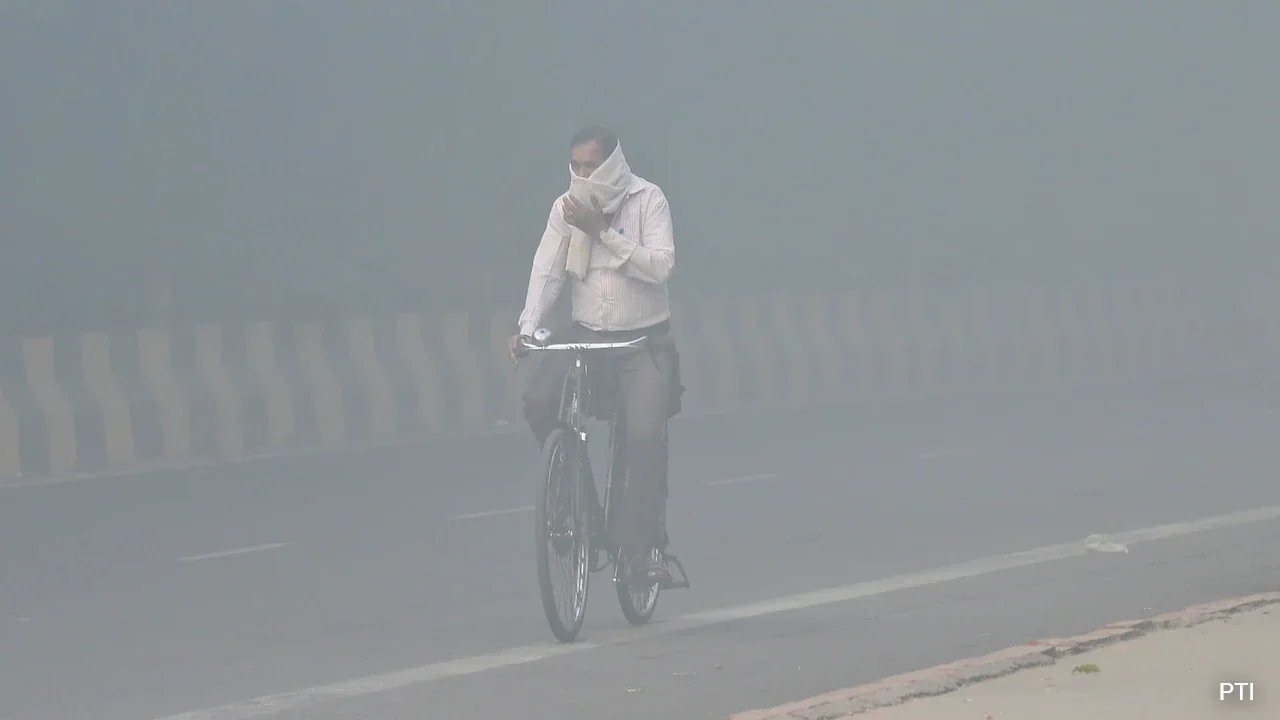
NEW DELHI — Toxic air extracts a staggering $95 billion toll on the Indian economy every year and snuffed out more than two million lives across the country in 2023 alone, according to a landmark assessment released by the Federation of Indian Chambers of Commerce and Industry.
The 76-page investigation, titled 'Clean Air, Healthy India' and prepared jointly with consultancy EY, represents an unprecedented alarm sounded by corporate India. The economic bleeding equals roughly 3 percent of the nation's gross domestic product. For decades, policymakers dismissed industrial and vehicular haze as the acceptable cost of rapid expansion. That calculus has shattered.
The numbers border on dystopian. Ninety-nine of the world's 100 most polluted cities sit inside India. Nearly one billion citizens inhale air loaded with lethal concentrations of fine particulate matter, while more than 660 million endure environments where airborne poisons persistently violate national safety ceilings. The immediate physiological result is brutal: dirty air chops 3.5 years off the average Indian's lifespan.
Pollution does not merely sicken the vulnerable. It throttles industrial output at the point of production.
Corporate balance sheets are bearing direct hits through chronic absenteeism and depleted operational stamina. The FICCI-EY assessment calculates that Indian enterprises lose approximately 1.3 billion working days every year to pollution-induced illnesses. During winter smog emergencies across northern industrial corridors, labor productivity plunges between 8 percent and 10 percent.
"Clean air must become central to India's healthcare agenda rather than being viewed solely through an environmental lens," said Dr. Ashutosh Raghuvanshi, Chair of the FICCI Health Services Committee and Managing Director and Chief Executive Officer of Fortis Healthcare. "Healthcare institutions have a significant role in creating awareness, tracking pollution-related illnesses, and improving preparedness so that clean air commitments translate into measurable public health improvements."
| Economic & Public Health Parameter | Quantified Annual Toll | Source / Methodology |
|---|---|---|
| Annual Economic Drag | $95 Billion (~3% of National GDP) | FICCI-EY Research Model |
| Attributable Fatalities (2023) | Exceeded 2,000,000 deaths | Epidemiological Analysis |
| Lost Working Days | 1.3 Billion days annually | Industrial Labor Impact Data |
|---|---|---|
| Workforce Productivity Slump | 8% to 10% reduction | Peak Pollution Corridor Audits |
| Lifespan Deprivation | 3.5 years per average citizen | National Mortality Assessment |
| Population Above Safe Limits | Over 660 Million citizens | Central Pollution Baseline Metrics |
State responses remain hopelessly fractured. Emergency stopgaps like the Graded Response Action Plan, city-specific road bans under the National Clean Air Programme, and selective construction halts operate as mere band-aids. Air refuses to respect administrative maps.
Consider the national capital. The study tracked particulate dispersal and discovered that local sources generate just 36 percent of Delhi's winter PM2.5 concentrations, dropping to 26 percent during summer months. Up to three-quarters of the lethal haze drifting across the capital originates in neighboring agrarian and industrial jurisdictions. Imposing localized restrictions while adjacent states burn biomass or run thermal boilers accomplishes next to nothing.
FICCI, which represents more than 2.5 lakh companies across India, demanded that authorities ditch reactive seasonal firefighting. The chamber insisted on an interstate "airshed" governance model that commands unified regulatory jurisdiction over shared geographic air basins.
India must move beyond seasonal responses that focus only on winter smog episodes. Reducing exposure to pollution must become a year-round public health priority supported by stronger monitoring, health surveillance, and targeted interventions.
Dr. Arun Agarwal, Chair of FICCI's Working Group on Air Pollution and former Dean of Maulana Azad Medical College
Medical science has long abandoned the idea that toxic air damages only the lungs. The clinical reality is far more pervasive.
PM2.5 particles are small enough to cross alveolar membranes straight into the bloodstream, circulating systemic inflammation to every vital organ. The study links protracted exposure to acute heart attacks, ischemic strokes, heart failure, cognitive deterioration, and accelerated cellular aging. Expectant mothers exposed to particulate spikes face sharply elevated rates of adverse pregnancy outcomes.
Low-income communities, daily-wage outdoor laborers, children, and elderly citizens absorb the brunt of the damage without clinical safety nets.
FICCI is submitting its regulatory framework to the Union Ministry of Health and Family Welfare, the Ministry of Environment, Forest and Climate Change, and regional inter-ministerial panels, seeking binding legislative timelines for airshed management ahead of the next winter legislative session.